

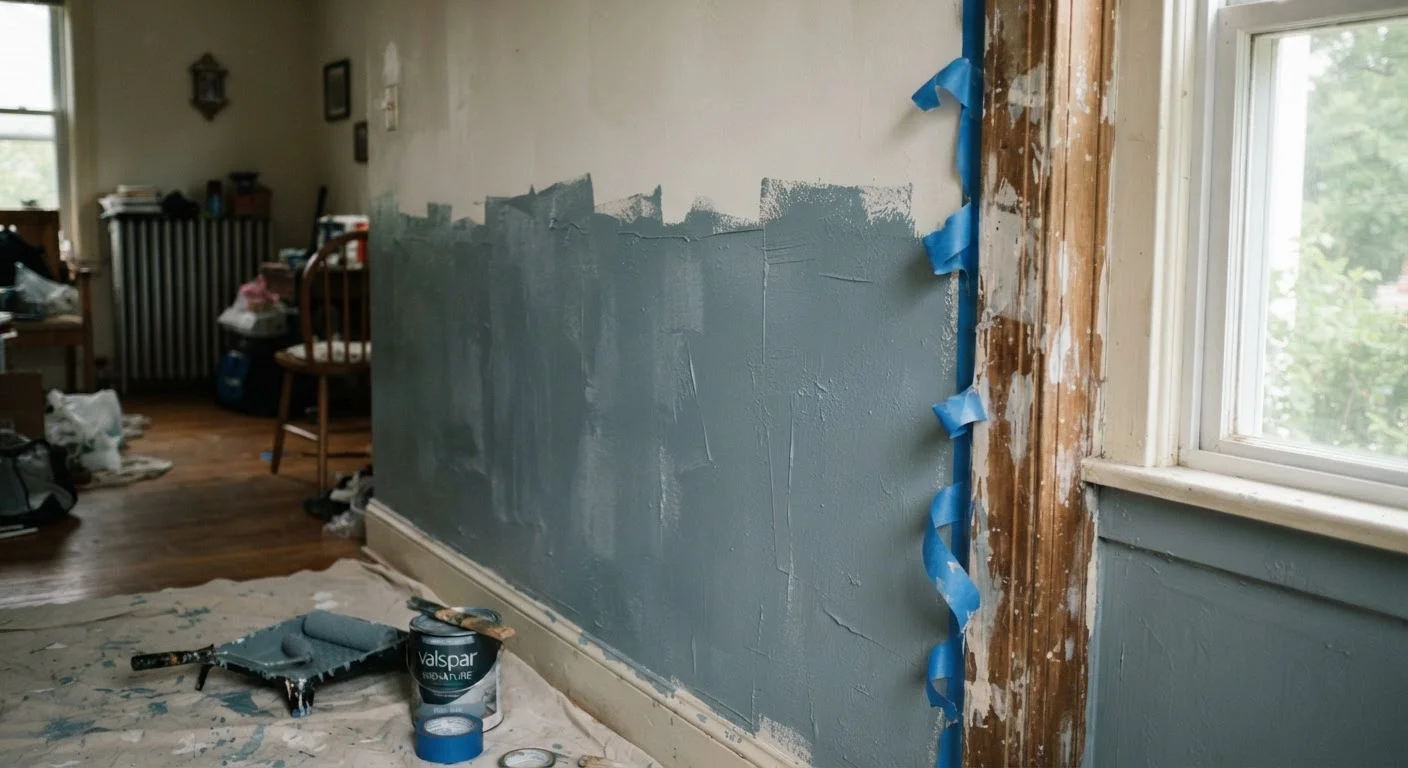
Why DIY Painting Goes Sideways
Painting a room looks deceptively simple — buy paint, grab a roller, go. But the gap between a professional-looking finish and a streaky, uneven disappointment almost always comes down to preparation and process, not talent. Most mistakes are predictable and entirely avoidable once you know what to watch for.
This guide walks through the errors that show up most often, why they happen, and what to do differently. Whether you're freshening up a bedroom or repainting an entire floor, the same principles apply. For a broader look at how to judge which home repairs are genuinely DIY-friendly, see our guide on DIY-friendly repairs.
Skipping surface cleaning and repair before painting.
Why it happens: Homeowners are eager to get to the visible work and underestimate how much dirt, grease, or old damage affects adhesion.
Not using primer, or using the wrong type for the surface.
Why it happens: Primer adds a step and a cost, so it's tempting to trust that paint-and-primer-in-one products do the same job. They often don't on bare drywall, stained surfaces, or when making a dramatic color change.
Choosing the wrong roller nap for the surface texture.
Why it happens: Most people grab whatever roller is available without checking nap thickness, unaware that nap depth determines how well paint gets into surface texture.
Applying painter's tape incorrectly or removing it at the wrong time.
Why it happens: Tape is applied quickly without pressing down edges firmly, or it's left on too long after painting and pulls dried paint with it when removed.
Overloading the roller or brush with paint.
Why it happens: It seems efficient to carry more paint per pass, but excess paint creates drips, runs, and uneven buildup that dry visibly.
Not allowing adequate dry time between coats.
Why it happens: Homeowners want to finish the job in one session and apply a second coat before the first has cured enough to accept it.
Getting the Finish Right the First Time
Beyond avoiding individual mistakes, a successful paint job depends on treating each step as connected to the next. Paint applied over a dusty, glossy, or damp surface will fail — not immediately, but within months. The same goes for skipping intermediate drying time: two coats applied back-to-back behave like one thick, slow-drying coat prone to drips and uneven sheen.
70%
Paint failures traced to poor surface prep
Industry painting contractors and extension services consistently attribute the majority of premature paint failures to inadequate surface preparation rather than paint quality.
2–4 hrs
Minimum recoat time for latex paint
Most latex paint manufacturers specify a recoat window of two to four hours under standard temperature and humidity conditions — a window many DIYers compress at their own risk.
Good ventilation during and after painting also matters more than most homeowners expect. Adequate airflow accelerates drying, reduces fume buildup, and helps paint cure evenly. Open windows on opposite sides of the room to create cross-ventilation rather than relying on a single open door.
Finally, paint sheen matters for durability and cleanability. Flat finishes hide imperfections but scuff easily — better suited to ceilings and low-traffic areas. Eggshell and satin sheens hold up to light cleaning and work well for most living spaces. Semi-gloss is standard for trim and doors because it withstands moisture and repeated wiping. Matching sheen to the surface's function is as important as matching the color.
Older Homes May Contain Lead Paint
If your home was built before 1978, painted surfaces may contain lead-based paint. Sanding or scraping these surfaces without proper precautions can release hazardous dust. The EPA's Renovation, Repair, and Painting (RRP) rule covers these situations — consult a certified contractor or your local health authority before disturbing any painted surface in an older home.
For more on common product and material missteps around the home, learn what homeowners frequently get wrong about cleaning products — many of the same misconceptions about "more is better" apply to paint as well.
The content on this site is for informational purposes only and is not a substitute for professional advice. Always consult a qualified professional for guidance specific to your situation.