

The Cleaning Gaps That Cost You
Most homeowners keep a solid handle on the obvious stuff — vacuuming carpets, wiping counters, scrubbing the toilet. But the spots that quietly accumulate grease, dust, and mildew behind the scenes? Those tend to stay untouched for months or years at a time.
That neglect adds up. Appliances work harder than they need to, air quality suffers, and small buildups turn into expensive fixes. The good news: most of these overlooked areas take just minutes to address once you know where to look.
If you're rethinking how you approach home maintenance, it's also worth reading The Case For and Against Deep-Cleaning on a Schedule to decide how to work these tasks into your routine.
Range Hood Filters
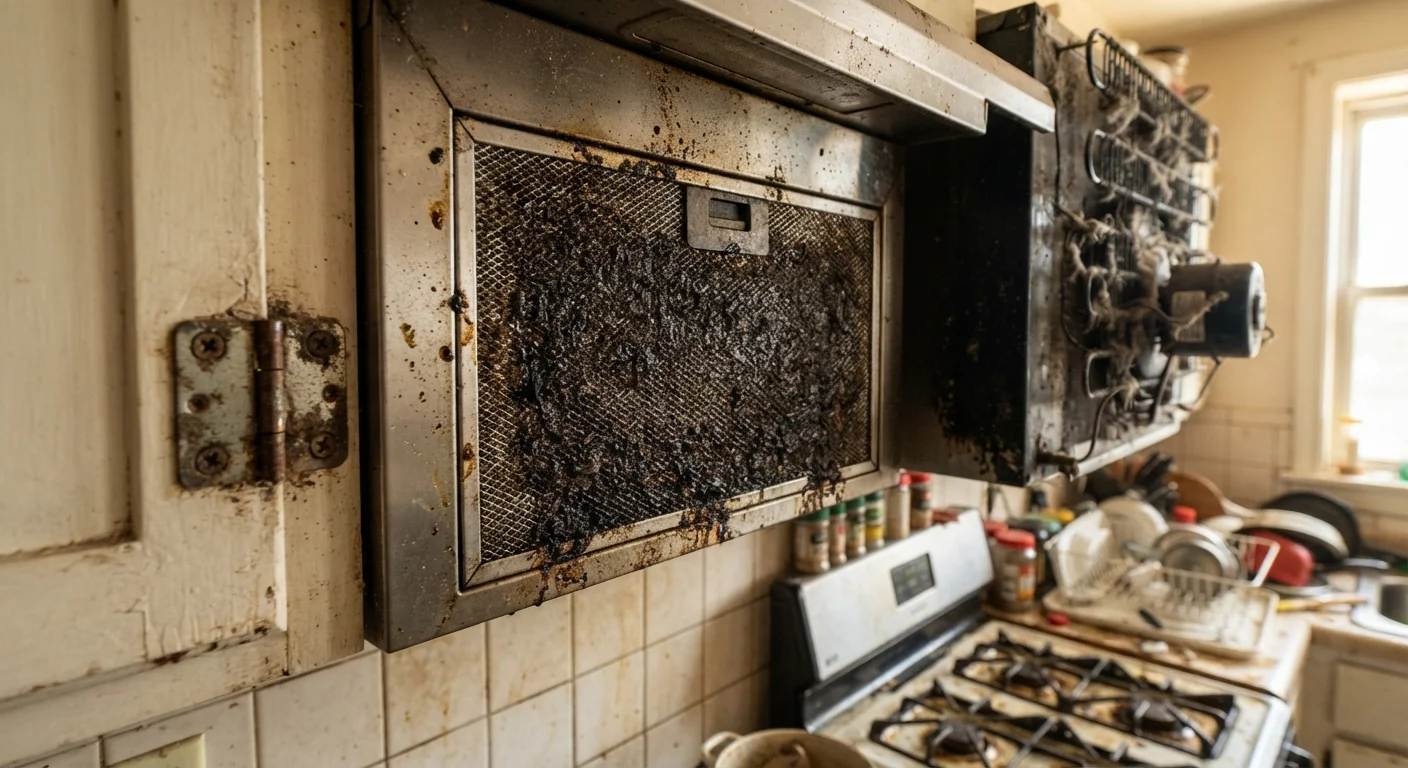
The mesh or baffle filters inside your range hood trap airborne grease every time you cook. Over time, that grease hardens and restricts airflow, making the fan far less effective at pulling smoke and odors out of your kitchen. In worst cases, a heavily loaded filter can become a fire hazard.
Most filters can be soaked in hot water with dish soap or run through the dishwasher. Aim to clean them every one to three months depending on how often you cook.
A grease-clogged range hood filter can restrict airflow and, in severe cases, become a fire risk.
Refrigerator Condenser Coils
Located either beneath or behind your refrigerator, condenser coils release heat as part of the cooling process. When they're coated in pet hair, dust, and debris, the refrigerator has to work harder to maintain temperature — driving up energy use and shortening the appliance's lifespan.
Use a coil brush or vacuum attachment to clear them out once or twice a year. Pull the refrigerator away from the wall or remove the front grille to access them.
Dust-coated condenser coils force your refrigerator to work harder, increasing energy use and wear.
Door Hinges and Tracks
Interior door hinges collect dust and old lubricant over time, contributing to squeaks and stiff movement. Sliding door tracks — on closets, shower enclosures, and patio doors — accumulate hair, grit, and moisture that can corrode the hardware or cause misalignment.
Wipe hinges with a damp cloth and apply a small amount of lubricant annually. For tracks, use a toothbrush or narrow vacuum attachment to clear debris, then wipe clean before re-lubricating.
Dirty sliding door tracks can corrode hardware over time, causing alignment problems that are costly to fix.
The Gasket Around Your Refrigerator Door
That rubber seal running around the perimeter of your refrigerator door keeps cold air in — but it's also a prime location for mold and mildew to develop. Food residue, moisture, and warmth create ideal conditions for growth in the folds of the gasket.
Wipe it down with a solution of warm water and mild dish soap every few months. If you notice persistent black spots, a diluted white vinegar solution can help address mildew without damaging the rubber.
Mold in refrigerator door gaskets is common and largely preventable with a few minutes of routine attention.
Under and Behind Large Appliances
The floor beneath your stove, dishwasher, and washing machine is a magnet for crumbs, moisture, and lint — all of which can attract pests or promote mold growth, especially in humid regions. Washing machine discharge hoses and connections are also worth inspecting while you're back there.
Pull appliances out once or twice a year to sweep and mop the floor beneath them. While you're at it, inspect hoses for cracks or bulging — small leaks can cause significant water damage if undetected. For more on that risk, see Small Leaks, Big Damage: Catching Water Problems Before They Spread.
Moisture and crumbs beneath large appliances create conditions that invite pests and mold growth.
Bathroom Exhaust Fan Grilles
Bathroom exhaust fans pull humid air out of the room to prevent mold buildup — but when the grille and fan blades are caked with dust, the fan can't do its job effectively. The result is lingering moisture that works its way into walls and ceilings over time.
Turn off the power, remove the grille, and wash it in warm soapy water. Use a can of compressed air or a soft brush to clean the fan blades. Doing this once or twice a year keeps the airflow where it needs to be.
A dust-clogged bathroom fan grille allows moisture to build up, accelerating mold growth in walls and ceilings.
Make These Part of Your Seasonal Routine
You don't need to tackle every item on this list at once. Spreading these tasks across the year — a few per season — is a practical and manageable approach. Set a recurring reminder, keep basic supplies on hand, and you'll stay well ahead of the damage that invisible grime can cause.
Group Hidden Tasks by Location
When you pull out the refrigerator to clean the coils, use that same session to sweep the floor beneath it and check the water line if your fridge has one. Batching nearby hidden-area tasks saves time and makes it easier to stay consistent. Treat these as a zone inspection, not a single chore.
Poor maintenance in these hidden zones can also affect the air you breathe indoors. For a broader look at what's happening inside your walls and vents, see Why Indoor Air Quality Deserves More Attention Than Most Homeowners Give It. And if you're ever unsure which cleaning product to reach for, What Homeowners Get Wrong About Cleaning Products separates cleaning myths from what actually works.
The content on this site is for informational purposes only and is not a substitute for professional advice. Always consult a qualified professional for guidance specific to your situation.