

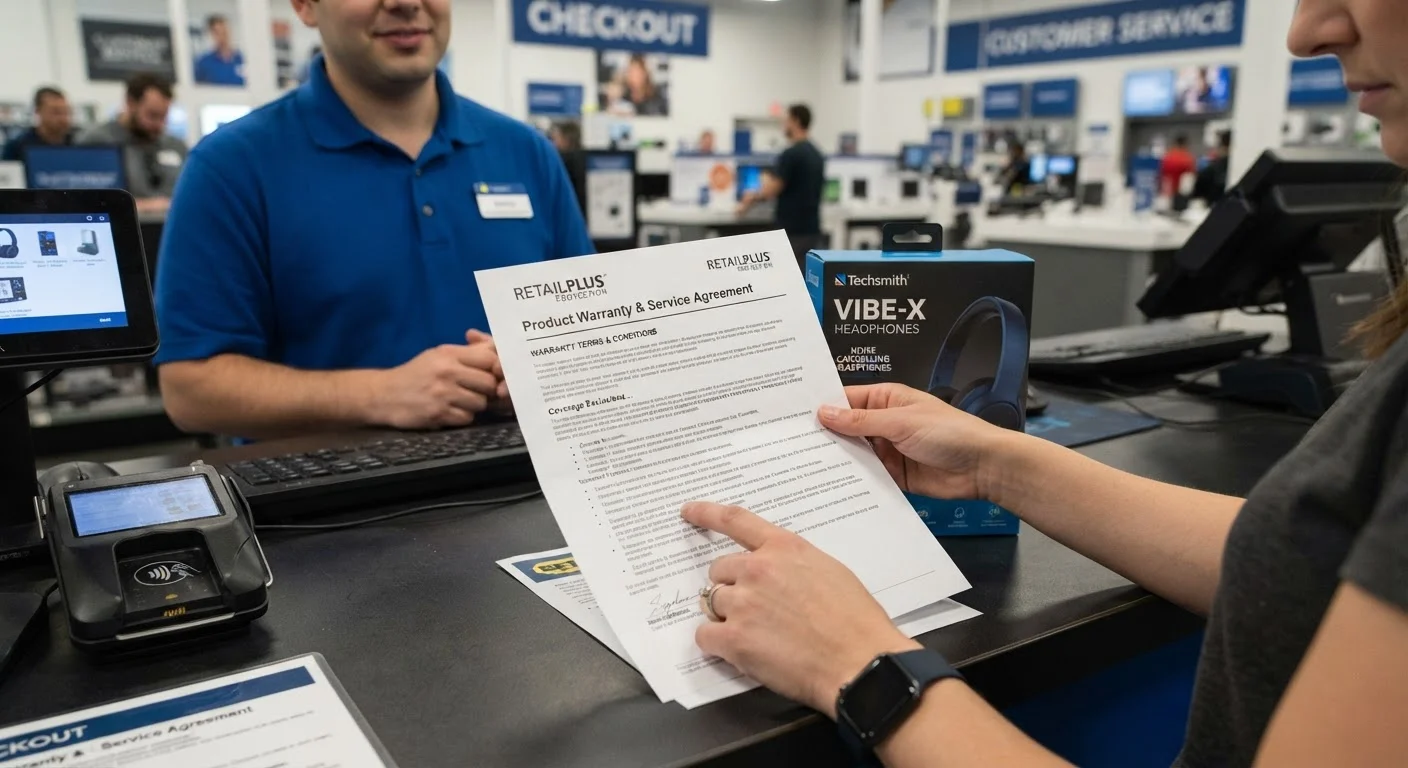
Why the Checkout Pitch Works — and Why It Shouldn't
Extended warranties and protection plans are among the highest-margin products a retailer sells. That's not a criticism — it's a structural fact that explains why the pitch happens at checkout, when you've already committed emotionally and financially to a purchase. Understanding that context is the first step to evaluating the offer on its actual merits rather than in-the-moment anxiety.
The coverage these plans provide is real, but it is almost always narrower than the sales pitch implies. The gap between what consumers believe they're buying and what the contract actually delivers is where most of the frustration — and wasted money — originates.
Myth
An extended warranty gives you coverage the moment the product breaks, regardless of cause.
Fact
Standard extended warranties typically cover mechanical and electrical failure only — not accidental damage, misuse, or cosmetic wear.
Most extended warranties are service contracts that kick in after the manufacturer's warranty expires and cover defects that arise under normal use. Drops, spills, power surges, and cosmetic damage usually require a separate accidental damage plan — which is a different (and often pricier) product. Always read the exclusions list, not just the coverage summary, before buying.
Myth
Extended warranties are required to complete a purchase.
Fact
Protection plans are always optional. No retailer can legally make the sale of a product conditional on purchasing a warranty or service contract.
Under the Magnuson-Moss Warranty Act, tying the sale of a product to the purchase of an extended warranty is prohibited. If a salesperson implies the warranty is mandatory or that declining it voids your manufacturer's warranty, that claim is false. You can — and often should — walk away from the add-on without affecting the underlying sale.
For a broader look at how contract language can work against buyers, see our breakdown of fine print terms that catch consumers off guard.
Myth
An extended warranty always starts the day you buy the product.
Fact
Most extended warranties begin only after the manufacturer's warranty expires, meaning there is no additional coverage during that overlap period.
A common source of buyer frustration is discovering that a three-year extended warranty on a product with a one-year manufacturer warranty provides only two years of net new protection — not three. The plans are usually sequential, not additive. Confirm the effective start date before purchase so you know exactly what you're paying for.
Myth
Filing a claim under an extended warranty is straightforward and fast.
Fact
Claims processes often involve diagnostics, authorization steps, and waiting periods that can take days or weeks to resolve.
Protection plan contracts frequently require that repairs be performed by an authorized service provider, that you ship the item to a central facility, or that a technician be scheduled. In some cases, the plan administrator — not the retailer — handles claims, adding another layer. Read the service process section of any contract, not just the coverage page, to understand the realistic timeline before you need it.
For more on how warranty terms can surprise buyers, common warranty myths are worth reviewing before your next purchase.
Myth
Extended warranties are always a smart investment for expensive electronics.
Fact
Consumer research consistently shows that products are most likely to fail either early in their life (covered by the manufacturer) or after the extended warranty expires.
The reliability curve for most electronics means extended warranties often cover the period of lowest failure risk. Additionally, repair costs for some categories — such as certain laptops or televisions — can approach replacement cost anyway, limiting the financial benefit. Whether a plan makes sense depends on the specific product category, its expected lifespan, and whether you already have overlapping coverage through a credit card or homeowner's insurance policy. See why extended warranties rarely deliver what buyers expect for a fuller analysis.
How to Evaluate Any Protection Plan Before Saying Yes
Before accepting or declining a plan, three questions cut through most of the noise:
- What does my manufacturer's warranty already cover, and for how long? A plan that duplicates existing coverage for 12 months adds no value during that window.
- Does my credit card extend warranties or cover damage? Check your card's benefits portal — many cards add six to twelve months of protection automatically on eligible purchases.
- What are the exclusions and the claims process? The exclusions list and service terms are the contract's most consequential sections. If a salesperson can't explain both clearly, ask for the written contract to review before purchase.
Check Your Credit Card Coverage First
Many major credit cards automatically extend the manufacturer's warranty on eligible purchases by six months to one year at no extra charge. Before paying for a retailer's protection plan, check your card's benefits guide. You may already have overlapping — or equivalent — coverage you're not using.
Plans that cover accidental damage — drops, liquid spills — are a different product category from standard extended warranties and are worth evaluating separately, particularly for portable devices. Just confirm that the deductible structure doesn't offset the benefit.
Deductibles Can Erase the Value
Some protection plans carry per-claim deductibles of $50–$100 or more. For lower-cost items, a single service call deductible can cost nearly as much as the repair itself — or the product's replacement value. Always ask about deductibles before purchasing any plan.
This article provides general consumer education and is not legal or financial advice. For questions about your specific rights under a warranty or service contract, consider consulting a consumer protection attorney or contacting your state attorney general's consumer protection office.
The content on this site is for informational purposes only and is not a substitute for professional advice. Always consult a qualified professional for guidance specific to your situation.