

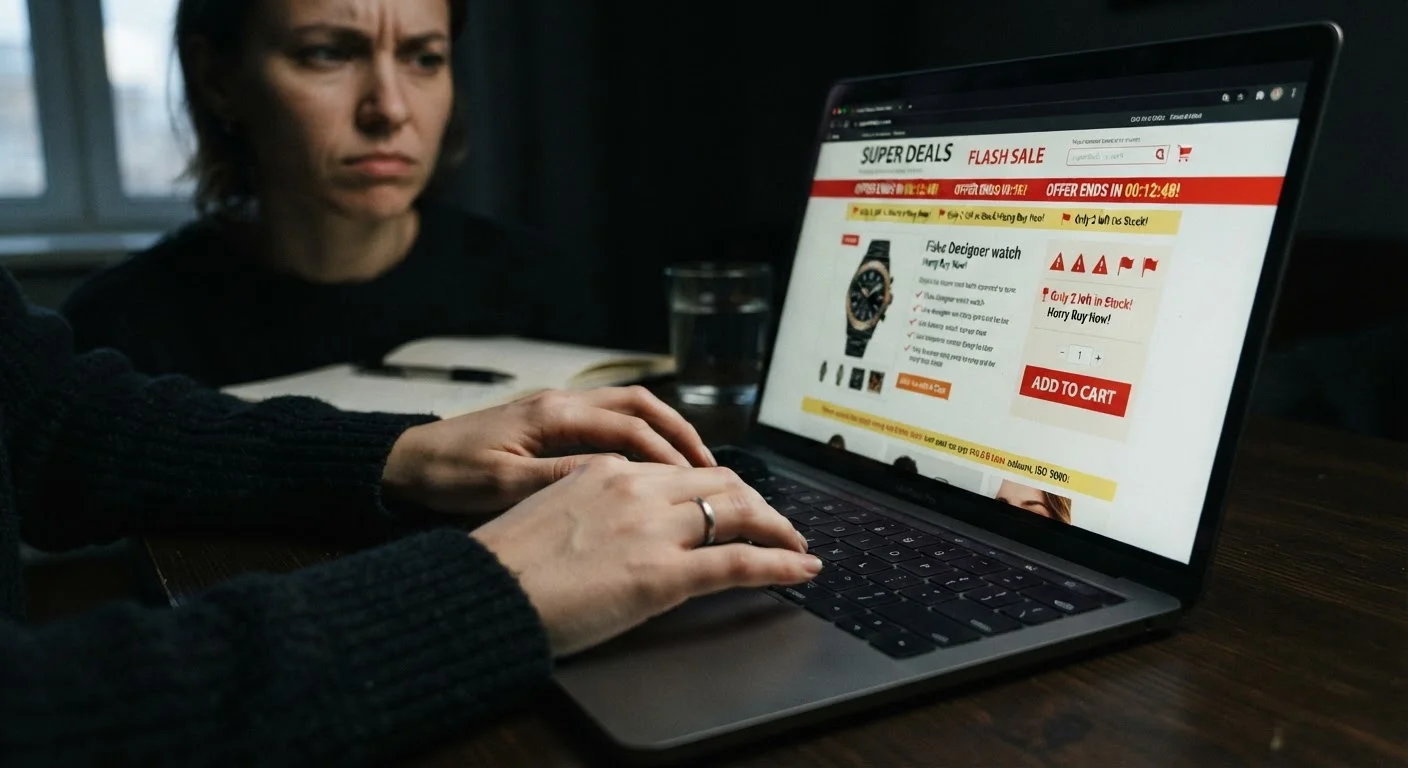
Why Seller Vetting Matters Before You Pay
Most online shopping fraud doesn't happen through elaborate hacking — it happens because buyers move too fast. An unfamiliar seller can look credible at a glance: polished images, reasonable prices, a checkout process that feels normal. The warning signs are there, but only if you know where to look.
This isn't about being paranoid. It's about applying the same basic scrutiny you'd give any stranger asking for your money. The checklist below covers the red flags experienced shoppers look for before entering payment details with any seller they haven't used before. Pair it with our pre-buy checklist for a thorough vetting process on any major purchase.
No Physical Address or Reachable Customer Support
Legitimate sellers — even small independent ones — provide a way to contact them that goes beyond a web form. Look for a physical address, a working phone number, or a verifiable email domain that matches the business name. If the only contact option is a generic Gmail address or a form with no confirmation that anyone reads it, that's a meaningful warning sign. Test it: send a question before you buy and see how — or whether — they respond.
Test contact channels before you buy — silence from a seller is itself an answer.
Prices That Are Dramatically Below Market Rate
A price that seems too good to be true usually signals one of three things: counterfeit merchandise, a bait-and-switch (where the listed item isn't what ships), or a listing designed to collect payment with no intention of delivering. Use price-comparison tools or check the same product on established platforms to calibrate what a realistic price looks like. A legitimate discount of 15–20% is plausible; 70% off a name-brand item from an unknown seller rarely is. See also: how inflated 'original' prices distort perceived savings.
Prices 70% below market from unknown sellers rarely indicate a deal — they usually signal a trap.
Vague, Copied, or AI-Spun Product Descriptions
Fraudulent sellers frequently lift product descriptions from legitimate retailers or generate generic copy that says very little about the actual item. Watch for descriptions that don't match the images, omit key specifications (materials, dimensions, compatibility), or read as though they were written for a different product entirely. Paste a suspicious description into a search engine — if it appears verbatim on a dozen other sites, that's a red flag about the seller's authenticity.
Copy-pasted or vague product descriptions are a reliable marker of low-accountability sellers.
Only High-Risk Payment Methods Accepted
Wire transfers, cryptocurrency, money orders, and gift cards offer buyers virtually no recourse if something goes wrong. Reputable sellers accept credit cards or established payment processors that include buyer protection programs. If a seller steers you away from protected payment methods — or offers a discount for paying by wire — decline. The small convenience of that discount is not worth the loss of your ability to dispute the charge. This applies equally to marketplace transactions and private-party sales; our guide on private seller vs. dealership purchases covers how payment dynamics shift in high-value transactions.
Any seller pushing wire transfers or gift cards is removing your ability to dispute a bad outcome.
No Clear Return or Refund Policy
A seller without a posted return policy — or one buried in vague language like "all sales final" or "returns at seller's discretion" — is signaling that accountability ends at the moment of payment. Before buying, locate the return policy, read it fully, and confirm it specifies a timeframe, a process, and who covers return shipping. If the policy is absent, contradictory, or impossible to find, treat that as a refusal to stand behind the product. For a broader framework, run through a real-value checklist before completing checkout.
If a return policy is missing or impossible to find, assume returns will be impossible to make.
Reviews That Don't Hold Up Under Scrutiny
On-site ratings are easy to manipulate. Before trusting a seller's five-star average, look for reviews on independent platforms — the Better Business Bureau, Trustpilot, or relevant Reddit communities. Watch for patterns: reviews that all posted within a short window, generic praise with no product specifics, or an absence of any negative feedback despite a high volume of transactions. A seller with 200 reviews and zero complaints is statistically unusual; that uniformity often reflects curation, not performance.
A flawless on-site rating means little — cross-check with independent sources before trusting it.
Trust Takes More Than a Polished Storefront
A professional-looking website costs almost nothing to set up quickly — it's not evidence of legitimacy on its own. What actually signals trustworthiness is transparency: clear ownership, reachable support, honest policies, and a consistent reputation across independent sources.
Use Your Credit Card's Dispute Rights
Paying by credit card gives you a federally backed right to dispute charges for goods not received or significantly not as described, under the Fair Credit Billing Act. Before buying from an unfamiliar seller, confirm your card's specific dispute window and process. This protection doesn't exist with debit cards, wire transfers, or peer-to-peer payment apps used as goods-and-services transactions.
If something feels off after reviewing these flags, trust that instinct. Consumer protection resources, including your state attorney general's office and the Federal Trade Commission (FTC), publish guidance on reporting fraudulent sellers and, in some cases, pursuing remedies. For more on the protections available to you as a shopper, explore the Consumer Rights Basics hub.
This article is for general informational purposes only and does not constitute legal or financial advice. Consult appropriate professionals or official consumer protection agencies for guidance specific to your situation.
The content on this site is for informational purposes only and is not a substitute for professional advice. Always consult a qualified professional for guidance specific to your situation.