

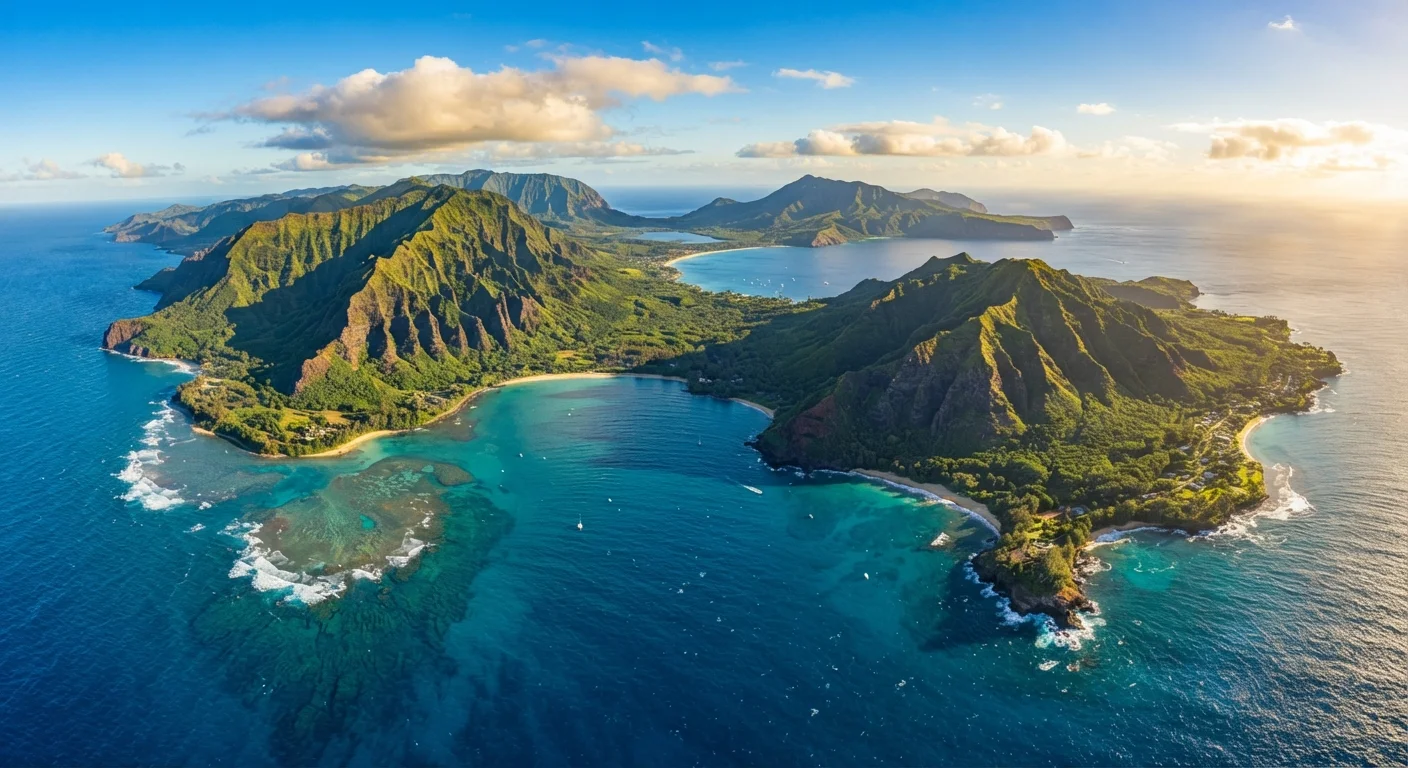
Oahu: Where History Meets the Hustle
Oahu is Hawaii's most populated island and its cultural and political hub. Honolulu — the state capital — anchors the island's south shore, and the iconic Waikiki Beach stretches along it like a postcard come to life. But Oahu is far more than its famous strip of sand.
History runs deep here. Pearl Harbor and the USS Arizona Memorial draw visitors who want to connect with a pivotal chapter in American history. The Bishop Museum offers one of the world's finest collections of Hawaiian and Pacific cultural artifacts. Meanwhile, the North Shore transforms every winter into a global stage for big-wave surfing, with waves that can reach 30 feet or more at breaks like Pipeline.
Oahu suits travelers who want variety: urban dining, easy public transportation, accessible hikes like Diamond Head, and consistent entertainment. It's also the most straightforward island for a first-time Hawaii visit.
Planning an Oahu Visit? Budget Extra Time
Oahu's traffic — particularly around Honolulu and H-1 during rush hours — can add significant time to drives that look short on a map. Build buffer time into your itinerary, especially if you're moving between the south shore and the North Shore. Early morning departures make a real difference.
Maui: Romance, Road Trips, and the Valley Isle
Maui has a well-earned reputation as Hawaii's most romantic island, but it delivers far more than honeymoon vibes. The Road to Hana — a winding, 64-mile coastal highway — is one of the most scenic drives in the United States, threading past waterfalls, bamboo forests, and lava-rock coastlines. Allow a full day, and embrace the journey as the destination.
From December through April, humpback whales congregate in the warm waters of the Auau Channel between Maui and Lanai. Whale-watching excursions during this period are among the most reliable wildlife experiences in the Pacific. Upcountry Maui, at higher elevation, offers a completely different character — cooler temperatures, lavender farms, and sweeping views of the island's twin volcanic peaks.
~10,000
Humpback whales in Hawaiian waters each winter
According to NOAA, the Hawaiian Islands Humpback Whale National Marine Sanctuary supports one of the North Pacific's most significant humpback whale populations during winter months.
64 miles
Length of the Road to Hana, Maui
The Road to Hana highway passes approximately 600 curves and 59 bridges between Kahului and Hana town, making it one of America's most celebrated scenic drives.
4,000 ft+
Height of Na Pali Coast sea cliffs, Kauai
The Na Pali Coast State Wilderness Park's cliffs rise dramatically from the Pacific and are accessible by trail, boat, or helicopter, offering one of Hawaii's most iconic views.
Maui's resort corridor in West Maui and Kaanapali offers upscale amenities, while quieter corners like Hana Town and Upcountry reward travelers who venture beyond the well-worn path.
Kauai: The Garden Isle's Untamed Beauty
Kauai is the oldest of the main Hawaiian islands geologically, and time has carved it into something extraordinary. The Na Pali Coast — a 17-mile stretch of emerald sea cliffs rising more than 4,000 feet from the ocean — is regularly described as one of the most spectacular coastlines on Earth. You can see it by boat, helicopter, or on foot via the strenuous Kalalau Trail.
Waimea Canyon, nicknamed the "Grand Canyon of the Pacific," stretches ten miles long and more than 3,600 feet deep. It's a genuine geological wonder that surprises many visitors who expect only beaches. Kauai's north shore, centered around Hanalei Bay, is lush, laid-back, and famously beautiful — though north shore beaches can be rough for swimming in winter months.
Kauai moves at a slower pace by design. The island has deliberately limited large-scale resort development, giving it a character that feels more like the Hawaii of earlier generations.
A Note on Kauai's North Shore Seasonality
Kauai's north shore is strikingly beautiful year-round, but its beaches — including Hanalei Bay — can have dangerous surf conditions and strong currents during winter months (roughly November through March). Always check posted beach safety flags and consult lifeguards before entering the water, regardless of how calm conditions may appear from shore.
The Big Island: Diversity on a Grand Scale
The Big Island — officially Hawaii Island — is larger than all the other Hawaiian islands combined, and its sheer scale produces something remarkable: eleven of the world's thirteen climate zones exist here on a single island. You can move from tropical rainforest to alpine desert to lava fields within a single day of driving.
Hawaii Volcanoes National Park is the island's centerpiece, home to Kilauea and Mauna Loa, two of the most active volcanoes on the planet. Lava landscapes, steam vents, and lava tube caves make for genuinely otherworldly hiking. Always check National Park Service advisories before visiting, as conditions change.
At 13,796 feet, Mauna Kea's summit is one of the premier stargazing locations in the world — and a cultural site of deep significance to Native Hawaiians. Visitors should approach this area with respect for its cultural and spiritual importance. The Kohala Coast on the island's west side offers calm, sunny beaches and a stark contrast to the active volcanic terrain just an hour away.
Frequently Asked Questions
Oahu is often the most practical starting point for first-timers because it has the widest range of accommodations, transportation options, and activities. That said, 'best' is subjective — if you prioritize nature over nightlife, Kauai or Maui might suit you better right from the start.
Yes, inter-island flights are relatively short — typically 30 to 60 minutes — and operate frequently between major islands. However, hopping islands adds logistics, cost, and transit time, so most travelers spend at least three to four nights on each island they visit.
The Big Island (Hawaii Island) is home to Kilauea, one of the world's most continuously active volcanoes. Visitors can see lava fields and volcanic landscapes through Hawaii Volcanoes National Park, though conditions vary — always check the National Park Service for current access and safety information before visiting.
Hawaii has a year-round warm climate, but April through early June and September through November are generally considered shoulder seasons with fewer crowds and moderate prices. Winter months bring the best whale-watching opportunities off Maui, while summer is peak season for families.
Kauai can be wonderful for families who enjoy outdoor exploration, but its more rugged terrain and limited commercial infrastructure means it requires more planning than Oahu or Maui. Beaches on Kauai's south and east shores tend to be calmer and more family-friendly than those on the north shore.
On Oahu, the public transit system (TheBus) and rideshares can get you around without a car, especially in Honolulu and Waikiki. On Maui, Kauai, and the Big Island, renting a car is strongly recommended because attractions are spread out and public transportation is limited.
The content on this site is for informational purposes only and is not a substitute for professional advice. Always consult a qualified professional for guidance specific to your situation.