

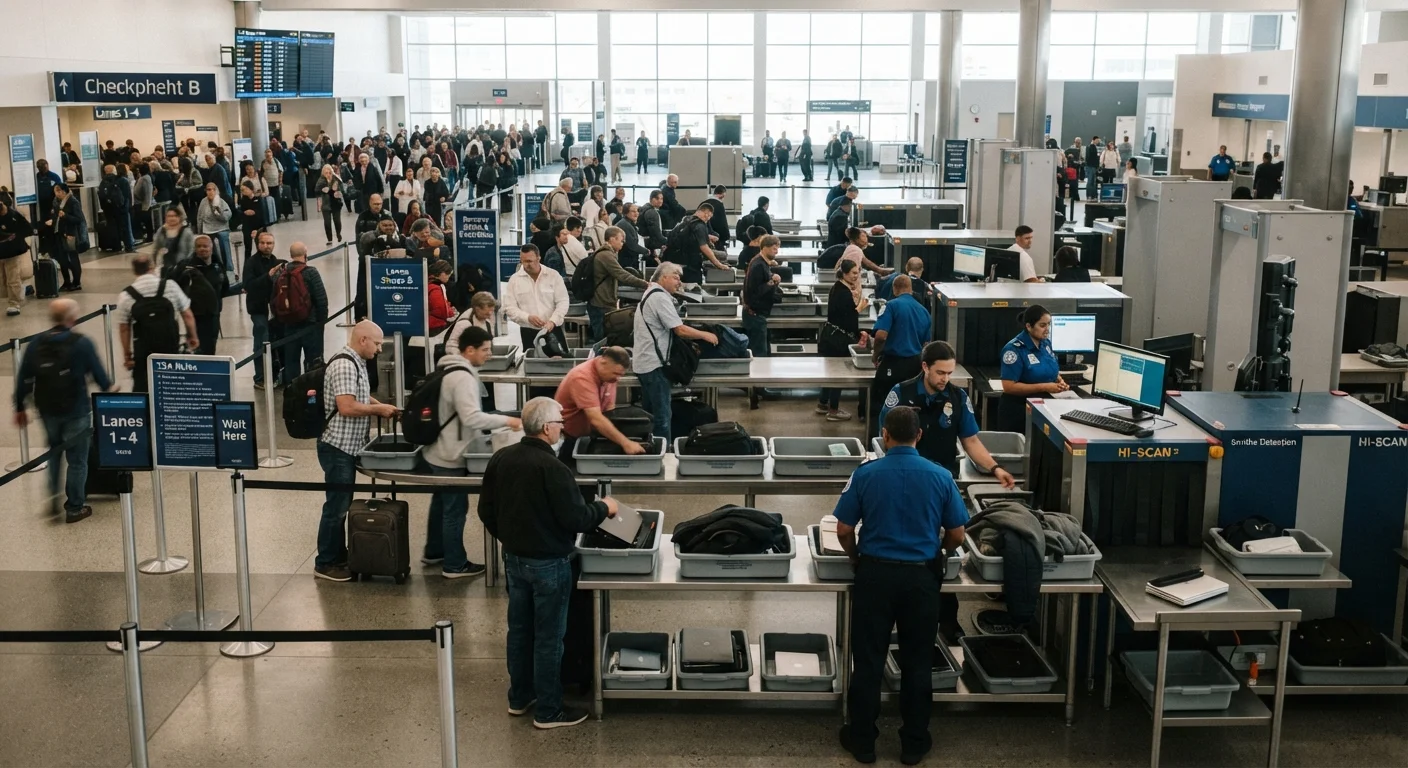
Why Airport Security Myths Are So Sticky
Airport security is one of those experiences everyone has an opinion about — and most of those opinions are at least partially wrong. Rumors spread through family group chats, travel forums, and overheard conversations at the gate, and once a myth takes root, it's nearly impossible to shake. The result? Thousands of travelers every day showing up at TSA checkpoints with wrong assumptions baked in, causing slowdowns for themselves and everyone behind them.
The good news: the actual rules are publicly documented and knowable. A few minutes spent separating fact from fiction before your next flight can mean the difference between gliding through security and getting flagged, pulled aside, or forced to repack your bag from scratch. Whether you're a frequent flyer or an occasional traveler, these myths are worth knowing. And if you're still falling for common trip planning myths, security misconceptions are likely costing you even more time than you think.
Myth
You always have to take your shoes off at airport security.
Fact
Shoe removal is required in standard lanes, but TSA PreCheck members can keep their shoes on.
The shoe-removal rule was introduced after the 2001 shoe bomber incident and applies to travelers in standard security lanes. However, passengers enrolled in TSA PreCheck are not required to remove their shoes — or their belts, or light jackets. If you're regularly frustrated by the shoe shuffle, this is one of the most tangible perks of enrolling in a trusted traveler program.
Myth
Any container under 3.4 oz (100 ml) is fine to bring through security.
Fact
The container must hold 3.4 oz or less — even if it's only half full — and all liquids must fit in one quart-sized clear bag.
The TSA's 3-1-1 rule is frequently misunderstood. A 6 oz bottle of shampoo that's only a quarter full still violates the rule — the container size is what matters, not how much liquid is inside. All liquids, gels, aerosols, creams, and pastes must fit in a single quart-sized, zip-top clear bag. One bag per traveler. Overstuffed bags that won't close are also a common cause of hold-ups at the X-ray belt.
Myth
Laptops can stay in your bag if it's a 'laptop-friendly' backpack.
Fact
Standard lane travelers must remove laptops and place them in a separate bin, regardless of the bag's design.
Laptop-friendly checkpoint bags are designed to fold flat and expose the laptop for imaging — but TSA officers still typically require the device to be removed and placed in its own bin in standard lanes. The only travelers consistently exempt from this step are TSA PreCheck members, who can leave electronics inside their bags. If you're in a standard lane, pulling the laptop out proactively is faster than being asked to do it after your bag is flagged.
Myth
Wearing less metal means you won't set off the detector.
Fact
Modern TSA scanners are millimeter-wave imaging units that detect far more than just metal.
The walk-through metal detectors of the past have largely been replaced at major US airports by Advanced Imaging Technology (AIT) scanners — full-body scanners that use millimeter-wave technology to detect a wide range of materials, not just metal. Dense items, thick clothing layers, and certain prosthetics or medical devices can all trigger additional screening. If you use a medical device or implant, carrying documentation can help speed up secondary screening.
Myth
TSA PreCheck means you'll always be in a shorter line.
Fact
PreCheck lanes are often shorter, but wait times vary by airport, terminal, and time of day.
TSA PreCheck dramatically changes what you do at the checkpoint — shoes stay on, laptops stay in bags, and you use a dedicated lane — but it doesn't guarantee a short wait. At peak travel times or smaller airports with only one PreCheck lane open, waits can still be meaningful. The program's primary value is the simplified screening process, not a guaranteed bypass of all queues.
Myth
Packing your bag neatly means it won't get flagged for a manual search.
Fact
Bags are flagged based on what's inside and how it images on X-ray, not how organized it looks.
TSA officers reviewing X-ray images are looking for prohibited items and dense or obscured areas that require clarification — not judging your packing skills. Cluttered bags can make imaging harder and increase the chance of a manual check, but a perfectly folded suitcase with a prohibited item or a confusing cluster of cables and chargers will still get pulled. Separating electronics, cords, and food items into accessible pockets can actually help the imaging process move faster.
What Actually Speeds You Up (and What Doesn't)
The travelers who move fastest through checkpoints share a few habits: they know exactly what needs to come out of their bag, they've dressed for the occasion (minimal metal, slip-on shoes if possible), and they don't overpack their carry-on with wishful thinking. None of that requires a trusted traveler program — though enrolling in one can genuinely change the experience.
~2.9M
Passengers screened by TSA daily
TSA screens approximately 2.9 million travelers per day across more than 430 airports, according to TSA operational data.
15M+
Active TSA PreCheck members
As of publicly reported figures, TSA PreCheck enrollment has surpassed 15 million members across the United States.
If you fly even a few times a year, it's worth understanding the difference between programs designed for domestic and international travelers. Our breakdown of TSA PreCheck vs. Global Entry walks through exactly who benefits from each. And for a broader look at what to handle before you even leave the house, our pre-trip checklist covers the details most people overlook until it's too late.
Don't Rely on Outdated Secondhand Advice
TSA rules do change — and what a well-traveled friend told you two years ago may no longer apply. Always verify current guidelines directly on the TSA website (tsa.gov) before you fly, especially for specialty items like sporting equipment, medication, or food. Official sources are the only ones you should trust for rules that affect your ability to board.
Security confidence also comes from understanding what's true across all of travel — not just the checkpoint. If you find myths fascinating, travel myths that steer American vacationers in the wrong direction is a worthwhile read before your next trip.
The content on this site is for informational purposes only and is not a substitute for professional advice. Always consult a qualified professional for guidance specific to your situation.