

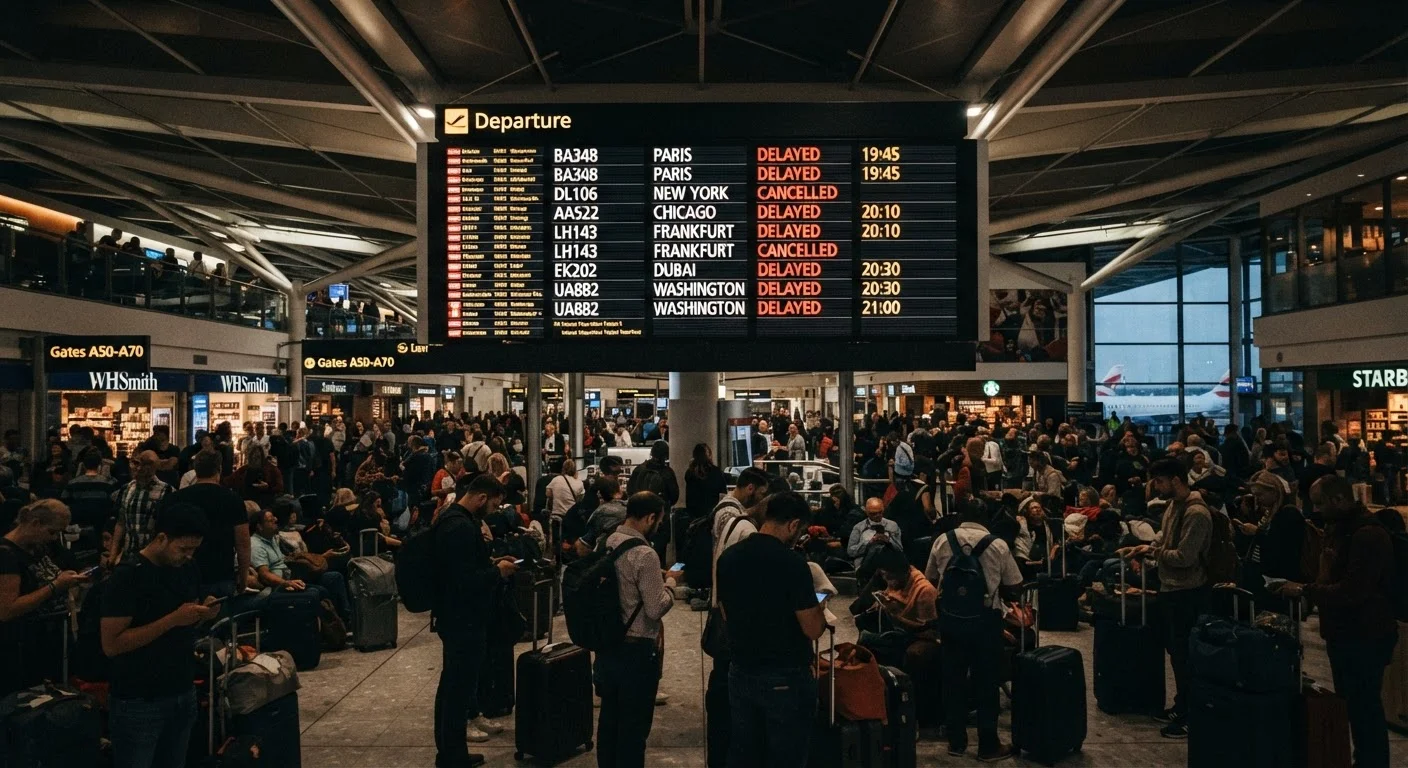
What U.S. Law Actually Requires Airlines to Do
Many travelers assume airlines have sweeping legal obligations when flights go sideways. The reality is more nuanced — and knowing the actual rules puts you in a far stronger position. Before your next trip, it's worth understanding key airline and booking terms so the policies you encounter aren't a surprise.
| Cash refund required when airline cancels | Yes — regardless of fare type (U.S. Department of Transportation) |
| Federal mandate for meal or hotel vouchers | No — voluntary airline policy only (U.S. DOT Aviation Consumer Protection) |
| Involuntary bumping compensation | Up to 4× one-way fare (federal limits apply) (14 CFR Part 250, DOT regulations) |
| Where to file an airline complaint | DOT Aviation Consumer Protection Division (airconsumer.dot.gov) |
| Tarmac delay limit (domestic flights) | 3 hours before passengers must be deplaned (DOT Tarmac Delay Rule) |
Under U.S. Department of Transportation (DOT) rules, airlines are legally required to provide a full cash refund if they cancel your flight or make a "significant change" — such as a major schedule shift or a downgrade in cabin class — and you choose not to travel. This applies regardless of whether your ticket was labeled non-refundable. The refund must be issued to your original payment method, not just a voucher.
Beyond refunds for cancellations, federal law currently requires airlines to disclose their delay and cancellation policies, and to provide prompt notification of disruptions. However, there is no federal law mandating that airlines provide meals, hotel stays, or cash compensation for delays — unlike rules that exist in the European Union.
Airline Policies vs. Legal Rights: A Critical Distinction
Here's where many travelers get tripped up: what airlines offer during a disruption is often voluntary policy, not a legal requirement. Most major U.S. carriers publish "customer service plans" that outline what they'll provide for delays caused by factors within their control — think mechanical issues or crew scheduling problems — versus so-called "extraordinary circumstances" like severe weather or air traffic control outages.
Significant Change
A DOT-defined alteration to your itinerary — such as a substantial departure or arrival time shift, a change in departure or arrival airport, or a cabin class downgrade — that triggers your right to a full refund if you choose not to travel.
Controllable Delay
A flight disruption caused by factors within the airline's management, such as mechanical problems, crew availability, or aircraft cleaning. Airlines are generally expected to provide more assistance for these delays under their customer service plans.
Extraordinary Circumstances
Events outside an airline's control — including severe weather, air traffic control restrictions, or security incidents — that typically reduce or eliminate the airline's voluntary compensation obligations.
Involuntary Bumping
When a confirmed passenger is denied boarding due to airline overbooking against their will. U.S. DOT rules require airlines to pay defined compensation in this situation, unlike for most delays.
Customer Service Plan
A voluntary, publicly posted policy document each U.S. airline must maintain, outlining what it commits to providing passengers during delays, cancellations, and other disruptions.
DOT Refund Rule
The U.S. Department of Transportation regulation requiring airlines to issue full cash refunds — to the original payment method — when they cancel a flight or make a significant change and the passenger opts not to travel.
When a delay is within the airline's control, many carriers voluntarily provide meal vouchers after a certain wait threshold and hotel accommodations for overnight delays. When the cause is deemed outside their control, these amenities are far less likely to be offered automatically. Always ask at the gate or customer service desk — representatives can sometimes authorize assistance that isn't offered proactively.
It's also worth knowing that DOT rules require airlines to seat passengers with confirmed reservations. Involuntary bumping due to overbooking triggers specific compensation requirements — typically a multiple of the one-way fare, up to federal limits — which is one area where passengers do have clear, codified protections. For a broader look at how consumer protections work after a purchase, see what U.S. consumer law actually gives you.
Steps to Take When Your Flight Is Disrupted
Acting quickly and strategically during a disruption can make a real difference. Here's a practical sequence to follow:
- Don't just wait in line. Call the airline's customer service number or use their app simultaneously — phone agents can often rebook you faster than gate agents overwhelmed by a crowd.
- Document everything. Screenshot your original itinerary, delay notifications, and any expenses you incur. This is essential if you later seek reimbursement or file a credit card travel protection claim.
- Ask specifically what the airline will cover. Use language like: "Is this delay within your control? What meal or accommodation assistance is available under your customer service plan?"
- Know your credit card benefits. Many travel credit cards include trip delay or cancellation insurance that kicks in when delays exceed a certain length — often six to twelve hours. Check your card's guide to benefits before assuming you're on your own.
- File a DOT complaint if needed. If an airline refuses a refund it legally owes you, file a complaint at the DOT's Aviation Consumer Protection Division website. This creates an official record and is often the fastest path to resolution.
Travel Insurance Can Fill the Gaps
Because U.S. law leaves much of delay compensation to airline discretion, a separate travel insurance policy or credit card trip delay benefit can be a meaningful safety net. These products vary widely in coverage terms, so review the policy details carefully before assuming you're covered. Consult the policy documents or a licensed insurance professional with questions about specific coverage.
Planning smarter from the start also reduces disruption risk. Understanding how airlines price and schedule flights — explored in our piece on booking flights early vs. waiting for lower fares — can help you choose routes and connection times that leave less room for things to go wrong. And if you've ever wondered which widely held travel beliefs are actually myths, some popular travel assumptions don't hold up to scrutiny.
The content on this site is for informational purposes only and is not a substitute for professional advice. Always consult a qualified professional for guidance specific to your situation.