

Summary
18 items · 30–60 minutes to review; allow 4–6 weeks before departure to act
Why Travel Health Prep Deserves a Spot on Your Planning Calendar
Most travelers nail the flights, hotels, and packing list — but health preparation often gets pushed to the last minute. That's a problem, because some travel vaccines require multiple doses administered weeks apart, and certain destinations require documented proof of vaccination just to enter. Getting this piece right is as important as making sure your passport won't be rejected at the border. See our complete trip planning guide for a broader look at every phase of international travel preparation.
The good news: with a clear checklist and enough lead time, travel health prep is entirely manageable. Here's what American travelers should know before heading abroad.
Start Earlier Than You Think You Need To
Some vaccines — such as those for rabies, Japanese encephalitis, and hepatitis B — require a series of doses given over several weeks. If you wait until two weeks before departure, you may not have time to complete the series. Certain yellow fever and other live vaccines also require a waiting period before they are considered effective for entry documentation purposes. Book your travel medicine appointment the moment your international trip is confirmed.
Tools and Resources You'll Need
Before working through the checklist, gather these resources. Having them on hand makes every step faster and more accurate.
CDC Travelers' Health Website (wwwnc.cdc.gov/travel)
Look up destination-specific vaccine recommendations, health notices, and outbreak alerts from the U.S. Centers for Disease Control and Prevention.
Travel Medicine Clinic or Primary Care Provider
Provides personalized vaccine recommendations, prescriptions for preventive medications, and official vaccination certificates.
U.S. Department of State Travel Website (travel.state.gov)
Check travel advisories, entry requirements, and destination health and safety information for every country.
STEP (Smart Traveler Enrollment Program)
Register your international trip with the U.S. embassy so you can receive security and health alerts for your destination.
Secure Cloud Storage (any provider)
Store digital backups of vaccination records, prescriptions, and travel insurance documents accessible from anywhere.
Your Travel Health Prep Checklist
Work through these items roughly in order — some steps depend on completing others first. Aim to start at least 4–6 weeks before departure; earlier is always better for complex itineraries or destinations with required vaccines.
Research and Appointment Scheduling
Vaccines and Preventive Medications
Documentation and Health Records
Travel Health Insurance and Emergency Planning
Don't Rely on Online Summaries for Entry Requirements
Vaccine entry requirements change frequently and can vary based on your travel history, not just your destination. A country that doesn't require yellow fever proof for travelers arriving from the U.S. may require it if you're transiting through an endemic country. Always verify the current rules directly with the destination country's embassy or official government health authority before you travel — third-party summaries, including this one, may not reflect the latest changes.
Once you've addressed health prep, make sure the rest of your pre-departure logistics are locked in. Our pre-trip checklist and international pre-departure checklist cover everything from mail holds to currency and beyond.
Documentation: What to Carry and Why It Matters
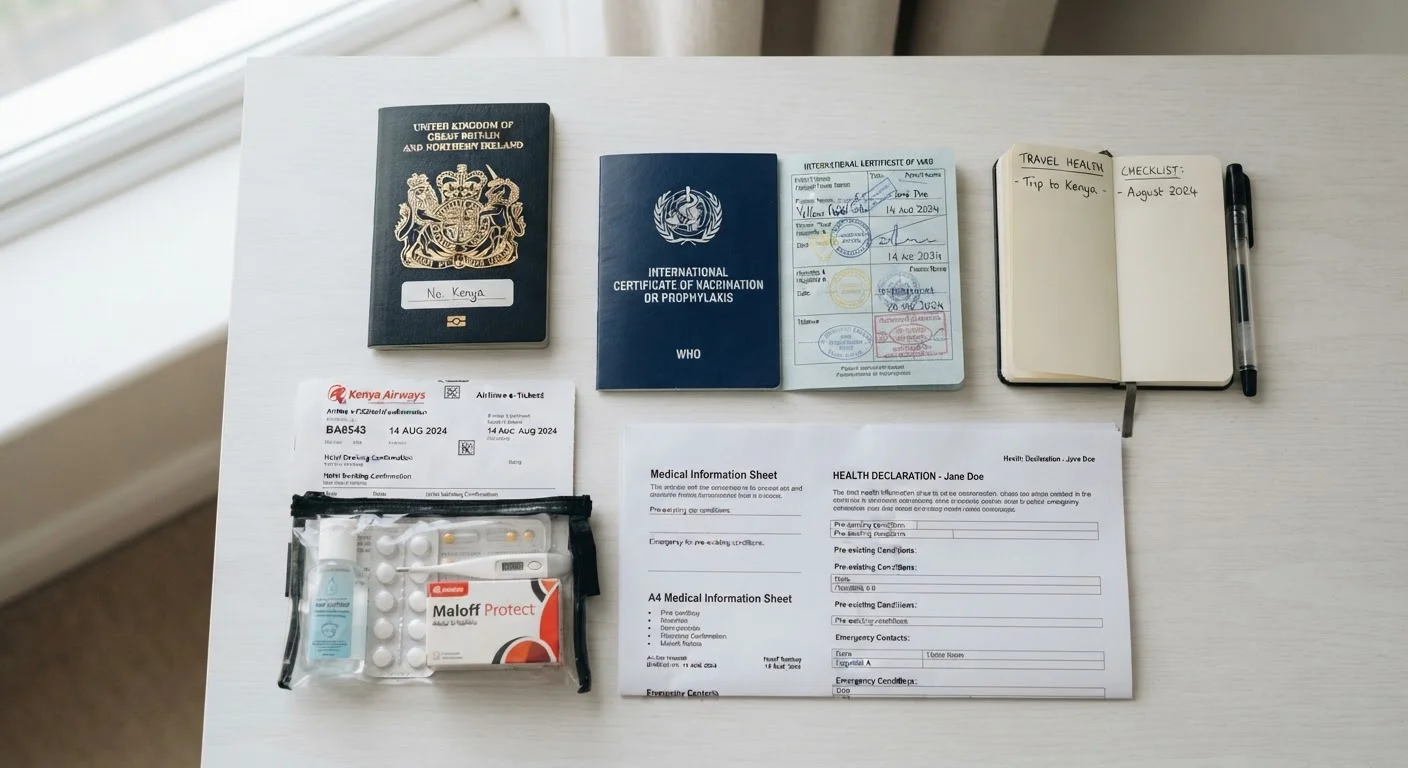
Health documents can be just as consequential as your passport at an international border. Some countries — particularly in sub-Saharan Africa and parts of South America — require travelers to present a valid yellow fever vaccination certificate (often called the ICVP, or International Certificate of Vaccination or Prophylaxis) as a condition of entry. Arriving without it can mean denied boarding, quarantine, or deportation.
Beyond mandatory certificates, carry a summary of your general health history, a list of current medications with generic drug names (brand names differ internationally), and any prescriptions written on official letterhead. Store digital copies in a secure cloud folder you can access offline, and keep a physical copy in a separate bag from your main luggage.
For a broader look at entry requirements you might not have considered, check out our international booking verification checklist.
This article is for general informational purposes only and does not constitute medical advice. Always consult a qualified healthcare provider or travel medicine specialist for guidance tailored to your personal health history and destination-specific risks.
The content on this site is for informational purposes only and is not a substitute for professional advice. Always consult a qualified professional for guidance specific to your situation.