

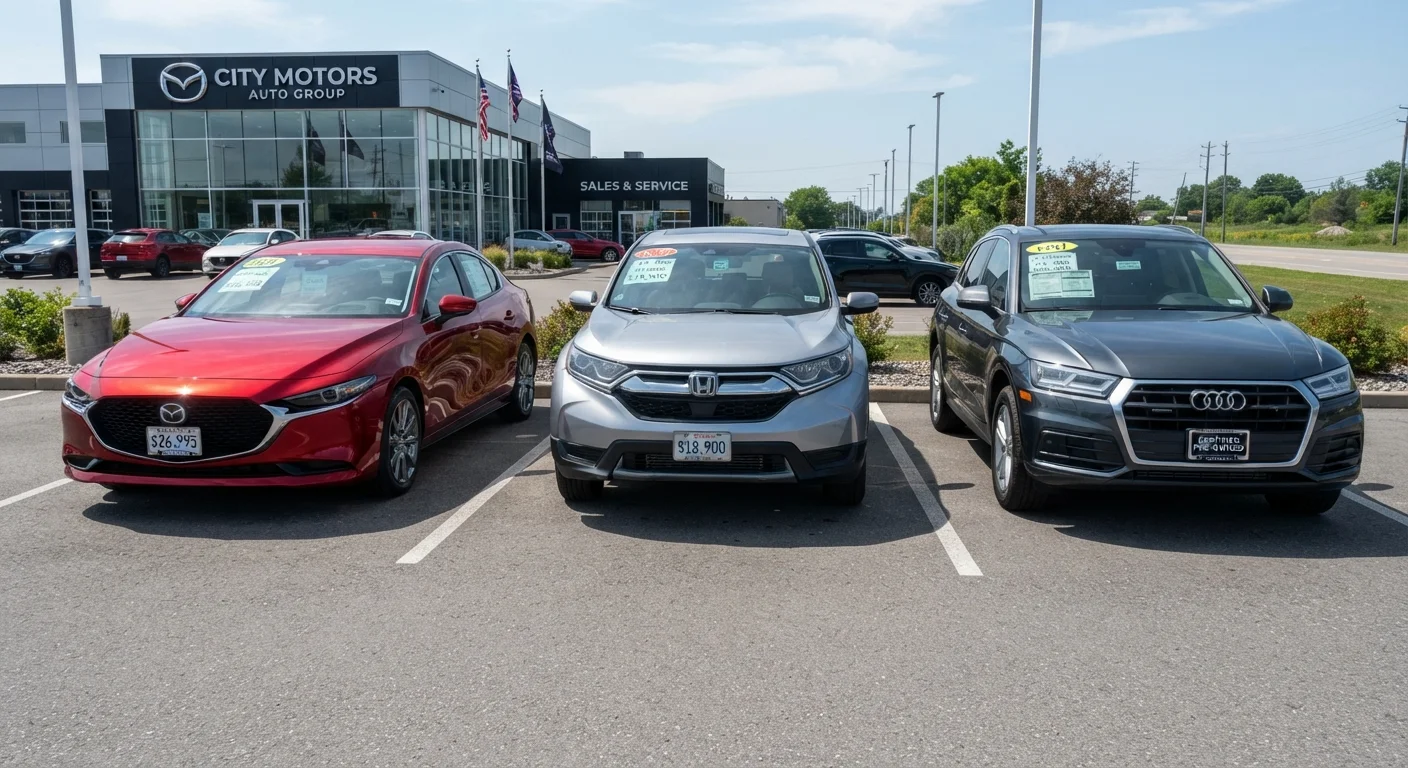
What 'New' Actually Means
A new car is a vehicle that has never been titled to a private owner. It comes directly from the manufacturer through a franchise dealership, with zero prior ownership history and the full original manufacturer's warranty intact. That warranty typically includes a bumper-to-bumper component (covering most systems for a set period) and a longer powertrain warranty covering the engine and transmission.
The appeal of buying new is straightforward: no ownership uncertainty, predictable warranty coverage, and often the latest safety technology. The significant tradeoff is depreciation. New vehicles lose a substantial portion of their value the moment they're driven off the lot, with the steepest drop occurring in the first year or two. For drivers who keep vehicles for a decade or more, this depreciation curve is less painful to absorb - it's spread across many years of use. For someone who trades in every three years, it's a meaningful financial consideration.
New cars also frequently come with manufacturer financing incentives that can reduce the effective cost of borrowing. However, these programs vary by brand, model, and market conditions, so they shouldn't be assumed or factored in before you confirm them directly.
Factor In the True Cost of Ownership
The sticker price of a new car is only part of the equation. Insurance premiums, registration fees, and financing costs all differ between new and used vehicles. Running the full ownership cost - not just the purchase price - gives you a clearer picture of what each option actually costs over time.
What 'Used' Actually Means
A used car is any vehicle that has been previously owned and titled. That could mean a two-year-old vehicle with 15,000 miles, or a ten-year-old one with 130,000. The category is broad, and within it, quality varies enormously.
Used cars are typically sold through franchised dealerships, independent lots, or private sellers. The primary advantage is price - used vehicles cost substantially less than their new equivalents, and because depreciation has already occurred, buyers absorb less of that loss themselves. The tradeoff is uncertainty. Unless you have a complete service history, a vehicle history report, and an independent mechanical inspection, you're accepting some degree of unknown risk about the car's condition.
For private-party sales especially, there are generally no implied warranties and very limited recourse if problems emerge after purchase. Understanding what changes between buying from a private seller versus a dealer is important groundwork. See our article on buying from a private seller vs. a dealership for a detailed breakdown of those differences.
Getting a pre-purchase inspection from an independent mechanic is one of the most practical steps any used-car buyer can take before committing.
~20%
Typical first-year depreciation on a new car
Industry estimates commonly cited by automotive analysts suggest new vehicles lose roughly 15-20% of their value within the first year of ownership.
100-200
Inspection points in typical manufacturer CPO programs
Most major manufacturer-backed CPO programs require vehicles to pass between 100 and 200 individual inspection checkpoints before receiving certification.
5-6 years
Average age of a used car sold in the U.S.
Data from automotive market research firms indicates the average used vehicle sold at retail in the United States is typically five to six years old.
What 'Certified Pre-Owned' Actually Means
Certified pre-owned (CPO) is a designation applied to used vehicles that have passed a defined inspection process and come with some form of extended warranty coverage. Most manufacturer-backed CPO programs require the vehicle to be within a certain age and mileage range, have a clean title history, and pass a multi-point inspection - often 100 to 200 checkpoints depending on the brand.
The key word in CPO is program. There is no universal federal standard governing what CPO means. A manufacturer-backed CPO program from a major automaker is generally more structured and consistent than a dealer-certified program, which may carry looser criteria. Before treating CPO status as a guarantee of quality, ask for the actual inspection report and understand precisely what the warranty covers, how long it lasts, and whether it's backed by the manufacturer or the dealership itself.
Manufacturer CPO vs. Dealer CPO: A Key Distinction
Manufacturer-backed CPO programs are administered by the automaker and typically follow standardized criteria across all franchised dealers. Dealer-certified programs are created by individual dealerships and can vary significantly in rigor. When evaluating any CPO vehicle, confirm whether the certification is manufacturer-backed or dealer-defined before weighing its warranty value.
CPO vehicles occupy a middle ground in terms of cost - priced above comparable non-CPO used cars but below new. Whether that premium is worth it depends on how much value you place on the warranty coverage and the reduced uncertainty. For drivers who want some of the protection of new without the full price, a manufacturer-backed CPO can be a reasonable option - provided the math checks out for your specific situation.
Choosing the Right Category for Your Situation
There's no universally correct answer to which vehicle category is right for every buyer. The decision depends on your budget, how long you plan to keep the car, your tolerance for mechanical uncertainty, and what the actual numbers look like for specific vehicles you're considering.
A useful framework: if minimizing uncertainty and repair risk matters most and you'll keep the vehicle long-term, new may be worth the premium. If price is the priority and you're comfortable doing due diligence on condition, a well-researched used vehicle can deliver strong value. If you want a middle path with some warranty protection but a lower price than new, a manufacturer-backed CPO on a model you've researched is worth evaluating - but read the warranty terms carefully rather than assuming the label does all the work.
Whichever category you choose, understanding the full buying process makes a substantial difference. Our guide on the complete car-buying journey walks through every stage from budgeting to finalizing the deal. And before you sign anything, it's worth reviewing what the terms in a car purchase contract actually mean so nothing in the paperwork catches you off guard.
Frequently Asked Questions
Yes, CPO vehicles are technically used cars - they've had at least one previous owner. What distinguishes them is that they've been inspected against a defined checklist and come with an extended warranty, usually backed by the manufacturer. The quality of that distinction depends heavily on the specific program.
New cars start with the full original manufacturer warranty, which is typically more comprehensive. CPO warranties extend coverage on a used car but may not replicate every component of a new-car warranty. Reading the fine print on both is essential before comparing.
Yes. CPO status doesn't set a fixed price - it's a certification, not a price floor. Negotiating is still appropriate, and comparing prices across multiple dealerships for the same CPO model is a reasonable strategy.
Hidden mechanical issues are the primary risk. Without an inspection or vehicle history report, you may not know about prior accidents, deferred maintenance, or wear that will require expensive repairs. Arranging a pre-purchase inspection by an independent mechanic significantly reduces this risk.
New cars make the most financial sense when you plan to keep the vehicle for many years, want to minimize repair uncertainty, or are financing at a very low manufacturer-incentivized rate. The depreciation hit is most painful for short-term owners.
Mileage alone isn't a reliable indicator - maintenance history, driving conditions, and vehicle type matter as much. A well-maintained vehicle with higher mileage can be more reliable than a neglected lower-mileage car. A vehicle history report and independent inspection provide far more useful information than mileage alone.
The content on this site is for informational purposes only and is not a substitute for professional advice. Always consult a qualified professional for guidance specific to your situation.