

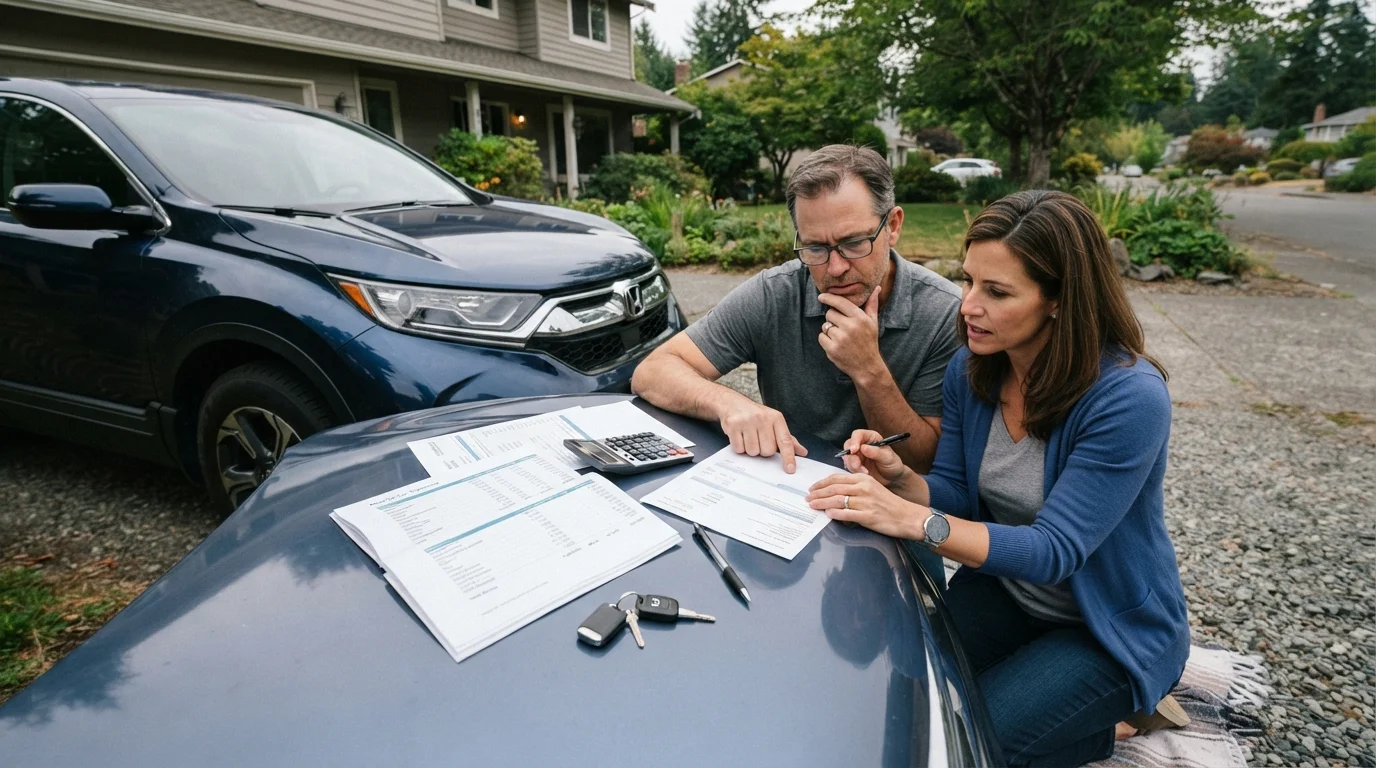
Why the Purchase Price Is Only the Beginning
Most car shoppers focus on the monthly payment or the negotiated sale price - and that's understandable. But the total financial picture of owning a vehicle is far broader. Industry estimates consistently show that annual operating costs can run thousands of dollars beyond what you financed, regardless of whether you bought a budget sedan or a midsize SUV.
Understanding these layers before you buy is one of the most powerful moves you can make as a consumer. As part of the full car-buying journey, budgeting for true ownership costs - not just the sticker - separates informed buyers from those who end up financially stretched within the first year.
The Five Major Cost Categories Every Owner Faces
1. Depreciation
Depreciation is the single largest cost for most owners, yet it's invisible at the register. A new vehicle can lose 15-25% of its value in the first year alone, and roughly 50% over five years, though this varies significantly by vehicle type and market conditions. If you're weighing purchase versus lease, the financial trade-offs between buying and leasing hinge largely on how depreciation affects each structure differently.
2. Insurance
Auto insurance is legally required in nearly every U.S. state, and premiums vary based on your driving record, location, age, vehicle type, and the coverage levels you carry. Full coverage on a financed vehicle typically costs more than liability-only. Get quotes before finalizing your vehicle choice - insurance costs can shift your affordability calculus meaningfully.
3. Fuel
Fuel is a recurring cost that compounds over time. A vehicle rated at 20 mpg driven 15,000 miles annually will consume roughly 750 gallons per year. At varying pump prices across U.S. regions, that translates to anywhere from $2,000 to over $3,500 annually. Drivers considering alternatives should review how EVs and gas cars compare for everyday American drivers, particularly on fuel and maintenance savings.
4. Maintenance and Repairs
Routine maintenance - oil changes, tire rotations, brake inspections, fluid flushes - is unavoidable. Unexpected repairs add another layer. Older vehicles carry higher repair risk; newer vehicles may still fall within warranty but come with higher purchase prices. Visit the car maintenance hub for guidance on keeping your vehicle running efficiently over the long term.
5. Registration, Taxes, and Fees
Annual vehicle registration fees vary by state and often by vehicle weight or value. Some states also assess personal property taxes on vehicles each year. These costs are easy to overlook but should be factored into your annual budget from day one. First-time buyers in particular often miss these line items - a common pattern among first-time buyers.
Depreciation
The loss in a vehicle's monetary value over time. It occurs regardless of how well you maintain the car and is typically steepest in the first few years of ownership.
Total Cost of Ownership (TCO)
The complete financial cost of owning and operating a vehicle over a given period, including purchase price, insurance, fuel, maintenance, fees, and depreciation.
Full Coverage Insurance
An auto insurance package that typically includes liability, collision, and comprehensive coverage. Lenders usually require it for financed or leased vehicles.
EPA Fuel Economy Rating
A standardized estimate of a vehicle's fuel efficiency, measured in miles per gallon (mpg), issued by the U.S. Environmental Protection Agency. Real-world results may differ.
Registration Fee
An annual fee paid to your state to legally operate a vehicle on public roads. The amount varies by state and sometimes by vehicle weight, age, or assessed value.
Putting It All Together: Estimating Your True Annual Cost
A practical approach is to build a simple annual ownership estimate before committing to any vehicle. Add up projected insurance premiums, average fuel costs based on your driving habits and the vehicle's EPA rating, a maintenance reserve (commonly $500-$1,500 for newer vehicles, more for older ones), registration fees for your state, and an estimate of depreciation loss if resale value matters to you.
Vehicles that seem affordable at purchase can carry outsized operating costs - and vice versa. The factors that quietly shape a car's long-term value - trim level, color, mileage, and demand - influence resale and, by extension, the true net cost of ownership. For a broader framework on evaluating total cost across any major purchase, see how total cost of ownership works across product categories.
~50%
Value lost by a new car in 5 years
General industry depreciation estimates suggest new vehicles lose roughly half their value within five years, making depreciation the largest hidden ownership cost.
750 gal/yr
Fuel consumed at 20 mpg, 15,000 miles
A vehicle averaging 20 mpg driven 15,000 miles annually burns approximately 750 gallons - translating to thousands of dollars depending on regional gas prices.
This article is for general informational purposes only and does not constitute financial or legal advice. Consult a qualified financial professional for guidance specific to your situation.
The content on this site is for informational purposes only and is not a substitute for professional advice. Always consult a qualified professional for guidance specific to your situation.