

Our Verdict
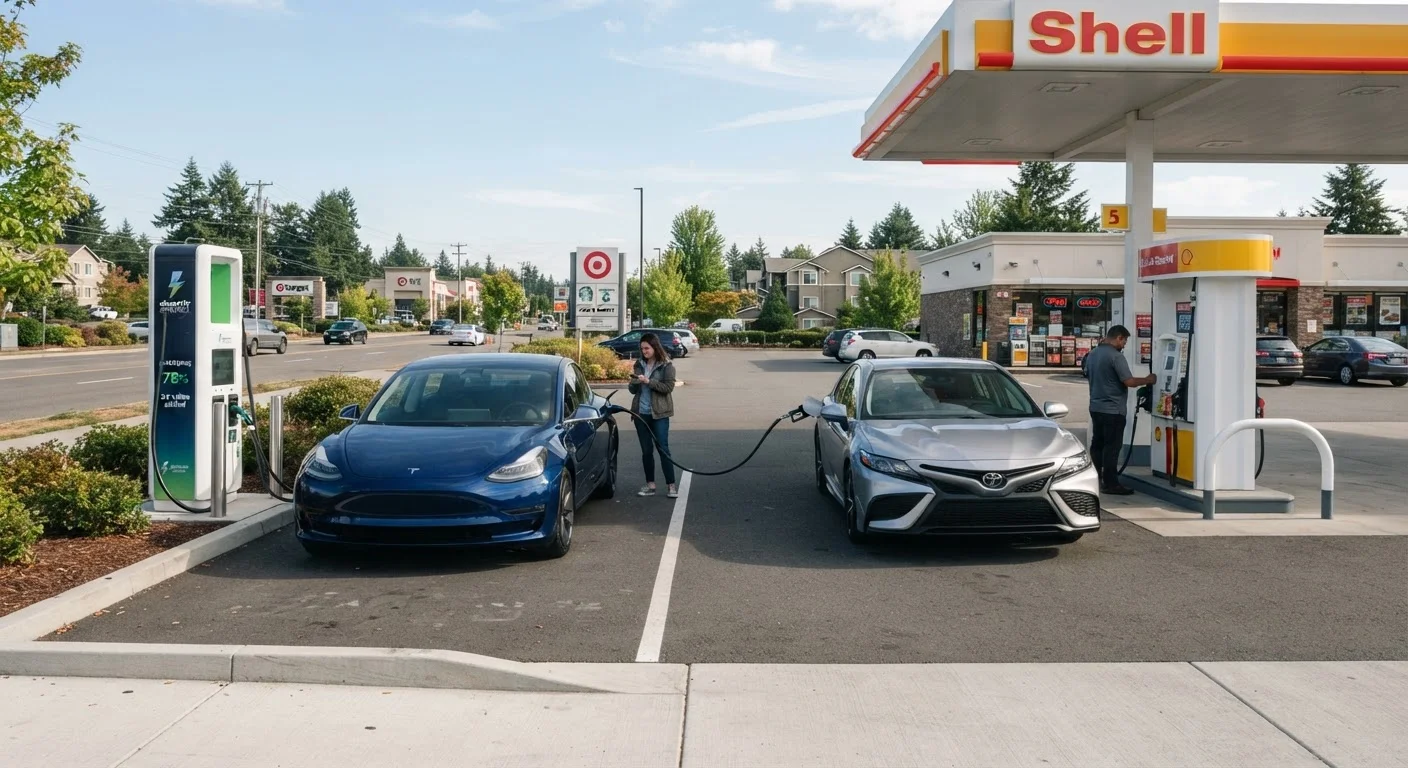
Neither EVs nor gas-powered cars are universally superior - the right choice depends heavily on your daily driving distance, home charging capability, regional infrastructure, and budget. For drivers with predictable commutes and home charging access, an EV can deliver meaningful long-term savings. For those who drive extensively across regions or lack reliable charging options, a gas-powered vehicle still offers hard-to-match flexibility.
| Best for | Recommended |
|---|---|
| Drivers with a predictable daily commute and home charging | Electric Vehicle |
| Frequent long-distance or interstate road trippers | Gas-Powered Car |
| Drivers in rural areas with limited charging infrastructure | Gas-Powered Car |
| Cost-conscious drivers focused on long-term ownership savings | Electric Vehicle |
Upfront Cost and Purchase Considerations
Electric vehicles generally carry a higher purchase price than comparable gas-powered models. That gap has narrowed in recent years, and federal tax incentives - subject to income and vehicle eligibility rules - can offset some of that difference for qualifying buyers. Still, the sticker price of an EV tends to be several thousand dollars more than a similar gas-powered vehicle in the same segment.
Financing terms, lease structures, and residual values also differ between powertrains. For a fuller picture of how purchase structure affects long-run costs, see buying vs. leasing trade-offs and the real costs of car ownership. Evaluating total cost of ownership - not just the purchase price - is essential before committing to either option.
Fuel and Energy Costs
Electricity is generally cheaper per mile than gasoline, though the exact savings depend on local utility rates, your driving habits, and whether you charge at home or at public stations. Home charging overnight using off-peak electricity rates tends to deliver the greatest cost efficiency.
Gas prices fluctuate with global oil markets, adding unpredictability to monthly ownership costs for conventional vehicle drivers. EV drivers face their own variability - commercial fast-charging networks often charge at rates significantly higher than home electricity, which can compress the per-mile savings advantage on long trips.
~37 miles
Average American daily driving distance
According to U.S. Department of Transportation data, most Americans drive well within a typical EV's single-charge range each day.
3-5x
Cost difference: home vs. commercial fast charging
Industry analyses consistently show that commercial DC fast charging can cost three to five times more per mile than charging at home on off-peak rates.
Maintenance Differences
One of the most concrete advantages EVs hold is reduced routine maintenance. Without an internal combustion engine, EV owners skip oil changes, transmission fluid services, and several other scheduled intervals that gas-powered vehicles require. Brake wear is also reduced in most EVs because regenerative braking - which uses the motor to slow the vehicle and recover energy - does much of the decelerating work.
However, EVs are not maintenance-free. Tire rotation, cabin air filters, coolant checks for the battery thermal system, and eventual battery health monitoring are still relevant. For new owners unfamiliar with either powertrain, routine car maintenance basics provides a solid grounding in what to expect. For a realistic look at DIY servicing across both vehicle types, see the honest trade-offs of doing your own car maintenance.
Check Battery Warranty Terms Before You Buy
Most EV manufacturers offer separate battery warranties - commonly 8 years or 100,000 miles - distinct from the general vehicle warranty. Understanding what degradation thresholds trigger a replacement is important for long-term ownership planning. Ask the selling dealer for written warranty terms and review them carefully before signing.
Range, Charging Infrastructure, and Real-World Flexibility
Range anxiety - the concern that an EV's battery will run out before reaching a charger - is a genuine consideration, though its practical impact depends on your driving patterns. Most EVs available today offer ranges between 200 and 350 miles per charge, which comfortably covers the average American's daily driving of roughly 37 miles (per U.S. Department of Transportation data). For daily commuters with home charging, range is rarely a limiting factor.
Long road trips are where gas-powered vehicles retain a clear edge. Refueling takes minutes at tens of thousands of stations nationwide. Public EV fast-charging networks have expanded considerably, but coverage remains uneven - particularly in rural areas, parts of the Midwest, and mountain West regions. Charging session times at DC fast chargers typically range from 20 to 45 minutes to reach 80% capacity, which requires more trip planning than a gas fill-up. EV charging technology itself continues to evolve rapidly; understanding how different charging speeds and hardware interact can help set realistic expectations - separating EV charging fact from folklore is a useful reference.
| Electric Vehicle | Gas-Powered Car | |
|---|---|---|
| Average upfront cost | Generally higher | Generally lower |
| Fuel/energy cost per mile | Lower (especially home charging) | Higher and more variable |
| Routine maintenance needs | Fewer scheduled services | More frequent servicing required |
| Refueling/recharging time | 20-45 min (fast charge to 80%) | 5-10 minutes at any gas station |
| Infrastructure availability | Growing but uneven nationally | Widespread across all regions |
| Long road trip practicality | Requires planning around chargers | High flexibility nationwide |
| Environmental emissions | Zero tailpipe emissions | Ongoing tailpipe emissions |
Which Choice Makes Sense for Your Situation
The EV vs. gas-powered decision is ultimately personal and situational. Drivers who own their home, have access to a garage or dedicated parking with an outlet, and drive predictable distances stand to benefit most from EV ownership. Urban apartment dwellers who rely on street parking or shared lots face real practical barriers to home charging that tip the equation back toward gas-powered cars - at least until public charging density improves further.
Budget constraints matter too. If the higher upfront cost of an EV would require stretching into an uncomfortable financing position, the long-term maintenance savings may not outweigh the near-term financial strain. Conversely, drivers planning to keep a vehicle for eight or more years may find that cumulative fuel and maintenance savings justify the initial premium. There is no single correct answer - only the answer that fits your actual life.
The content on this site is for informational purposes only and is not a substitute for professional advice. Always consult a qualified professional for guidance specific to your situation.