

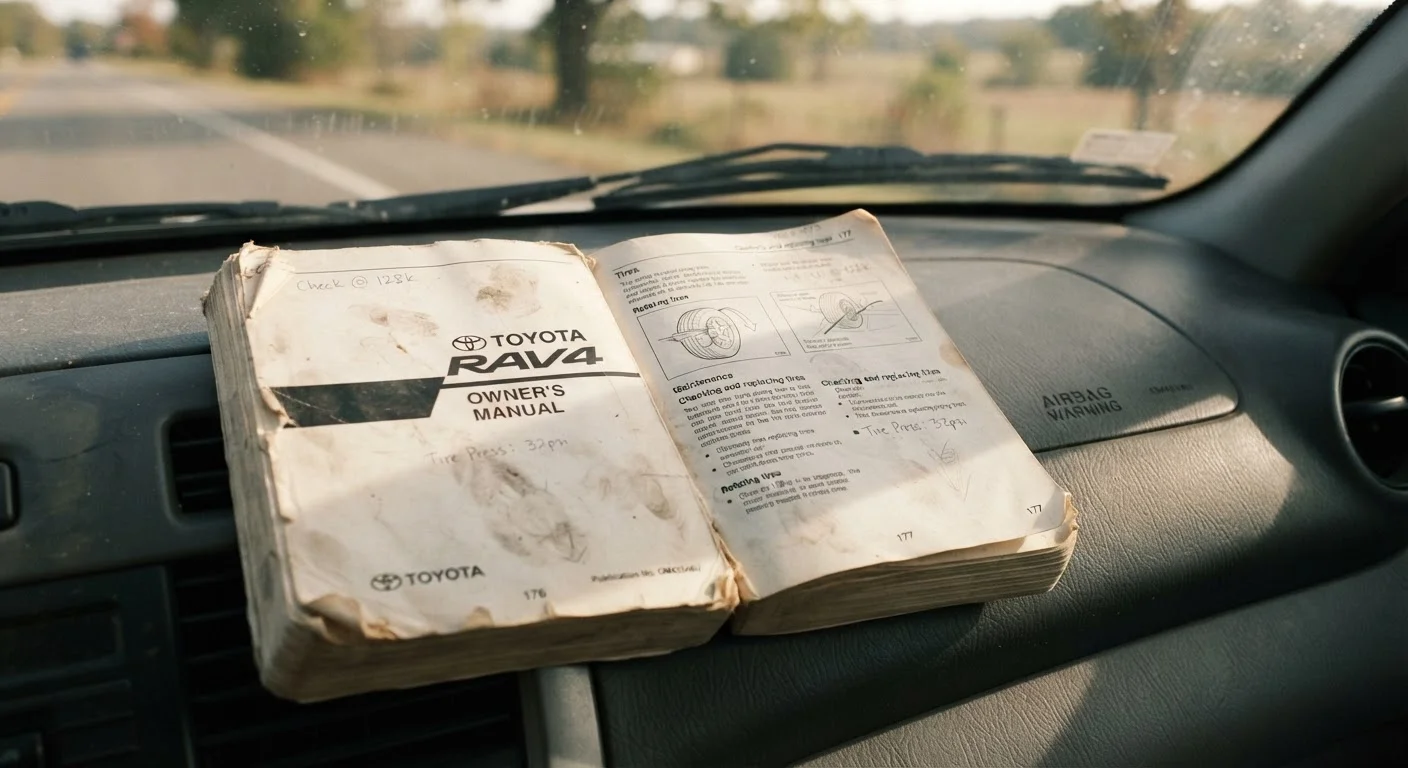
Why the Owner's Manual Is Your Most Reliable Source
Generic advice - whether from a quick-lube shop, a well-meaning friend, or an internet forum - is not calibrated to your specific engine, transmission, or drivetrain. Your owner's manual is written by the engineers who designed your vehicle and validated under real-world test conditions. It accounts for your exact powertrain, not a rough approximation of it.
A common example: many modern engines specify synthetic oil and 7,500- to 10,000-mile change intervals, yet shops sometimes recommend 3,000-mile changes out of habit. Following the manual saves money without sacrificing protection. If you are newer to car ownership, our introduction to car maintenance for new owners provides helpful broader context alongside this guide.
What you will need
Getting Practical Value From Every Read
The manual is most useful when you treat it as a living reference rather than a one-time read. After completing the steps above, revisit the maintenance schedule each time you have the oil changed or cross a major mileage threshold. Note upcoming items - timing belt inspections, coolant flushes, spark plug replacements - so they do not sneak up on you.
Keep a Digital Backup at All Times
Download your manual as a PDF and store it in a cloud folder or your phone's files app. This way, if your glove compartment copy is lost or damaged, you still have immediate access - including when you need to reference a warning light on the side of the road. Most manufacturer PDF manuals are searchable, making keyword lookups significantly faster than paging through a physical book.
If you are weighing whether to handle a maintenance task yourself or hand it to a shop, our article on DIY car maintenance tradeoffs pairs well with this guide. And for a comprehensive long-term maintenance framework, see The Complete Guide to Keeping Your Car Running Long-Term.
Owner's Manual
The primary reference document containing all manufacturer-specified maintenance intervals, fluid types, warning light definitions, and operational instructions.
Maintenance Log or Notebook
Used to record completed services alongside the manual's schedule, helping you track what has been done and what is due.
Smartphone or Tablet
Allows access to a digital PDF of the manual and lets you search by keyword when the physical copy is unavailable.
Locate or obtain your manual
Check the glove compartment first - that is where manufacturers typically place the manual at the factory. If it is missing, visit the manufacturer's official website and search for your model year and trim level. Most automakers offer free PDF downloads. Save a copy to your phone so it is always within reach.
Scan the table of contents before you need it
Spend five minutes reading the table of contents so you understand how information is organized. Typical sections include vehicle controls, instruments and warning lights, maintenance and care, specifications, and an emergency guide. Knowing the layout means you can find critical information quickly under pressure - for example, when a dashboard light appears unexpectedly.
Read the maintenance schedule carefully
The maintenance schedule is the most practically valuable section in the manual. It lists every fluid change, filter replacement, inspection, and component check by mileage or time interval - whichever comes first. Pay close attention to whether your driving qualifies as normal or severe. Severe conditions include frequent short trips under five miles, stop-and-go city traffic, towing, dusty environments, or extreme temperatures. Severe-duty intervals are shorter, and ignoring them can accelerate wear.
Look up fluid and tire specifications
The specifications section lists the correct oil viscosity (such as 0W-20 or 5W-30), coolant type, transmission fluid, brake fluid, and tire pressure for your vehicle. Using the wrong fluid type can damage components and may void warranty coverage. Confirm tire pressure in the manual or on the door-jamb sticker - not from the maximum pressure printed on the tire sidewall, which is a tire limit, not a vehicle recommendation.
Decode warning lights using the manual
When an unfamiliar warning light appears, open the instruments or warning lights chapter before assuming the worst - or brushing it off. The manual categorizes lights by urgency. Red indicators typically require immediate attention. Yellow or amber lights often signal a condition to monitor or address soon. Green and blue lights are generally informational. Knowing which category a light falls into helps you decide whether to pull over immediately, drive to a shop, or simply schedule an appointment.
Cross-reference with your actual service history
Compare the manual's schedule against any service records you have. Identify gaps - services that are overdue based on your current mileage or time elapsed. Create a simple list of upcoming intervals so nothing slips through. This is particularly useful when you purchase a used vehicle and inherit an incomplete history. For a deeper breakdown of what each mileage milestone involves, see our guide to maintenance schedules.
The content on this site is for informational purposes only and is not a substitute for professional advice. Always consult a qualified professional for guidance specific to your situation.