

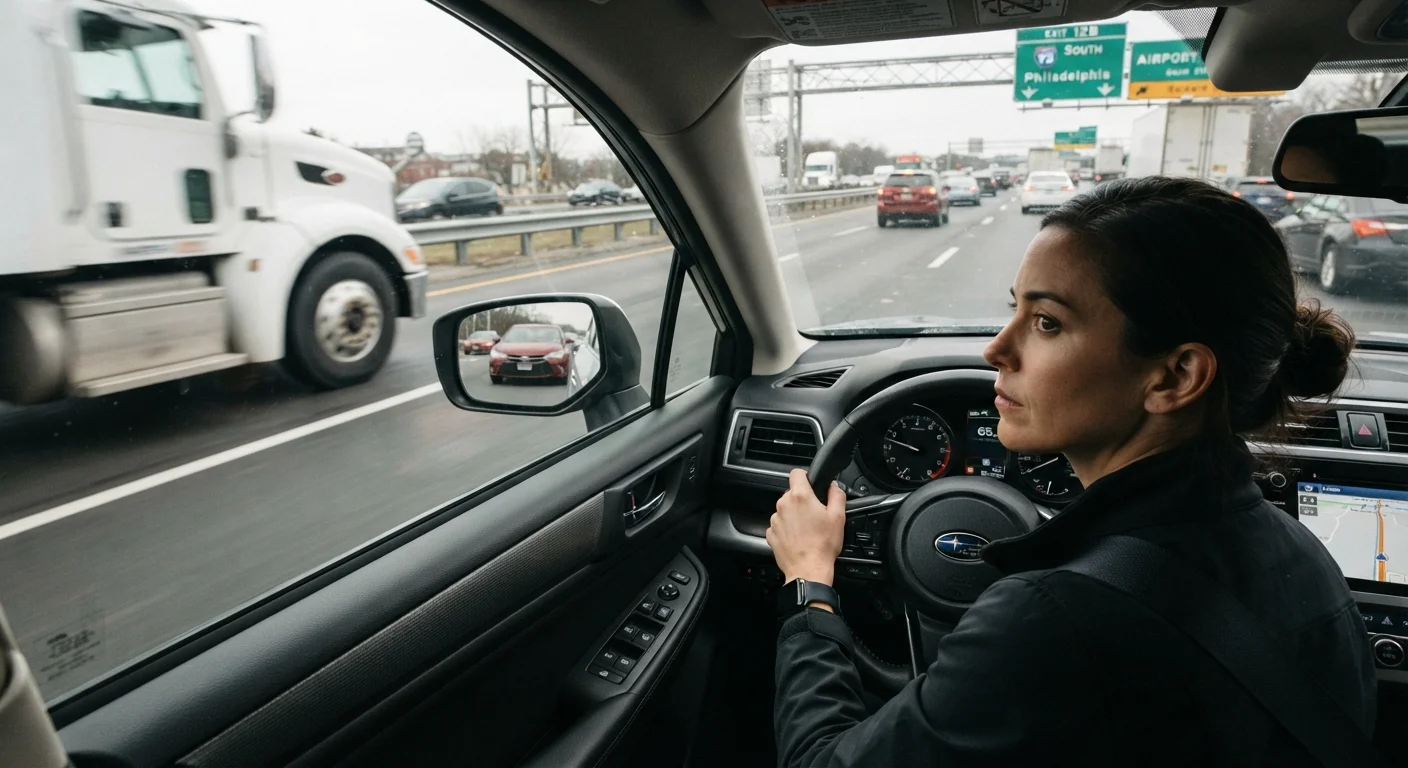
What Blind Spots Are and Why They're Dangerous
A blind spot is any area surrounding your vehicle that falls outside your direct line of sight and isn't captured by your mirrors in their standard positions. Every vehicle has them - typically along the rear quarters on both sides - but the size and shape of those zones vary considerably depending on vehicle height, body design, and pillar placement.
The danger isn't that blind spots are mysterious. It's that most drivers underestimate how large they are. A motorcycle, a compact car, or even a cyclist can disappear entirely into a blind zone that's just a few feet wide. At highway speeds, that vehicle can close the gap in under two seconds. When a driver initiates a lane change without accounting for what's in that zone, the result is often a sideswipe collision - one of the most common crash types on American roads.
Understanding blind spots is part of a broader awareness of vehicle dynamics. Just as stopping distances change with speed, the consequences of a blind-spot error scale sharply with how fast traffic is moving.
Relying solely on mirrors without performing a physical head check before changing lanes.
Why it happens: Mirrors feel like a complete solution, and drivers develop the habit of only glancing at them during lane changes without realizing the coverage gaps that remain.
Keeping side mirrors angled too far inward, centering your own vehicle in the reflection.
Why it happens: This is how many drivers were originally taught, and it feels intuitive - seeing your own car provides a reference point. In practice, it wastes mirror coverage on your own vehicle instead of the lanes beside you.
Failing to account for larger vehicle blind zones when driving an SUV, pickup truck, or van.
Why it happens: Drivers who move from a sedan to a larger vehicle often carry over the same habits without recalibrating for the new vehicle's geometry and extended blind zones.
Changing lanes without signaling early enough to give surrounding drivers time to react.
Why it happens: Many drivers signal simultaneously with the lane change - or not at all - treating the signal as a courtesy rather than a safety tool.
Over-relying on blind-spot monitoring technology as a substitute for manual checks.
Why it happens: These systems are marketed as safety features, and drivers reasonably assume they handle the task completely. In practice, radar-based systems have detection gaps, especially with smaller vehicles or fast-closing traffic.
How to Check Blind Spots Reliably Every Time
Reliable blind-spot checking is a combination of proper mirror setup, physical head movement, and consistent habit. No single step is sufficient on its own.
Set Your Mirrors Correctly First
Standard mirror advice tells drivers to center the view of their own car in each side mirror. That's outdated. A more effective approach positions side mirrors outward so that your own vehicle's body is just barely visible at the inner edge. This dramatically widens the coverage area and reduces overlap with the rearview mirror, closing much of the traditional blind zone.
Always Add a Physical Head Check
Even optimally adjusted mirrors leave gaps. Before moving into another lane, turn your head briefly toward the rear quarter - the area alongside your back seat, angled rearward - to visually confirm no vehicle occupies the space. This takes less than a second and catches what no mirror can show.
Use Signals Early
Signaling well before a lane change gives other drivers time to react or alert you. It also creates a brief window for a vehicle in your blind spot to flash headlights or sound a horn. Driving without early signaling removes that safety buffer entirely - a pattern that contributes to the same collision chain explored in our guide on common merging errors.
840,000+
Annual blind-spot-related crashes in the U.S.
The National Highway Traffic Safety Administration has estimated that hundreds of thousands of crashes each year involve blind-spot failures during lane changes and merges.
~2 sec
Time for a vehicle to cross a blind zone at highway speed
At 65 mph, a vehicle traveling in an adjacent lane can traverse a typical blind spot in under two seconds - leaving almost no margin for a driver who checks mirrors only once.
Driver-assistance features like blind-spot monitoring systems use radar or cameras to detect vehicles in adjacent lanes and alert the driver - often with a warning light in the mirror housing. These systems are genuinely useful, but they have limitations: they can fail to detect fast-approaching vehicles, cyclists, or motorcycles in certain conditions. Treat them as a supplement, not a replacement, for active visual checks.
Reduced visibility conditions compound the risk. Night driving and heavy rain make it harder to spot vehicles during a head check, which is why consistent mirror positioning and early signaling matter even more in low-visibility environments.
Distraction Amplifies Blind-Spot Risk
Checking a phone, adjusting a radio, or glancing at a passenger during a lane change eliminates the brief window in which a head check would catch a vehicle in your blind spot. Distracted driving and blind-spot errors frequently combine in the same crash. Keep your attention fully on the road during any lane change.
The content on this site is for informational purposes only and is not a substitute for professional advice. Always consult a qualified professional for guidance specific to your situation.