

Our Verdict
Smartwatches deliver genuine daily value through a small core set of features: step and heart rate tracking, glanceable notifications, and quick timers or alarms. The more specialized sensors and apps - ECG, fall detection, sleep staging, onboard GPS - are genuinely useful for specific users but go largely untouched by most owners most of the time. Matching a smartwatch to your actual habits, rather than its longest spec sheet, is what determines whether it becomes indispensable or just decorative.
Best suited to people who want passive health awareness, lighter phone dependency, and simple fitness accountability without managing a complex device.
The Daily Workhorses: Features That Earn Their Keep
Most smartwatch owners interact with the same handful of features dozens of times each day, regardless of which platform or price tier they chose. These are the capabilities that justify the wrist real estate.
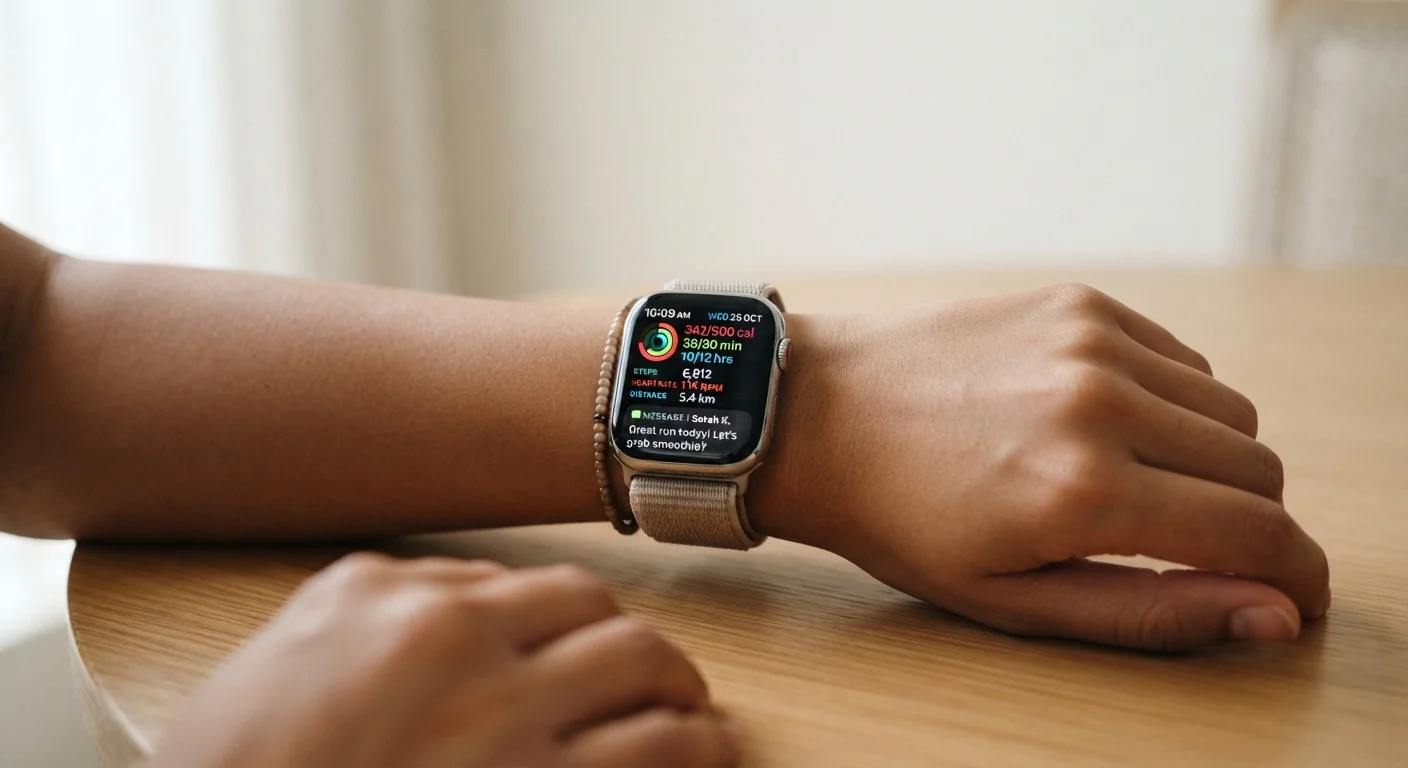
Step counting and heart rate monitoring top the list. Both run passively in the background, require no input from the wearer, and surface useful at-a-glance data throughout the day. Research consistently shows that simply seeing step counts nudges people toward more movement - the feedback loop is automatic. If you're looking to build more consistent activity into a packed schedule, pairing this passive awareness with a structured routine can be effective. See our guide to fitting exercise into a busy week for a practical framework.
Notification mirroring is another feature that reshapes daily behavior quickly. Being able to read a text or check a calendar alert without pulling out your phone reduces distraction - particularly in meetings or while cooking. The key word is glanceable: the watch shows enough to decide whether a notification warrants attention, nothing more.
Timers and alarms may sound mundane, but wrist-based haptic (vibration) alerts are notably more discreet than a ringing phone. Cooks, parents, and office workers consistently report this as one of the stickiest daily habits a smartwatch builds.
Passive step and heart rate tracking requires zero effort
These sensors run continuously without user input, making health awareness automatic rather than something that depends on remembering to log data manually.
Glanceable notifications reduce phone dependency
Seeing a message preview on your wrist lets you decide in two seconds whether it needs attention, reducing the urge to pull out your phone repeatedly throughout the day.
Haptic alarms and timers are discreet and effective
Vibration-based alerts are nearly silent, making them practical in offices, classrooms, and other quiet environments where a phone alarm would be disruptive.
Workout auto-detection simplifies fitness logging
Many watches can recognize when you start walking, running, or cycling and begin tracking automatically, removing the friction of manually starting a workout session.
Safety features add low-cost peace of mind
Fall detection and emergency SOS capabilities, while rarely triggered, provide a meaningful safety layer for older adults or solo outdoor exercisers without requiring any daily interaction.
The Rarely-Used Roster: Impressive Specs That Collect Dust
Smartwatch feature lists have grown dramatically, but usage data and user reports tell a different story about what actually gets tapped after the first week.
ECG (electrocardiogram) recording is a clinically meaningful capability - it can flag irregular heart rhythms that warrant a doctor's visit. But most wearers run an on-demand ECG only a handful of times. It is a safety net, not a daily habit, and it's worth understanding that smartwatch ECGs are single-lead readings, far simpler than the 12-lead tests performed in clinical settings.
Blood oxygen (SpO2) sensors follow a similar pattern. Spot-checking blood oxygen can be informative for some conditions, but for healthy adults without a specific reason to monitor it, the readings rarely inform any decision. The sensors also have accuracy limitations at lower readings that users should be aware of.
Onboard GPS is genuinely useful for outdoor runners and cyclists who want to leave their phone at home. For everyone else, it drains battery without providing meaningful benefit over phone-connected GPS.
Built-in apps - weather, stocks, news - are replicated so much better on a phone that most users abandon them within days. The watch screen is simply too small for comfortable browsing.
Advanced health sensors rarely inform daily decisions
ECG recording and SpO2 monitoring are clinically interesting but most users check them infrequently. Without consistent use and medical context, the data rarely changes any behavior.
Onboard GPS drains battery for most users unnecessarily
Unless you regularly exercise without your phone, onboard GPS provides little practical benefit over phone-connected GPS while meaningfully shortening battery life.
Built-in apps rarely compete with phone alternatives
The small screen and limited input make most third-party watch apps uncomfortable to use beyond a quick glance, so many users never return to them after initial setup.
Sleep tracking accuracy varies significantly
Wrist-based sleep staging relies on movement and heart rate estimates rather than direct brain activity measurement, meaning sleep stage breakdowns should be treated as approximate, not clinical.
Frequent charging can disrupt wrist-based sleep tracking
Watches with short battery life need to charge overnight, which directly conflicts with the sleep tracking feature - users must choose one or the other.
What Actually Determines Daily Satisfaction
The features you use most are only part of the equation. Two hardware qualities consistently separate satisfying smartwatches from frustrating ones in everyday use.
Battery life is the silent feature. A watch that needs daily charging introduces a new friction point into the morning routine and creates anxiety about running out mid-day. Watches that last two or more days on a charge are meaningfully easier to live with, even if they sacrifice a few sensor capabilities. For context on how to keep wearable batteries healthy longer, our everyday gadget longevity guide covers charging habits that apply directly to smartwatches.
Display readability matters more than resolution numbers suggest. An always-on display that's legible in sunlight makes the watch feel like a watch. A screen you have to flick your wrist to wake - and then squint at - removes the core convenience advantage over a phone check.
A Note on Health Sensor Accuracy
Smartwatch health sensors - including heart rate, SpO2, and ECG - are consumer-grade tools, not medical devices in the clinical sense. They can surface patterns worth discussing with a doctor, but readings should not be used to self-diagnose conditions or replace professional evaluation. If a reading concerns you, consult a qualified healthcare provider rather than acting on the data alone.
Understanding which smartwatch features align with your habits is the same kind of decision-making that applies to any device. For a parallel look at how phone specs translate to real-world use, see what smartphone specs actually mean for everyday use.
Making the Right Match for Your Lifestyle
The most effective way to evaluate a smartwatch isn't to compare feature counts - it's to audit how you'd realistically interact with it across a typical week.
~3
Core features used daily by most owners
User behavior surveys consistently find that step tracking, notifications, and timers account for the vast majority of daily smartwatch interactions across platforms.
1-2 days
Battery life threshold that affects daily satisfaction
Consumer reviews across major platforms frequently cite battery life as the single most important factor in long-term smartwatch satisfaction, above sensor count or app availability.
Ask yourself: Do you exercise consistently enough that workout tracking would change your behavior? Do you work in settings where phone-free notifications would be genuinely useful? Is sleep tracking something you'd act on, or just glance at occasionally? Honest answers to those questions narrow the field considerably.
If your answers cluster around passive health awareness and notification convenience, a mid-range device with strong battery life will likely serve you better than a flagship loaded with sensors you won't use. Conversely, if you're a distance runner, a serious cyclist, or someone managing a specific health condition, the advanced sensors may be worth their cost and their battery trade-off.
It's also worth noting that smartwatch notification habits intersect with broader screen-time patterns. The same tools that make you more phone-independent can, for some people, simply shift the distraction to the wrist. Our overview of built-in screen time tools explores how digital boundaries work across devices - relevant context if you're buying a watch partly to reduce phone dependency.
The content on this site is for informational purposes only and is not a substitute for professional advice. Always consult a qualified professional for guidance specific to your situation.