

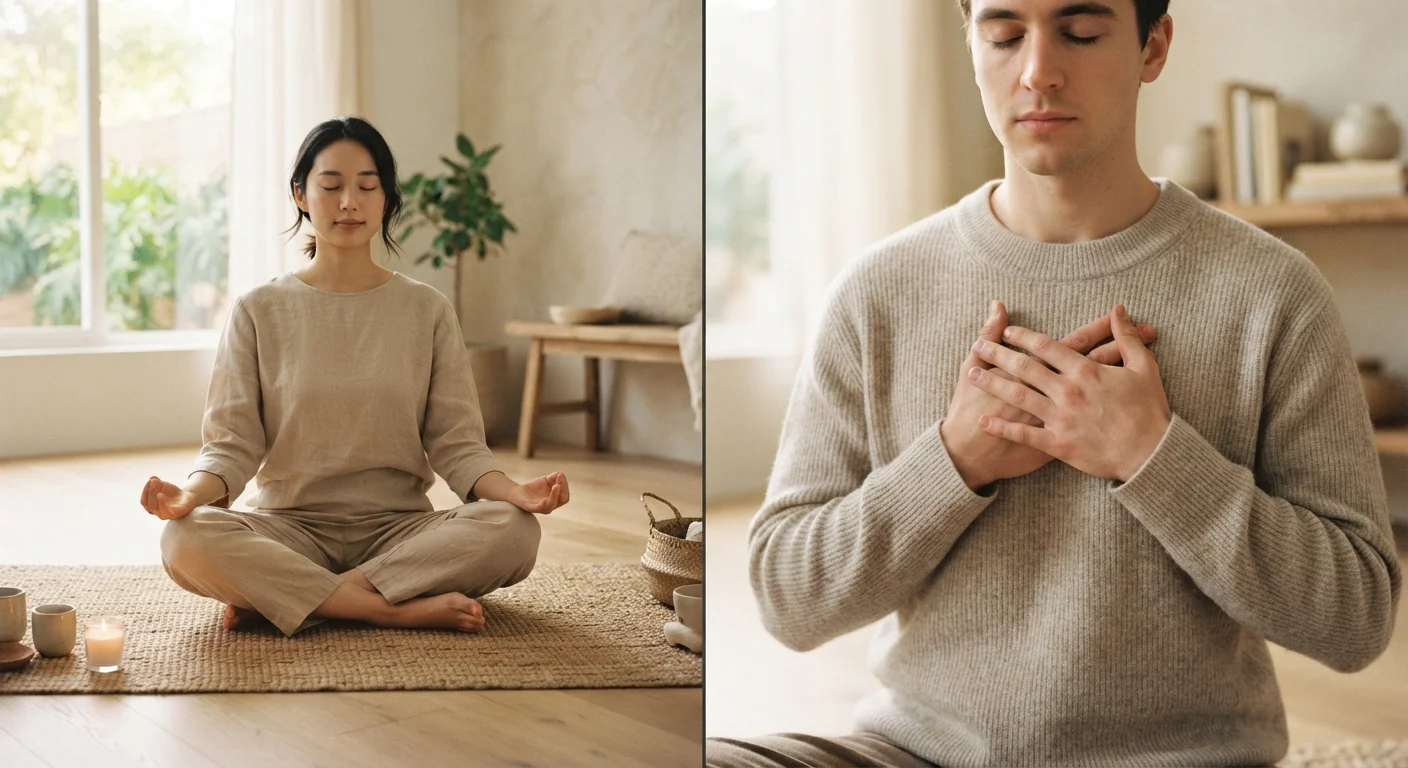
Option A
Meditation
The sustained, mind-training practice.
Best for: Building long-term resilience to stress and developing a steadier baseline mood over weeks and months.
Option B
Deep Breathing
The immediate, body-based reset.
Best for: Quickly calming the nervous system in the moment - during acute stress, anxiety spikes, or before high-pressure situations.
How Each Technique Actually Works
Meditation and deep breathing are often mentioned in the same breath - but they operate through meaningfully different pathways. Understanding those differences helps you reach for the right tool at the right time.
Deep breathing works primarily through the autonomic nervous system. Slow, deliberate exhalations stimulate the vagus nerve, which signals the parasympathetic branch - sometimes called the "rest and digest" system - to counteract the stress response. Heart rate slows, blood pressure eases, and the flood of stress hormones like cortisol begins to subside. This process can take effect within just a few minutes. Common techniques include diaphragmatic breathing (belly breathing), box breathing (inhale-hold-exhale-hold in equal counts), and 4-7-8 breathing. The mechanics are simple enough that virtually anyone can begin immediately with no instruction beyond the basic rhythm.
Meditation, particularly mindfulness-based meditation, works more broadly across the mind-body system over time. Rather than directly triggering a physiological reflex, meditation trains attentional control - the ability to notice thoughts and sensations without automatically reacting to them. Research has found that regular practice is associated with reduced activity in the amygdala (the brain's threat-detection center) and increased connectivity in prefrontal regions involved in emotional regulation. These are gradual changes; they accumulate through consistent practice over weeks and months, not single sessions. For context on how unmanaged stress affects the body at a biological level, see what the science says about stress and the body.
| Criterion | Meditation | Deep Breathing |
|---|---|---|
| Primary mechanism | Attentional training; brain adaptation | Vagal nerve stimulation; autonomic shift |
| Time to noticeable effect | Weeks to months of regular practice | Minutes within a single session |
| Learning curve | Moderate; benefits from guided instruction | Low; basic techniques learned immediately |
| Best use case | Chronic stress; emotional regulation | Acute stress; immediate calming |
| Session length | Typically 10-20 minutes | Can be effective in 2-5 minutes |
| Evidence base | Broad; includes RCTs and meta-analyses | Strong for acute physiological effects |
| Requires quiet environment | Helpful but not always required | Not required; usable anywhere |
When to Use One Over the Other
The clearest way to think about this: deep breathing is acute, meditation is chronic - meaning deep breathing addresses stress in the moment, while meditation addresses your overall relationship with stress over time.
Reach for deep breathing when you're already activated - heart racing before a difficult conversation, shoulders tightening during a hard phone call, or feeling overwhelmed mid-task. You don't need a quiet room or five minutes of stillness. Even four slow breath cycles while seated at your desk can measurably shift your physiological state.
Invest in meditation when you want to change your default stress threshold. If you notice you're easily triggered, frequently anxious, or slow to recover from stressful events, a regular meditation practice - even 10 minutes most mornings - targets those longer-term patterns. It pairs well with other daily mental wellness habits, explored in small habits that support mental wellbeing.
Using Both Together
Deep breathing and meditation aren't competing approaches - they're naturally complementary. Many structured programs, including Mindfulness-Based Stress Reduction, incorporate deliberate breathwork as part of the broader practice. Starting a meditation session with a brief breathing exercise can reduce mental noise and help sustain attention throughout the session.
Interestingly, the two techniques reinforce each other. Opening a meditation session with a few intentional breaths helps settle the nervous system faster, making it easier to sustain focused attention. And regular meditators often report that deep breathing becomes more effective because they've trained the skill of deliberate attention.
If you're uncertain about your current stress levels or what your patterns look like, a structured mental wellness self-check-in can help clarify what you might need most right now.
What the Evidence Shows
Both practices have meaningful research support, though the strength and scope differ.
Deep breathing has robust, well-replicated evidence for acute stress reduction. Studies consistently show reductions in heart rate, blood pressure, and self-reported anxiety following slow-paced breathing exercises. Diaphragmatic breathing in particular has been studied in clinical populations - including people with anxiety and hypertension - with consistently favorable results in the short term.
Meditation carries a broader and longer body of research, including randomized controlled trials. Mindfulness-Based Stress Reduction (MBSR), an 8-week structured meditation program developed at the University of Massachusetts Medical School, has accumulated substantial evidence across domains including chronic pain, anxiety, depression, and stress. A meta-analysis published in JAMA Internal Medicine found moderate evidence that mindfulness meditation programs improved anxiety, depression, and pain, though researchers noted that longer and more rigorous trials are still needed for some claims.
~43%
Adults reporting stress-driven health effects
The American Psychological Association's ongoing Stress in America research has consistently found that a substantial proportion of U.S. adults report stress affecting their physical health.
8 weeks
Duration of standard MBSR meditation program
The Mindfulness-Based Stress Reduction program, among the most studied meditation protocols, is structured as an 8-week course with measurable outcomes studied across multiple clinical trials.
~4 min
Time for slow breathing to reduce acute anxiety
Research on slow-paced breathing (around 6 breath cycles per minute) suggests measurable heart rate variability improvements can occur within a single brief session.
It's worth noting what the research doesn't show: neither technique is a treatment for clinical anxiety disorders, PTSD, or major depression on its own. They can complement professional care - and meditation is increasingly integrated with therapies like CBT, as explored in how CBT and mindfulness-based approaches differ - but they are not substitutes for it. If stress or anxiety is significantly impairing your daily life, please consult a qualified mental health professional.
This article is for general informational purposes only and does not constitute medical or mental health advice. Always consult a qualified healthcare professional for concerns about your mental or physical health.
The content on this site is for informational purposes only and is not a substitute for professional advice. Always consult a qualified professional for guidance specific to your situation.