

Our Verdict
Mood-tracking apps offer genuine benefits for people motivated to build self-awareness and spot behavioral patterns over time. However, they carry real limitations - from oversimplified emotion labeling to data privacy concerns - that users should weigh carefully. Used as a supplement to, not a substitute for, professional support, they can be a practical mental wellness tool.
Best for adults who are generally well, motivated to build daily self-reflection habits, and who understand that an app is a personal awareness tool - not a diagnostic or therapeutic one.
What Mood-Tracking Apps Actually Do
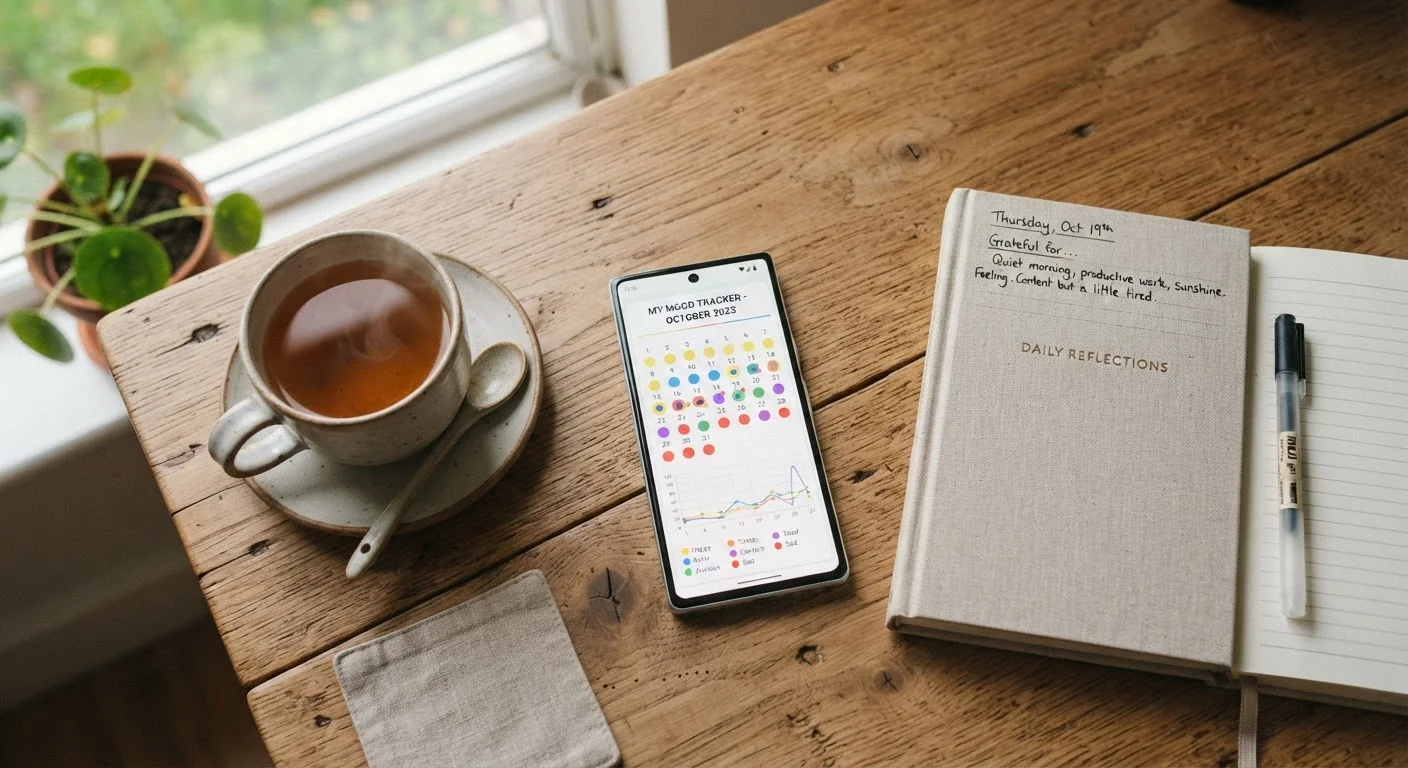
Mood-tracking apps prompt users to log their emotional state - typically once or several times per day - using scales, emoji, word prompts, or short notes. Over time, the app aggregates these entries into charts and trend lines, allowing users to review patterns alongside logged factors like sleep, exercise, or stress levels.
Some apps connect with wearable data, such as heart rate variability, while others remain entirely self-report based. The core premise is that structured, repeated self-observation builds insight. This idea has roots in established therapeutic approaches: mood logging is a standard component of Cognitive Behavioral Therapy (CBT), where tracking thoughts and feelings helps identify unhelpful patterns.
This article provides general health information for educational purposes only and is not a substitute for advice from a qualified mental health professional.
The Genuine Benefits of Self-Tracking
When used consistently, mood-tracking apps offer several real advantages for everyday mental wellness.
Reveals patterns invisible to daily awareness
Reviewing a month of mood data can surface connections - between poor sleep and low mood, or social activity and energy - that feel invisible in the moment but become clear in aggregate.
Low barrier to starting a reflective habit
A quick daily check-in requires far less time and effort than traditional journaling, making it a realistic starting point for people new to self-reflection practices.
Creates a record useful in therapy
Mental health professionals can use logged mood data to identify triggers or treatment response trends, potentially making sessions more focused and productive.
Supports affect labeling - naming emotions
Research in psychology suggests that simply naming an emotional state can reduce its intensity, and mood apps create a structured prompt to do exactly that each day.
Increases awareness of lifestyle-mood links
Many apps allow users to log sleep, exercise, and diet alongside mood, helping users connect daily habits to emotional outcomes over time.
~1 in 5
U.S. adults experience mental illness each year
According to the National Institute of Mental Health, approximately one in five American adults lives with a mental illness - underscoring why accessible self-awareness tools attract interest.
~4 weeks
Typical user engagement window before drop-off
Research on digital health behavior tracking consistently finds that most users disengage within the first month, limiting the usefulness of pattern data for many.
Beyond raw data, the act of pausing to label an emotion - a practice sometimes called "affect labeling" - has been shown in psychological research to reduce the intensity of that emotion. Apps create a built-in prompt for this brief but potentially meaningful pause. For readers interested in broader daily practices that support emotional balance, small evidence-informed habits like these can compound meaningfully over time.
The Real Drawbacks to Consider
Despite their appeal, mood-tracking apps come with limitations that users should understand before building them into a wellness routine.
Emotion scales are blunt instruments
Reducing complex emotional states to a number from one to five or a choice between five emoji flattens nuance. Moods like 'melancholy,' 'restless,' or 'quietly satisfied' rarely fit neatly into predefined categories.
Consistency is hard to maintain long-term
Studies on self-monitoring tools consistently show that engagement drops sharply after the first few weeks. Sporadic data produces misleading patterns and limited insight.
Data privacy policies vary and may be weak
Sensitive emotional data stored by app companies may be shared with third parties or used for advertising purposes. Users should read privacy policies carefully before committing to any platform.
Can increase anxiety or rumination
For some people, repeatedly checking and rating mood throughout the day may amplify self-focus in ways that increase worry rather than reduce it - a risk especially relevant for those with existing anxiety.
Not a substitute for professional support
Apps can support wellness, but they cannot assess mental health conditions, provide treatment, or offer the relational context a trained clinician provides. Treating app data as clinical insight can create a false sense of management.
A Note on Data Privacy
Mood and mental health apps occupy a gray zone in consumer data protection. Unlike medical records, data held by consumer wellness apps is generally not protected under HIPAA in the United States. Before using any mood-tracking app, review its privacy policy to understand how your data is stored, shared, and whether it can be sold. Some apps are explicitly designed with privacy as a priority, while others monetize user data. This is an important factor to weigh, particularly given the sensitivity of emotional health information.
There's also a subtler risk: over-reliance on an app for emotional awareness can paradoxically reduce engagement with deeper reflective practices. A structured journaling approach or a personal mental wellness check-in may offer a richer, more nuanced picture than a five-point emoji scale ever can.
How to Use Mood Apps More Effectively
Getting meaningful value from a mood-tracking app generally requires a few deliberate practices:
- Log at consistent times. Random or sporadic entries distort patterns. Tying a check-in to an existing habit - a morning coffee or evening routine - improves consistency.
- Add brief notes. A numeric rating alone rarely explains why a mood shifted. Even a short phrase provides context when reviewing trends later.
- Review weekly, not just daily. Single-day data is noisy. Weekly reviews reveal the patterns worth paying attention to.
- Treat data as a conversation starter. If you're working with a therapist, your logged trends can be useful material to discuss - not a self-diagnosis.
It's also worth thinking about screen time as part of the equation. Built-in phone tools for managing screen time have real limits, and adding another app to a heavy-use device may not serve everyone equally well.
If you are experiencing persistent low mood, anxiety, or distress, please consult a qualified mental health professional rather than relying on an app for support.
The content on this site is for informational purposes only and is not a substitute for professional advice. Always consult a qualified professional for guidance specific to your situation.