

Why Portion Awareness - Not Portion Control - Is the Better Frame
The phrase "portion control" carries baggage. For many people it implies restriction, counting, and rigid adherence to numbers. Portion awareness is a more useful concept: it's about developing an accurate mental picture of how much you're eating, so that choices become more intentional rather than driven purely by habit, plate size, or distraction.
Research in nutrition science consistently shows that environmental cues - the size of a plate, the opaqueness of a container, whether food is pre-plated or served family style - shape how much people eat, often outside conscious awareness. Portion awareness doesn't eliminate these influences, but it helps you see them more clearly.
This article is general nutrition education, not personalized dietary advice. Individual needs vary based on age, health status, activity level, and other factors. If you have specific health concerns or conditions that affect your diet, consult a registered dietitian or your healthcare provider before making changes.
What you will need
Putting It Into Practice: Your Step-by-Step Guide
The steps below are designed to be adopted gradually. You don't need any special equipment - just a standard plate, some attention, and a willingness to experiment. Start with the tools that make the process easier:
Standard Dinner Plate (9-10 inches)
Provides a consistent visual reference for dividing food groups by plate real estate.
Measuring cups (set of 4)
Useful once or twice to calibrate your eye to common portion sizes - not needed daily.
Small bowl for grains or sides
Helps limit grain and starchy side portions naturally through container size.
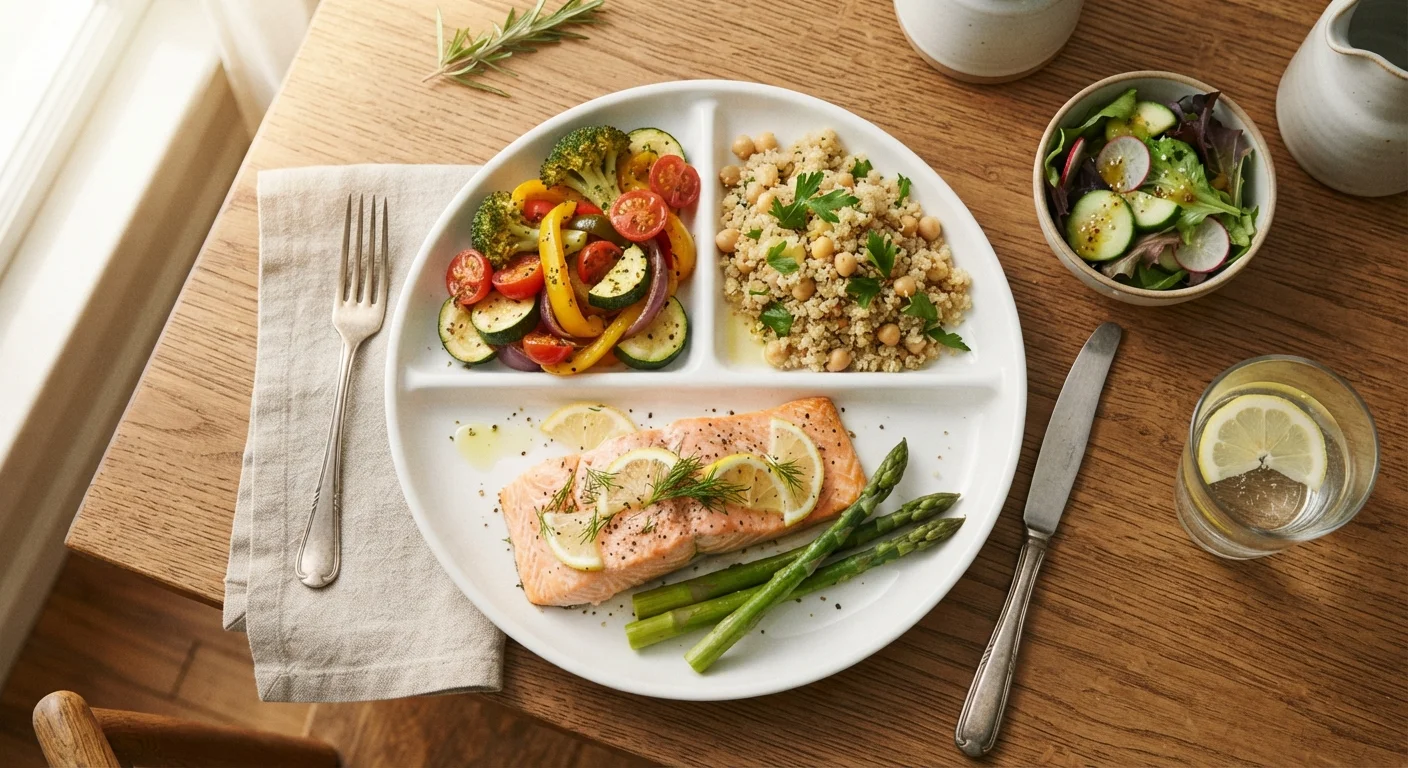
Start with the half-plate vegetable rule
Before adding anything else, fill roughly half your plate with non-starchy vegetables - leafy greens, broccoli, peppers, cucumbers, tomatoes, or whatever you have on hand. This isn't about restriction; it's about structure. When vegetables anchor the plate first, they naturally crowd out excessive portions of calorie-dense foods without requiring any mental math.
Use your hand as a portion guide
Your hand is a built-in measuring tool that travels everywhere with you. Use these general benchmarks as a starting point:
- Protein (chicken, fish, beans, tofu): a portion roughly the size of your palm
- Grains or starchy carbohydrates (rice, pasta, bread): a cupped handful
- Fats (nuts, oils, cheese): a thumb-sized portion
- Vegetables: two open handfuls or more
These are calibration guides, not rigid rules. Body size, activity level, age, and health status all affect individual needs - this is general nutrition education, not a personal prescription.
Check packaged food serving sizes before plating
Packaged foods list a serving size on the Nutrition Facts label, and this number often differs substantially from what people pour or serve themselves. Before plating crackers, cereal, pasta, or sauces, glance at the label's serving size. You don't need to follow it exactly, but knowing it helps you make a more conscious choice. For a deeper look at how to read those labels, see our guide to reading Nutrition Facts labels.
Sit down and remove screen distractions
Eating in front of a television or scrolling through a phone consistently increases total food intake across multiple studies, likely because attention is diverted away from the physical cues of hunger and fullness. For at least one meal per day, sit at a table, put the phone face-down, and focus on the food in front of you. This isn't a moral judgment - it's a practical nudge that supports what researchers call mindful eating: paying attention to taste, texture, and satiety signals.
Pause mid-meal and assess hunger
Halfway through your plate, pause for 60 seconds. Ask yourself honestly: am I still hungry, or am I eating on autopilot? This simple check-in can break the habit of eating past comfortable fullness simply because food is still present. You don't have to stop eating - you're just gathering information about your own signals. Over time, this habit recalibrates your awareness so that fullness becomes a meaningful cue rather than an empty plate.
Adjust gradually, not all at once
Overhauling every meal simultaneously is unsustainable for most people. Instead, apply one new habit per week - the half-plate rule one week, the hand-size guide the next. Small, consistent changes tend to stick better than dramatic overhauls. If you're just getting started with nutrition fundamentals, our nutrition primer for beginners is a useful foundation to read alongside this guide.
Smaller Plates Work - With a Caveat
Switching from a 12-inch to a 9- or 10-inch dinner plate can reduce portion sizes without any conscious effort, a finding backed by behavioral nutrition research. However, this effect can reverse if you fill the smaller plate multiple times. Use a smaller plate as a starting-point nudge, not a guaranteed fix.
For context on how meal timing fits into the larger picture, see our article on whether meal timing actually matters. And if you're thinking about what to stock in your kitchen to make balanced plating easier, a weekly grocery checklist can help you keep the right foods on hand.
This Is Not a Weight-Loss Protocol
Portion awareness is a general healthy-eating habit, not a medically supervised weight-management plan. This guide does not provide calorie targets, weight-loss projections, or dietary prescriptions. If you have a health condition, are pregnant, or have been advised by a clinician to follow a specific dietary plan, follow that guidance and consult your provider before adopting new eating habits.
This article is for general informational and educational purposes only and is not a substitute for professional medical or dietary advice. Always consult a qualified healthcare provider for guidance tailored to your individual health needs.
The content on this site is for informational purposes only and is not a substitute for professional advice. Always consult a qualified professional for guidance specific to your situation.