

Summary
32 items · 20-40 minutes
Why a Weekly Grocery Checklist Matters for Nutrition
Most Americans fall short on vegetables, fiber, and key micronutrients - not because they lack intention, but because shopping without a framework leads to an unbalanced fridge. A structured weekly grocery checklist addresses that problem before you ever set foot in the store.
If you're newer to thinking about food quality and variety, the nutrition primer for beginners covers the foundational concepts that make this checklist more meaningful. For a deeper look at the vitamins and minerals your body relies on from food, see our guide to essential vitamins and minerals.
This checklist is organized by food group. You don't need every single item every week - the goal is breadth and variety over time, not a perfectly packed cart every trip.
This Is Education, Not a Prescription
This checklist is designed as general nutrition education for healthy adults and is not personalized dietary advice. People with specific health conditions, food allergies, or special dietary needs - including pregnant individuals, children, and older adults - should consult a registered dietitian or healthcare provider before making significant changes to their diet. Individual nutritional needs vary considerably.
What to Look for in Each Category
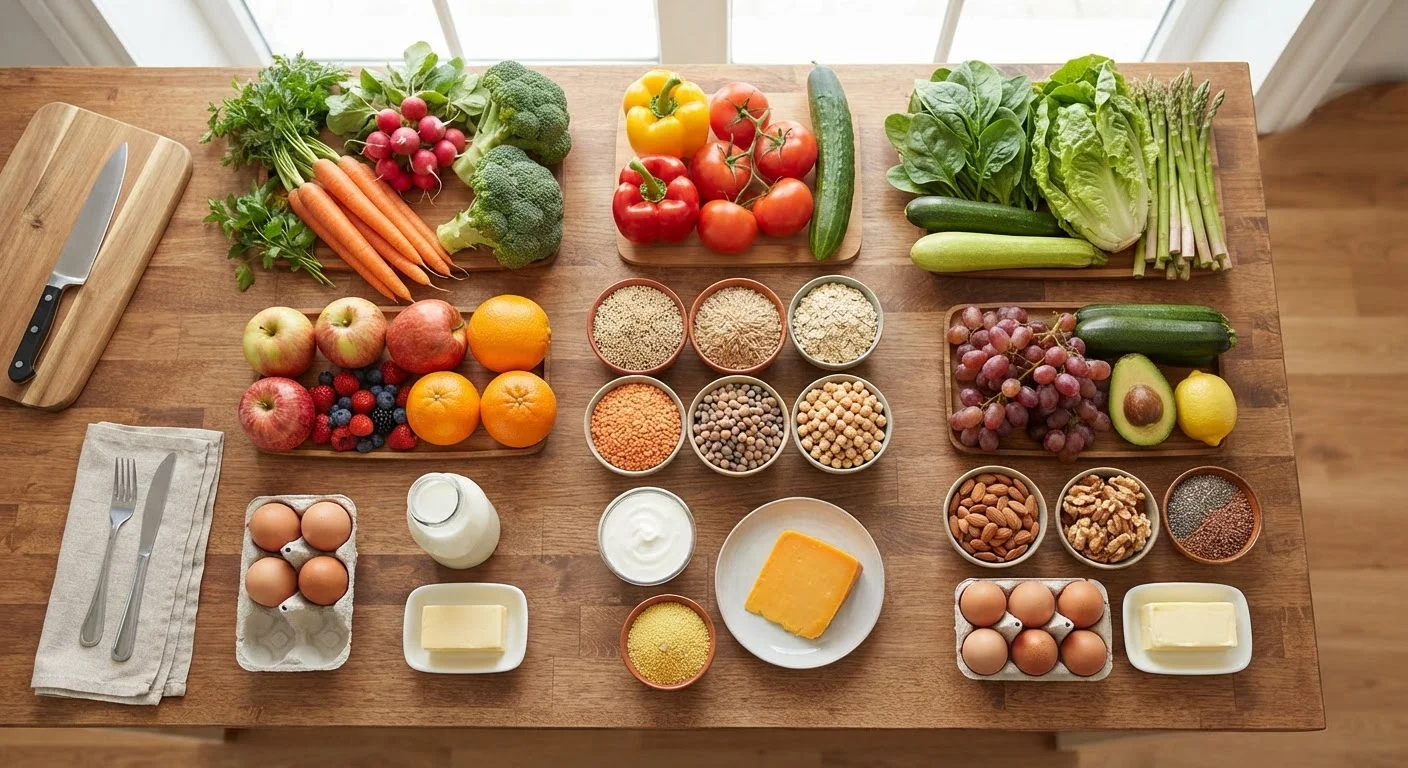
Each food group below serves a different nutritional role. Produce supplies vitamins, minerals, and fiber. Proteins support muscle, immune function, and satiety. Whole grains deliver sustained energy. Dairy or fortified alternatives provide calcium and vitamin D. Healthy fats support cell function and nutrient absorption.
The checklist below covers all of these. Use it as a reference rather than a rigid prescription - swap items based on what's in season, what your household prefers, and what fits your budget. Our guide to healthy eating on a budget offers practical strategies for keeping costs manageable without sacrificing variety.
Vegetables
Fruits
Proteins
Whole Grains
Dairy and Fortified Alternatives
Healthy Fats and Nuts
Pantry Staples
Hydration
Once your groceries are home and meals are being prepared, portion awareness helps you translate a well-stocked kitchen into well-composed meals. And if you're pairing good nutrition with physical activity, see our framework for fitting exercise into a packed week.
Don't Overlook Sodium and Added Sugar
Many pantry staples - canned goods, sauces, condiments, flavored yogurts, and cereals - contain more sodium or added sugar than the label implies at first glance. When choosing packaged items, check the Nutrition Facts panel and aim for lower-sodium canned goods and products with minimal added sugars. These two ingredients are among the most over-consumed in the average American diet, according to dietary guidelines.
This article provides general nutrition education and is not a substitute for personalized advice from a registered dietitian or qualified healthcare provider. Individual needs vary based on health status, age, and other factors.
The content on this site is for informational purposes only and is not a substitute for professional advice. Always consult a qualified professional for guidance specific to your situation.