

Where the Term Comes From
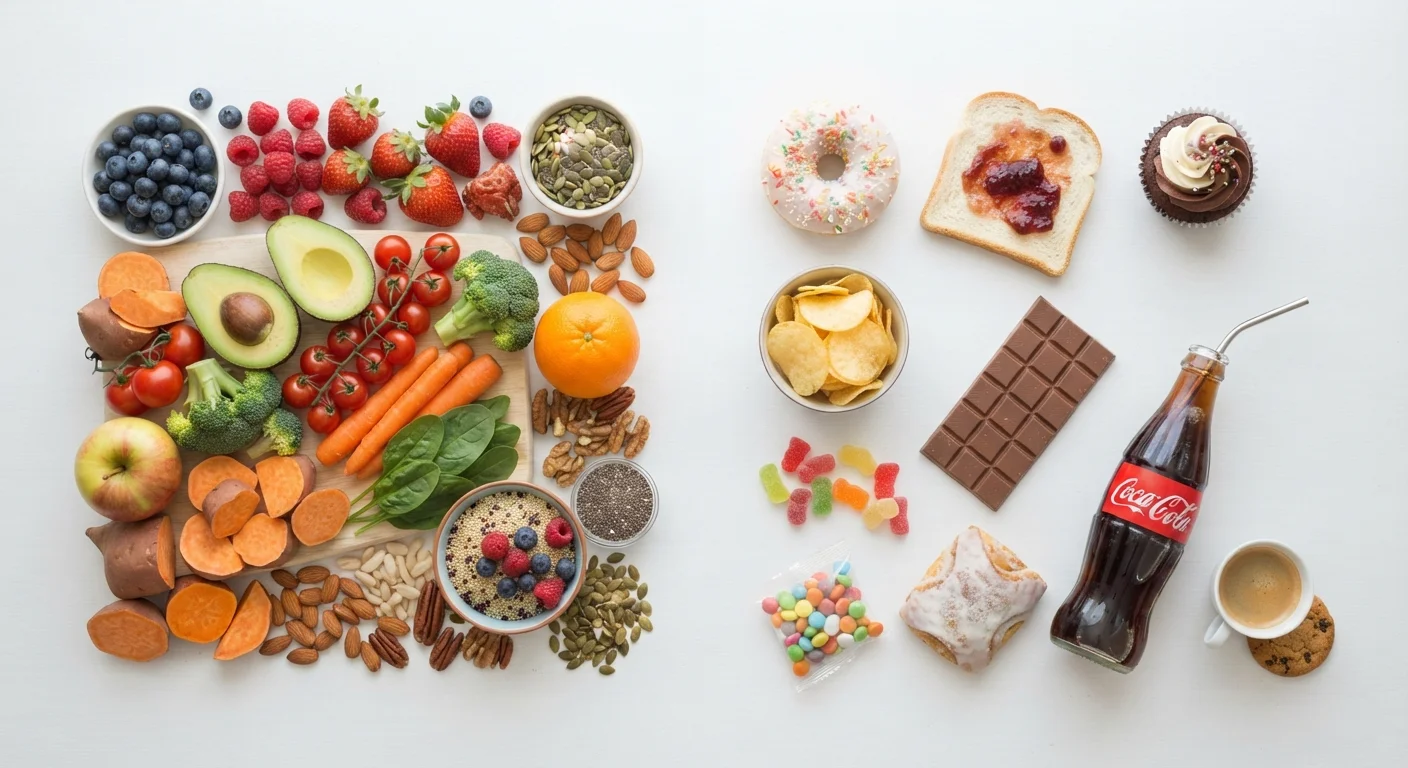
The phrase "empty calories" has roots in public health nutrition and was widely popularized through U.S. dietary guidelines, which specifically flag added sugars and solid fats as the primary contributors. These two ingredients show up in enormous quantities in the American food supply - think sweetened beverages, baked goods, fried snacks, and fast food - and they supply caloric energy without meaningful vitamins, minerals, fiber, or protein.
It's worth noting that virtually no food is completely devoid of all nutrients. Even table sugar technically contains trace amounts of certain compounds. The "empty" descriptor is shorthand for a low nutrient-to-calorie ratio - a way of flagging that some foods return very little nutritional value per calorie consumed. Understanding this framing makes the term more useful and less moralistic.
Not All Processed Foods Are Empty-Calorie Foods
"Processed" is a broad category that includes everything from canned beans to packaged cookies. Many minimally processed foods - like canned fish, frozen vegetables, or fortified cereals - retain significant nutritional value. The degree and purpose of processing, along with the resulting nutrient profile, matters more than the processing label itself.
The Nutrient Density Framework
A more precise way to think about empty calories is through the lens of nutrient density - how many beneficial nutrients a food delivers per calorie. Spinach, lentils, and salmon score high: they pack fiber, protein, vitamins, and minerals into relatively modest calorie counts. A sugar-sweetened soda scores low: it may deliver 150 or more calories with essentially no fiber, protein, or micronutrients.
This framework helps move the conversation away from guilt about specific foods and toward patterns over time. To understand how the macronutrients themselves - carbohydrates, protein, and fat - function in this picture, see our macronutrients explainer. The goal isn't to eliminate every low-nutrient food; it's to make sure nutrient-dense options form the foundation of what you eat regularly.
17 tsp
Average daily added sugar intake for U.S. adults
According to CDC data, American adults consume roughly 17 teaspoons of added sugar per day - well above the American Heart Association's recommended limit of 6-9 teaspoons.
~47%
Share of U.S. calories from low-nutrient foods
Research published in JAMA Internal Medicine estimated that nearly half of calories consumed by American adults come from low-quality carbohydrates and solid fats, underscoring the scale of the empty-calorie challenge.
#1
Sugary beverages as top added-sugar source
The CDC consistently identifies sugar-sweetened beverages - sodas, energy drinks, sports drinks - as the single largest source of added sugars in the American diet.
When It Actually Matters - and When It Doesn't
The practical importance of empty calories depends heavily on context. For someone eating a varied, whole-foods-based diet with adequate protein, fiber, and micronutrients, an occasional serving of chips or a slice of birthday cake doesn't meaningfully undermine their nutritional status. The body is resilient, and one meal or snack doesn't define long-term health.
Where empty calories genuinely matter is when they regularly displace more nutritious foods. If a significant portion of daily calories comes from added sugars or heavily processed snacks, there's less room - in both caloric budget and appetite - for foods that supply the nutrients the body depends on. This displacement effect is well-documented in public health research on dietary patterns.
Focus on Crowding In, Not Cutting Out
Rather than fixating on eliminating empty-calorie foods entirely, try "crowding in" more nutrient-dense options first. When meals include adequate protein, fiber-rich vegetables, and whole grains, there's naturally less room - and often less craving - for low-nutrient snacks. This approach tends to feel less restrictive and supports lasting habits.
It also matters more for people with lower overall caloric needs, such as older adults or less active individuals, who have a smaller margin before their caloric budget is met. For very active people with higher energy requirements, the nutritional stakes of some empty-calorie foods shift somewhat, though nutrient density still matters.
For a deeper look at how other widely repeated nutrition claims hold up under scrutiny, explore common nutrition myths debunked.
Practical Steps for Everyday Eating
Reducing empty calories doesn't require overhauling your entire diet overnight. Small, sustainable shifts tend to stick better than dramatic restrictions. Start by identifying your primary sources - for many Americans, sweetened beverages are the single largest contributor of added sugars and empty calories. Swapping even some of these for water, unsweetened coffee, or tea can make a measurable difference in overall diet quality.
Reading food labels is a practical skill that makes this easier. Look for added sugars listed separately on the Nutrition Facts panel, and compare the fiber and protein content relative to calorie count. Learning to read a Nutrition Facts label takes practice but quickly becomes second nature.
Ultimately, healthy eating is about the cumulative pattern - not perfection at every meal. If you have specific health conditions or concerns about your diet, a registered dietitian can provide guidance tailored to your individual needs.
This article is for general informational and educational purposes only and is not a substitute for professional medical or dietary advice. Consult a qualified healthcare provider or registered dietitian for guidance specific to your health situation.
Frequently Asked Questions
Sugary beverages like sodas and energy drinks top the list, followed by candy, pastries, cookies, and heavily processed snack foods. Alcohol also contributes empty calories. These foods tend to be high in added sugars and/or solid fats with little nutritional benefit.
Consuming them occasionally in a generally nutritious diet is unlikely to cause harm. The concern arises when empty-calorie foods crowd out nutrient-dense ones regularly, potentially contributing to nutrient gaps over time. Balance and overall diet pattern matter more than any single food.
Pure fruit juice occupies a middle ground - it contains natural sugars and some vitamins but lacks the fiber of whole fruit. It's not the nutritional equivalent of soda, but it also isn't the same as eating a piece of fruit. Whole fruit is generally the more nutrient-dense choice.
Check the Nutrition Facts label for high added sugars and minimal fiber, protein, or micronutrients relative to the calorie count. A food with 200 calories but near-zero protein, fiber, vitamins, or minerals is a textbook example. <a href="/health-wellness/nutrition-basics/reading-a-nutrition-facts-label-without-getting-lost">Reading a Nutrition Facts label</a> can help you spot these patterns quickly.
Excess calories from any source - including nutrient-dense foods - can contribute to weight gain if they exceed what the body uses. Empty-calorie foods may be particularly easy to overconsume because they tend to be less filling than fiber- and protein-rich alternatives. Speak with a registered dietitian for personalized guidance.
The content on this site is for informational purposes only and is not a substitute for professional advice. Always consult a qualified professional for guidance specific to your situation.