

Why the Nutrition Facts Label Exists
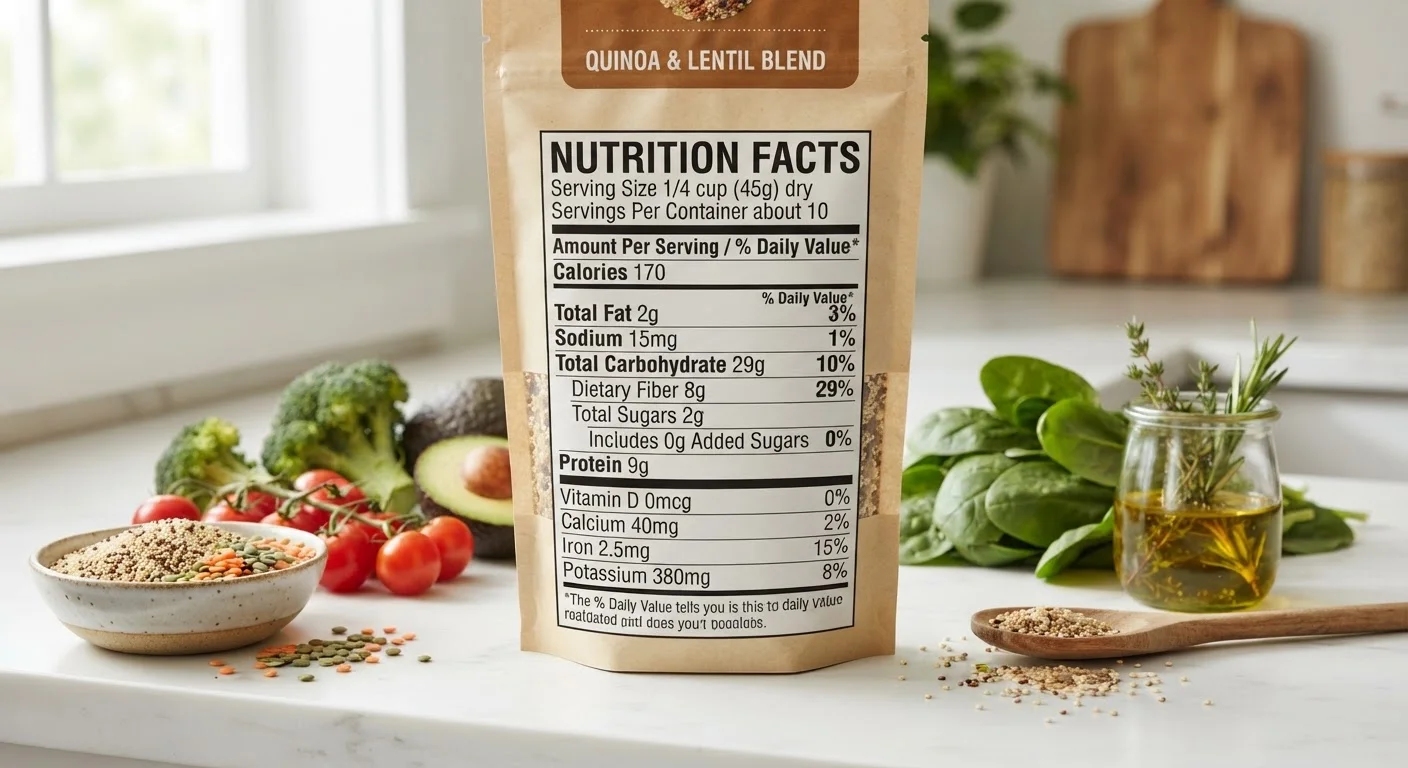
The Nutrition Facts label is a federally mandated tool, required on most packaged foods sold in the United States. The FDA updated its format in 2016 - the first major redesign since 1994 - to reflect updated nutritional science, including a new dedicated line for added sugars and a larger, bolder calorie display. The goal is to give consumers consistent, standardized information that makes genuine comparison possible across thousands of different products.
Understanding how to read it is a foundational skill for anyone trying to eat more intentionally. If you've ever wondered how decoding nutrition labels compares to reading other product labels, our guide to reading a skincare ingredient list shows how similar label-literacy principles apply in a completely different context.
This Is General Information, Not Medical Advice
Nutrition Facts labels are a public-health tool, but individual dietary needs vary based on age, health status, medications, and other factors. If you have a chronic condition, food allergy, or specific health goal, consult a registered dietitian or your healthcare provider before making significant dietary changes.
What to Know Before You Start
Before walking through the label section by section, a few grounding points help everything else make sense. First, the label describes the food as packaged - it doesn't account for preparation methods (adding butter, salt, or oil during cooking). Second, it reflects average nutrient content based on laboratory analysis, not a precise guarantee for every single unit. Third, no single food makes or breaks a diet; the label is most useful as a comparison and awareness tool rather than a strict scorecard.
For those who also buy pet food, a similar label-reading logic applies - though the regulatory framework differs. See our related guide on reading a pet food label without getting lost in the fine print.
What you will need
Packaged food product
Provides a real Nutrition Facts label to practice reading as you follow the steps.
Pen and notepad (or notes app)
Useful for jotting down key values when comparing multiple products at the store.
Step-by-Step: Reading the Label
Follow these steps the next time you pick up a packaged food item. You don't need to memorize every detail - the goal is to build a reliable, repeatable reading habit.
Find and anchor on the serving size
The very first line under "Nutrition Facts" states the serving size - for example, "2 crackers (28g)" - followed by the number of servings per container. Every single number on the rest of the label is based on that one serving. If you eat double the serving size, you double every calorie, fat gram, and milligram of sodium. This is the single most important anchor point on the entire label.
Read the calorie count in context
Calories measure total energy per serving. The large, bold calorie number reflects energy from all three macronutrients combined: fat (9 calories per gram), carbohydrates (4 cal/g), and protein (4 cal/g). Calories alone don't tell you whether a food is nutritious - a handful of nuts and a handful of candy may have similar calorie counts but very different nutritional profiles. Use calories as one data point, not the whole picture.
Identify nutrients to limit
The middle section of the label lists nutrients that, for most Americans, are consumed in excess: saturated fat, trans fat, cholesterol, and sodium. Trans fat has no established safe level, so aim for as close to zero as possible. Sodium is especially easy to overconsume in packaged and restaurant foods. For context on how added sugars fit into this picture, see our guide on what empty calories actually means.
Identify nutrients to seek out
Below the nutrients-to-limit section, labels list dietary fiber, vitamin D, calcium, iron, and potassium - all nutrients that Americans commonly fall short on. A higher %DV here is generally favorable. Dietary fiber, in particular, supports digestive health and satiety; learn more in our deep-dive on fiber and why most Americans don't get enough.
Interpret the % Daily Value column
The % Daily Value (%DV) column on the right is based on a 2,000-calorie-per-day reference diet established by the FDA. It tells you what percentage of the recommended daily amount for each nutrient one serving provides. Because individual calorie and nutrient needs vary significantly by age, sex, activity level, and health status, treat %DV as a relative comparison tool - most useful when comparing two similar products - rather than a precise personal target.
Use the label to compare products
The label's greatest practical value comes from side-by-side comparison. When choosing between two yogurts, two cereals, or two frozen meals, align them on the same serving size (or calculate per 100g if they differ) and compare %DV for the nutrients that matter most to you. This approach removes marketing language from the equation and grounds your choice in actual nutritional data. For more ways to apply this skill at the store, see our weekly grocery checklist for a balanced kitchen.
Use the 5% and 20% Rule as a Quick Guide
Nutrition experts often reference a simple shortcut: a %DV of 5% or less per serving is considered low for any nutrient, while 20% or more is considered high. Use this to quickly gauge whether a food is a meaningful source of a nutrient you want more of - or one you're trying to limit.
Putting It All Together
A Nutrition Facts label rewards consistent, comparative use. The more often you read labels across similar products, the faster your eye learns what a meaningful difference in sodium or fiber actually looks like. Common nutrition myths - like the idea that all fat is bad - often dissolve once you start reading labels carefully and seeing how different fats are categorized and quantified. Pair label-reading with broader habits like portion awareness for a more complete picture of day-to-day nutrition.
Serving Size Is Not a Recommendation
The serving size listed on a label is a standardized reference amount established for comparison purposes - it is not a suggestion of how much you should eat. How many servings you actually consume will multiply every nutrient value accordingly. Always check how many servings are in the entire package.
This article is for general informational and educational purposes only and does not constitute medical or dietary advice. Individual nutritional needs vary. Consult a qualified healthcare provider or registered dietitian for guidance specific to your health situation.
The content on this site is for informational purposes only and is not a substitute for professional advice. Always consult a qualified professional for guidance specific to your situation.