

What 'Low-Impact' Actually Means
The term low-impact refers to exercise in which at least one foot — or another body part — remains in contact with a surface at all times, or where the body is otherwise supported (such as in water). This mechanical distinction matters because it significantly reduces the ground reaction forces transmitted through the joints, particularly the knees, hips, and lower spine.
Low-impact exercise is not inherently easy. A vigorous cycling session or a challenging water aerobics class can elevate heart rate and recruit large muscle groups just as effectively as running — without the repetitive impact load that accumulates over miles on hard pavement. The federal physical activity guidelines make clear that both moderate- and vigorous-intensity activity count toward weekly targets, regardless of whether the format is high- or low-impact.
Understanding the distinction helps people choose formats that match their physical condition, goals, and long-term sustainability — not just what's trending at the gym.
Swimming and Water-Based Exercise
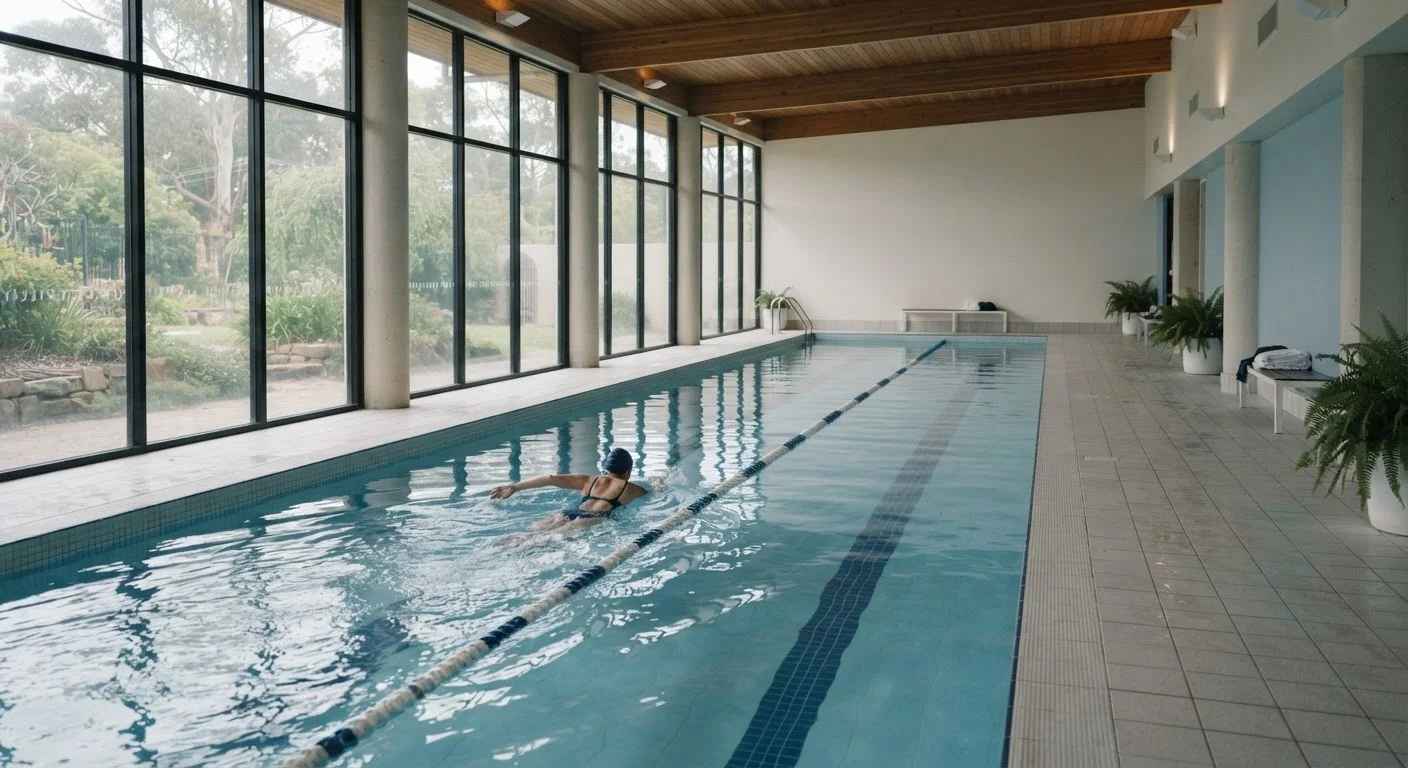
Water supports roughly 90% of body weight when submerged to the neck, making swimming and aquatic exercise among the most joint-friendly options available. Resistance from water also provides a natural strengthening stimulus for muscles throughout the body.
Who it suits most: People with osteoarthritis, those recovering from lower-body injuries, pregnant individuals (with provider clearance), and older adults with balance concerns. Water's buoyancy removes fall risk while still challenging cardiovascular and muscular fitness.
Practical note: Water aerobics classes are widely available at community pools and YMCAs, often at low cost. Lap swimming requires basic technique but is learnable at most adult skill levels.
Water supports up to 90% of body weight, making swimming exceptionally gentle on joints.
Cycling (Stationary or Outdoor)
Cycling keeps the body seated and distributes load through the saddle rather than concentrating it through the knees and hips the way running does. It effectively trains cardiovascular endurance and the major muscles of the lower body.
Who it suits most: People with knee or hip discomfort who can tolerate a bent-knee position, those building aerobic base after a sedentary period, and individuals who want controllable intensity. Stationary bikes allow precise resistance and speed adjustments without outdoor hazards.
Practical note: Proper saddle height matters significantly for knee health. A poorly fitted bike can create rather than prevent strain — it's worth a basic fitting assessment, especially for stationary setups used regularly.
Cycling builds cardiovascular fitness and leg strength without the impact load of running.
Walking
Walking is the most widely practiced form of exercise among American adults and has a strong research base supporting its cardiovascular, metabolic, and mental health benefits. It does involve some impact — more than cycling or swimming — but substantially less than running.
Who it suits most: Beginners, older adults maintaining mobility, people managing weight or blood sugar, and anyone building a foundation before progressing to more demanding formats. Walking has real benefits and real limitations — it may not be sufficient as a sole exercise modality for everyone, but it is rarely a wrong starting point.
Practical note: Brisk walking — a pace where conversation is possible but somewhat effortful — meets the threshold for moderate-intensity aerobic activity per national guidelines.
Brisk walking qualifies as moderate-intensity aerobic activity and is accessible to nearly everyone.
Elliptical Training
The elliptical machine simulates the motion of walking or running while keeping feet in contact with the pedals throughout the stride cycle. Published biomechanical research consistently shows lower peak joint forces on the elliptical compared to treadmill running at similar intensities.
Who it suits most: People who want to approximate a running workout without running's impact, those transitioning back to higher-intensity cardio after injury, and gym-goers who find stationary cycling uncomfortable for extended durations.
Practical note: Upper-body handlebars on many machines allow arm engagement, increasing caloric expenditure and recruiting more muscle groups simultaneously — a useful feature for those with limited exercise time.
Elliptical machines replicate running's cardiovascular demand with significantly less joint loading.
Yoga and Pilates
Both yoga and Pilates emphasize controlled movement, breath coordination, flexibility, and core stability — and neither involves impact. They differ in structure: yoga integrates mindfulness and static or flowing postures, while Pilates focuses more narrowly on spinal alignment and deep muscular activation.
Who it suits most: People with chronic low back pain (supported by a growing body of evidence for yoga in particular), those prioritizing balance and fall prevention, older adults maintaining range of motion, and anyone managing stress-related tension that affects physical functioning.
Practical note: Not all yoga styles are equally low-intensity. Hot yoga and advanced vinyasa classes can be physically demanding. Beginners and those with health considerations should start with beginner or restorative classes and inform instructors of any limitations.
Yoga and Pilates build core stability and flexibility without any impact on the joints.
Resistance Training with Controlled Movement
Strength training performed at a controlled tempo — whether using machines, free weights, resistance bands, or bodyweight — is generally low-impact in the biomechanical sense. It does not involve the repeated ground-contact forces of running or jumping, yet it provides stimulus for muscle and bone adaptation that aerobic low-impact formats alone cannot fully replicate.
Who it suits most: Older adults aiming to preserve muscle mass and bone density (sarcopenia and osteoporosis are significant public health concerns), rehabilitation patients following a clinician-guided program, and anyone building foundational strength alongside aerobic fitness.
Practical note: Machines are often recommended for beginners or those returning from injury because they constrain movement paths, reducing the technical learning curve and risk of improper loading. See a broader comparison of free weights and resistance machines for context.
Controlled strength training builds bone and muscle density — benefits aerobic low-impact options cannot fully provide.
Finding the Right Fit for Your Situation
No single exercise format is right for everyone. The options below serve a wide range of needs, but individual health history, current fitness level, and any existing musculoskeletal or cardiovascular conditions should always shape your choices. If you're returning to exercise after a long break, low-impact formats are often a sensible starting point precisely because they allow gradual progression with reduced injury risk.
Progress Still Matters in Low-Impact Exercise
Choosing a low-impact format doesn't mean staying at the same effort level indefinitely. Gradual progression — increasing duration, resistance, or intensity over time — is what drives continued fitness adaptations. If your routine has felt equally easy for several weeks, that's a signal to adjust. Track your sessions and look for opportunities to add a few minutes, a bit more resistance, or a faster pace.
It's also worth noting that low-impact exercise doesn't preclude strength work. Resistance training performed with controlled movement — whether on machines or with free weights — generally qualifies as low-impact, and building muscle is important across all age groups. See our comparison of free weights versus resistance machines for practical guidance on that decision.
Equally, if time is the barrier rather than joint health, low-impact formats can be structured efficiently. Our guide to building a weekly routine with limited time offers a realistic framework. And if you're questioning whether your current routine is actually helping, signs your routine may be working against you is worth reviewing.
This article is for general informational and educational purposes only and is not a substitute for professional medical advice. Consult a qualified healthcare provider before beginning any new exercise program, particularly if you have a chronic condition, injury history, or are pregnant.
The content on this site is for informational purposes only and is not a substitute for professional advice. Always consult a qualified professional for guidance specific to your situation.