

Start here
Why Starting From Zero Is Actually an Advantage
Build your foundation
Core Concepts Every Beginner Should Understand
Set expectations
Setting Realistic Expectations
Take action
Your First Four Weeks: A Practical Starting Point
Support your progress
Recovery, Nutrition, and Sleep: The Hidden Half of Fitness
Keep growing
When to Adjust, Progress, or Seek Guidance
Why Starting From Zero Is Actually an Advantage
Counterintuitively, complete beginners have a significant physiological edge: the human body responds most dramatically to exercise stimuli it has never encountered before. This phenomenon — sometimes called beginner gains in fitness circles — means that modest, consistent effort in your first weeks and months produces faster measurable improvements than the same effort would in a seasoned exerciser.
There's also a psychological clean slate. Without ingrained habits or past injuries shaping your approach, you have the freedom to build routines that genuinely fit your life. Physical fitness is not a destination reserved for athletes — it's a capacity every body can develop, at any starting point.
If you're also working on other foundational life habits, you may find parallels in how small, structured steps compound over time. The same logic that applies to starting a budget from scratch — see our beginner's guide to personal budgeting — applies equally well here: clarity, consistency, and realistic expectations matter far more than perfection.
Core Concepts Every Beginner Should Understand
Before lacing up your shoes, a few foundational principles will shape everything that follows.
Progressive overload
Gradually increasing the difficulty of exercise over time so your body continues to adapt and improve, rather than hitting a plateau.
Cardiovascular endurance
The ability of your heart and lungs to sustain physical activity over time. It improves with regular aerobic exercise like walking, cycling, or swimming.
Muscular strength
The maximum force a muscle can produce in a single effort. Resistance training — including bodyweight exercises — builds and maintains it.
DOMS (Delayed Onset Muscle Soreness)
Muscle soreness that appears 12–48 hours after unfamiliar exercise. It's a normal sign that your muscles are adapting, and it typically fades within a few days.
Rest day
A day with no intense exercise, allowing muscles to repair and grow stronger. Rest days are a planned, essential part of any fitness routine.
Aerobic activity
Exercise that raises your heart rate and breathing for a sustained period, such as brisk walking, jogging, or swimming. It benefits heart and lung health.
Progressive overload is the engine of fitness improvement. It means gradually increasing the challenge placed on your body — through more repetitions, more resistance, or longer duration — so that your muscles, heart, and lungs continue adapting. Without it, progress stalls; with too much too soon, injury risk rises.
The three pillars of fitness most relevant for beginners are cardiovascular endurance (how efficiently your heart and lungs work), muscular strength and endurance (what your muscles can produce and sustain), and flexibility or mobility (your range of motion). A balanced routine addresses all three over time, though beginners don't need to target all three simultaneously from day one.
Understanding these concepts early prevents two of the most common beginner mistakes: doing too much at once and doing the same thing indefinitely without adjustment.
Setting Realistic Expectations
Fitness marketing often sets unrealistic timelines. Research-grounded expectations look different — and more sustainable.
- Cardiovascular improvements typically become noticeable within four to six weeks of consistent aerobic activity.
- Strength gains in true beginners can appear within two to four weeks, largely due to neurological adaptations (your brain getting better at recruiting muscle fibers) before muscle size changes meaningfully.
- Body composition changes are slower and influenced by many factors beyond exercise alone, including nutrition and sleep.
The U.S. Department of Health and Human Services' Physical Activity Guidelines for Americans recommends that adults aim for at least 150 minutes of moderate-intensity aerobic activity per week, plus muscle-strengthening activities on two or more days. For a beginner, working toward this target gradually over several weeks is a sound approach.
Track Effort, Not Just Time
Rather than fixating on calories burned or miles logged, beginners often benefit most from tracking whether they showed up and how they felt. A simple journal noting 'completed,' 'felt hard,' or 'felt manageable' provides useful information about your body's adaptation without adding pressure. After four weeks, patterns in that data will tell you more than any fitness app.
It's also worth recognizing that fitness exists alongside mental wellness — consistent physical activity is associated with improvements in mood and stress resilience. For readers building multiple wellness habits at once, our guide on starting a daily mental wellness routine offers a complementary starting point.
Your First Four Weeks: A Practical Starting Point
The goal of your first month is not transformation — it's habit formation. Here's a simple, adaptable framework:
- Weeks 1–2: Three days of 20–30 minutes of brisk walking or another low-impact activity you enjoy. Focus entirely on showing up consistently, not on intensity.
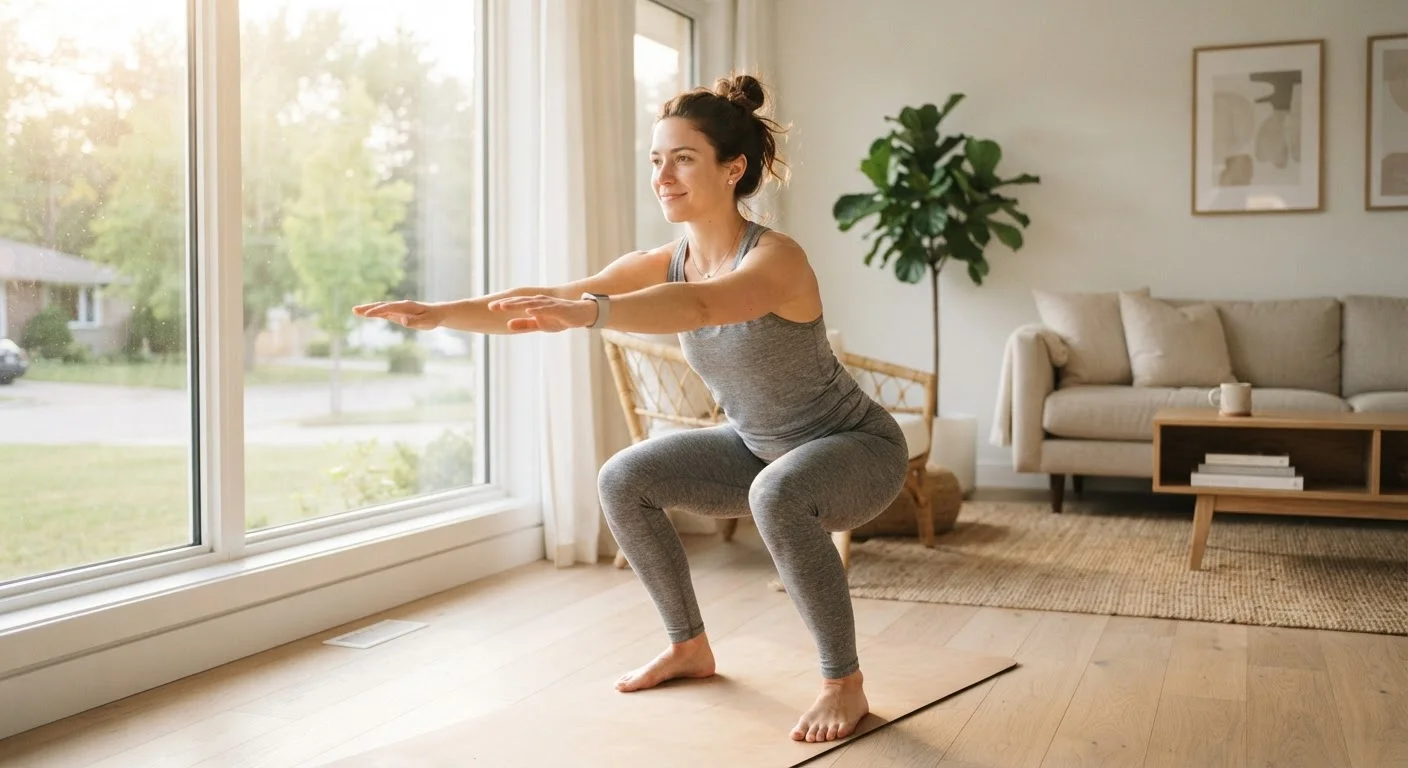
- Weeks 3–4: Add two days of basic bodyweight exercises — squats, modified push-ups, and a simple core exercise like a plank hold. Keep sessions short (15–20 minutes) and rest adequately between days.
No gym, no equipment, and no prior experience are required for this framework. The emphasis on walking is intentional: it is among the most well-researched physical activities for broad health benefits and carries a very low injury risk for most people.
As your fitness level builds over months, your body's needs will shift. Our article on physical activity across every decade of adult life is a useful reference for understanding how those needs evolve over time.
Recovery, Nutrition, and Sleep: The Hidden Half of Fitness
Exercise is the stimulus; recovery is when the adaptation actually occurs. Beginners frequently underestimate this side of the equation.
Rest days are not optional extras — they are when muscle tissue repairs and strengthens. Building in at least one to two full rest or light-activity days per week reduces injury risk and supports long-term progress.
Nutrition plays a direct role in how well you recover and perform. Adequate protein supports muscle repair; carbohydrates fuel activity; and sufficient overall calorie intake prevents fatigue. For a grounded introduction to eating well in support of an active lifestyle, explore our nutrition primer for beginners. General eating guidance is also available through our Nutrition Basics hub.
Sleep is perhaps the most undervalued recovery tool available. Research consistently links poor sleep with reduced strength, slower recovery, and higher injury risk. Our article on sleep and physical performance explains this connection in practical detail.
Special Populations: A Reminder
General fitness guidance is not one-size-fits-all. Older adults, people managing chronic conditions such as diabetes or heart disease, those who are pregnant, and individuals with orthopedic concerns all have specific needs that general beginner advice may not address safely. If you fall into any of these groups, please consult a qualified healthcare provider or certified exercise professional before starting a new routine.
When to Adjust, Progress, or Seek Guidance
Knowing when to change course is as important as knowing how to start. Two signals worth watching:
- You've plateaued: If the same workout feels too easy and you're not increasing challenge gradually, your body has adapted and needs a new stimulus. This is a good problem — it means you've built a base.
- Something hurts: Muscle soreness is normal; joint pain, sharp pain, or persistent discomfort is not. Stop the activity causing pain and consult a healthcare provider.
More exercise is not always better, and common pitfalls like overtraining, skipping recovery, or following imbalanced routines are worth understanding early. Our article on signs your exercise routine might be working against you covers the warning signs clearly.
If you've been inactive for a significant period and are returning rather than starting fresh, the approach differs — see our guidance on getting back to exercise after a long break for a tailored framework.
Above all: if you have a chronic health condition, are pregnant, are significantly overweight, or have experienced cardiac symptoms, speak with a qualified healthcare provider before beginning any new exercise program.
This article is for general informational and educational purposes only and is not a substitute for professional medical advice, diagnosis, or treatment. Always consult a qualified healthcare provider with questions about your individual health or before beginning a new fitness program.
Frequently Asked Questions
Most evidence-based guidelines suggest 3–5 days per week for beginners, including both movement days and rest or light-activity days. Starting with three days and building gradually reduces injury risk while still producing measurable improvements. The key is consistency rather than volume early on.
No — a gym is not required to build solid baseline fitness. Bodyweight exercises like squats, push-ups, and walking can deliver significant benefits with no equipment. As your fitness level grows, you may choose to add tools or join a gym, but that decision can wait.
Many beginners notice improved energy and mood within the first two to three weeks. Visible physical changes typically take six to twelve weeks of consistent effort. Strength and endurance gains often appear faster than changes in body composition.
Yes — delayed onset muscle soreness (DOMS) is common when you begin exercising and typically peaks 24–48 hours after a session. Mild soreness is a normal sign of adaptation. Sharp pain, joint pain, or pain that lasts more than a few days warrants medical attention.
If you have a chronic condition, a history of heart disease, joint problems, or have been sedentary for a long period, consulting a healthcare provider before starting is strongly recommended. Healthy adults without known conditions can typically begin light-to-moderate activity without a prior medical visit.
There is no single 'best' type — the most effective exercise is one you can do consistently and safely. Walking, bodyweight training, swimming, and cycling are all accessible starting points. A mix of aerobic activity and basic resistance training tends to produce well-rounded fitness benefits.
The content on this site is for informational purposes only and is not a substitute for professional advice. Always consult a qualified professional for guidance specific to your situation.