

Our Verdict
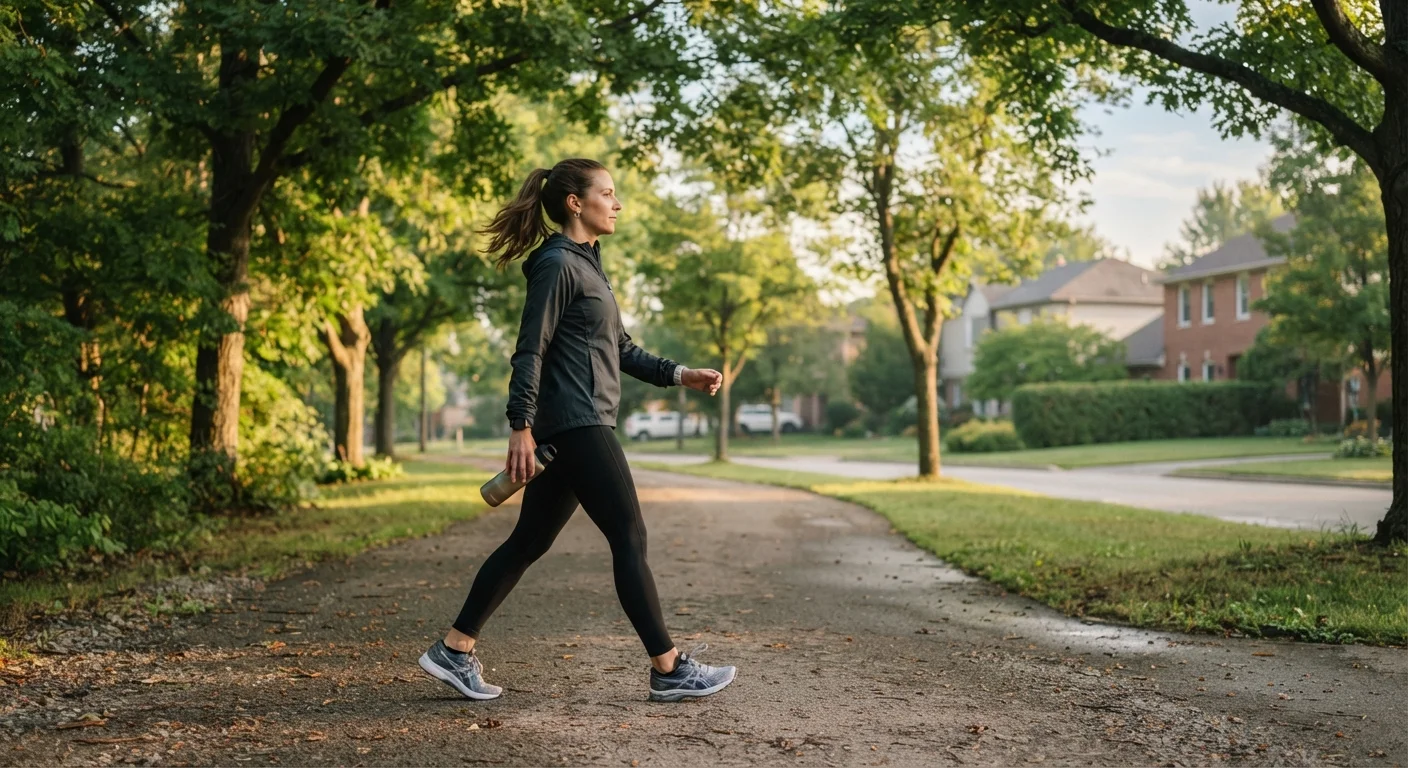
Walking is a genuinely effective, low-barrier form of exercise with well-documented benefits for heart health, mood, and longevity. Its limitations are real, particularly around muscle development and higher-intensity cardiovascular conditioning — but those gaps can be addressed by pairing it with complementary activities. For most people, walking is an excellent foundation, not a ceiling.
Walking is especially well-suited to beginners returning to activity, older adults, people managing joint concerns, or anyone building a consistent movement habit for the first time — as long as they recognize what additional training may still be needed.
Why Walking Gets Taken Seriously as Exercise
Walking occupies an unusual place in public health: it's so ordinary that people often discount it, yet decades of research consistently show it reduces risk for cardiovascular disease, type 2 diabetes, and early mortality. The U.S. Department of Health and Human Services includes brisk walking as a qualifying form of moderate-intensity aerobic activity in the federal physical activity guidelines. See what those guidelines actually recommend for a plain-language breakdown.
Walking's evidence base is strong precisely because it has been studied across enormous, diverse populations over long timeframes. The barrier to entry is near-zero — no gym membership, no equipment, no learned technique — which makes it uniquely sustainable for everyday Americans at virtually any fitness level.
Strong evidence for cardiovascular health benefits
Regular brisk walking is associated with reduced risk of heart disease, stroke, and high blood pressure. Studies across large populations consistently show meaningful cardiovascular protection even at moderate walking volumes.
Accessible with no equipment or cost
Walking requires no gym, no gear beyond supportive footwear, and no learned technique. This removes the most common practical barriers to starting and sustaining a physical activity habit.
Supports mental health and mood
Research links regular walking to reduced symptoms of mild-to-moderate depression and anxiety, and to lower perceived stress. Even short walks in natural settings show measurable mood benefits.
Low injury risk for most populations
Because walking is low-impact and does not require explosive movement or heavy load, musculoskeletal injury rates are substantially lower than with running or high-intensity training, making it suitable for a wide range of ages and fitness levels.
Aids blood sugar regulation and metabolic health
Post-meal walks — even short ones of 10 to 15 minutes — have been shown to blunt blood sugar spikes, which is particularly relevant for people managing or at risk for type 2 diabetes.
The Real Limitations of Walking as a Fitness Strategy
Honest assessment means acknowledging what walking does not do well. It provides little stimulus for building or preserving muscle mass, which requires progressive resistance against load. As a low-intensity activity for most people, it also falls short of the vigorous-intensity cardio that produces the greatest gains in cardiovascular fitness (VO₂ max). And for those who are already moderately fit, the body adapts to walking fairly quickly, limiting further progress unless pace, incline, or duration increases substantially.
Walking also does not meaningfully develop flexibility, joint mobility, or upper-body strength. A routine built solely around walking will leave several components of comprehensive fitness — strength, power, and mobility — largely untrained. Our overview of why your body needs both cardio and strength training explains what each type of exercise contributes and why combining them tends to produce better health outcomes.
Minimal stimulus for muscle strength or mass
Walking does not provide the progressive resistance load that muscles require to grow or maintain strength. Without supplemental resistance training, muscle loss — particularly relevant as people age — is not addressed.
Limited cardiovascular intensity for fit individuals
For people who are already moderately active, standard-pace walking often does not reach the intensity needed to further improve cardiovascular fitness. Greater gains typically require higher-effort activity.
Body adapts quickly, reducing ongoing progress
As fitness improves, the same walk becomes easier and burns fewer calories relative to body weight. Continued progress requires deliberate increases in pace, duration, or challenge — which many people do not make automatically.
Does not develop upper-body strength or mobility
Walking is primarily a lower-body and cardiovascular activity. Upper-body strength, grip strength, and joint mobility — all important for functional fitness and healthy aging — are not meaningfully trained.
How to Make Walking Work Harder for You
Walking's limitations are mostly about intensity and specificity — both of which can be addressed without abandoning walking altogether. Adding incline (hills or a treadmill grade), carrying light loads, or incorporating interval bursts of faster pace meaningfully raises cardiovascular demand. These adjustments won't replace strength training, but they extend the fitness ceiling walking can reach.
Walking Intensity Matters More Than Many Realize
The health benefits attributed to walking in research studies are typically associated with brisk walking — roughly a pace where you can talk but not easily sing. A leisurely stroll provides some benefit but generally falls below the threshold counted as moderate-intensity aerobic activity in the federal guidelines. If you want to ensure your walks are doing meaningful cardiovascular work, a slight breathlessness is a useful real-world cue.
For people who are sedentary or returning to activity after a break, walking is often the most appropriate starting point precisely because it carries low injury risk. See our guide to getting back to exercise after a long break for a structured approach. Pairing a daily or near-daily walk with two sessions of resistance training per week covers most of what the physical activity guidelines recommend for general health. If time is the obstacle, building a weekly exercise routine when you have almost no time offers a practical framework.
Walking also pairs well with other low-impact exercise options such as cycling or swimming for those who need to avoid high-impact movement. And don't overlook what walking doesn't train: flexibility, mobility, and stretching each serve different roles that a walking routine simply won't cover.
150 min
Weekly moderate activity recommended for adults
The U.S. Department of Health and Human Services Physical Activity Guidelines for Americans recommend at least 150 minutes of moderate-intensity aerobic activity per week — brisk walking qualifies.
~30%
Reduced cardiovascular disease risk from regular walking
A meta-analysis published in the European Journal of Preventive Cardiology found that regular walking was associated with roughly a 30% lower risk of cardiovascular events compared to no walking.
This article provides general health information and education only. It is not a substitute for personalized medical advice. Consult a qualified healthcare professional before starting or significantly changing any exercise routine, especially if you have existing health conditions.
The content on this site is for informational purposes only and is not a substitute for professional advice. Always consult a qualified professional for guidance specific to your situation.