

Why Pet Introductions Go Wrong More Often Than Owners Expect
Adding a second pet to your home is genuinely exciting — and genuinely easy to mishandle. The most well-meaning owners frequently underestimate how stressful a new animal's arrival is for both the newcomer and the pet already living there. What looks like simple social awkwardness can, if mismanaged, harden into lasting anxiety or aggression.
The core problem is that most animals are territorial to some degree. Even a friendly, socialized dog or cat experiences the arrival of a stranger in its home as a significant disruption. Without a structured introduction, both animals are placed in a situation they aren't equipped to navigate on their own.
The mistakes below are among the most common — and most correctable — errors owners make when bringing a second pet home.
Allowing an immediate, unsupervised face-to-face meeting between the new and resident pet.
Why it happens: Owners are excited and assume animals will simply 'figure it out' on their own, underestimating how territorial even friendly pets can be.
Skipping scent introduction as a preliminary step.
Why it happens: Scent-swapping feels indirect and easy to dismiss, but for animals that rely heavily on smell, it is often the most important early step.
Neglecting the resident pet's routine and exclusive resources during the transition.
Why it happens: Owners focus most of their energy on the newcomer, unintentionally signaling to the resident pet that their status in the household has changed.
Bringing a new pet home without a prior veterinary health check.
Why it happens: New owners are eager to get the animal settled at home and may delay the vet visit, assuming a visibly healthy pet poses no risk.
Interpreting a brief peaceful moment as a sign the introduction is complete.
Why it happens: Owners are relieved when there's no immediate conflict and assume the animals have accepted each other, ending structured supervision too early.
Building a Calmer Transition: What the Process Should Actually Look Like
A successful introduction is essentially a slow reveal. The goal is to allow both animals to build familiarity at a pace that keeps stress low enough for learning and positive association to occur.
Don't Interpret Stress Signals as Settling In
Hiding, excessive vocalization, loss of appetite, and aggression are not signs that pets are 'working it out.' These are stress responses that indicate the introduction is moving too fast. Pushing through visible distress can create lasting fear or hostility between animals that might otherwise have coexisted peacefully.
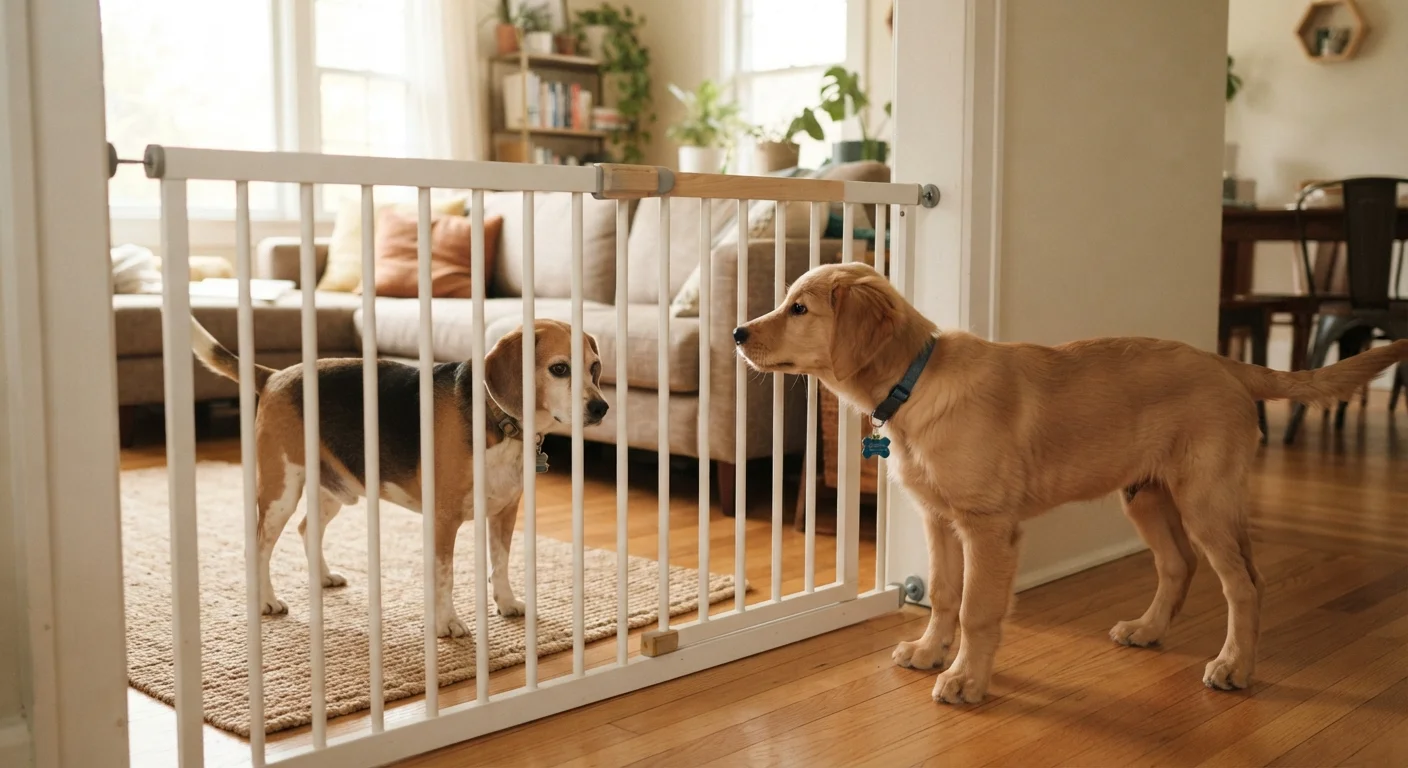
Begin with physical separation and scent exchange. After several days with no adverse scent reactions — both animals eating normally and behaving calmly near the boundary — move to brief visual contact through a baby gate or cracked door. Only when both animals show consistently relaxed body language should you allow shared space, and always with supervision initially.
Throughout this process, maintain your resident pet's feeding schedule, play sessions, and quiet time. Disrupting these routines adds unnecessary stress on top of an already significant change. If you have a senior pet in the household, pay particular attention: their tolerance for disruption and their immune resilience may differ from younger animals. Our article on how health needs shift as dogs and cats age covers what to keep in mind.
~44%
Multi-pet US households
According to the American Pet Products Association, a significant share of US pet-owning households have more than one animal, making inter-pet introductions a common challenge.
Days to weeks
Recommended introduction timeline
Veterinary behaviorists generally recommend a gradual introduction period spanning days to several weeks, depending on species, age, and individual temperament.
If the introduction stalls — if either animal is consistently hiding, refusing food, or showing aggression — consult a veterinary behaviorist or certified applied animal behaviorist. This is not a sign of failure; it's a sign you're paying attention. The first vet visit for your new animal is also a good opportunity to raise any behavioral concerns with a professional who knows both your pets' health histories.
Schedule a Vet Visit Before the Introduction
Before your new pet meets any existing animals in the home, a veterinary exam is essential. An undetected illness, parasite, or infection can spread quickly to resident pets. Schedule a checkup — and verify vaccination records — prior to any shared contact. See our guide on what to expect at your new pet's first vet visit for what to bring and what to ask.
This article is for general informational purposes only and does not constitute veterinary or behavioral advice. Always consult a licensed veterinarian or certified animal behaviorist for guidance specific to your pets' needs.
The content on this site is for informational purposes only and is not a substitute for professional advice. Always consult a qualified professional for guidance specific to your situation.