

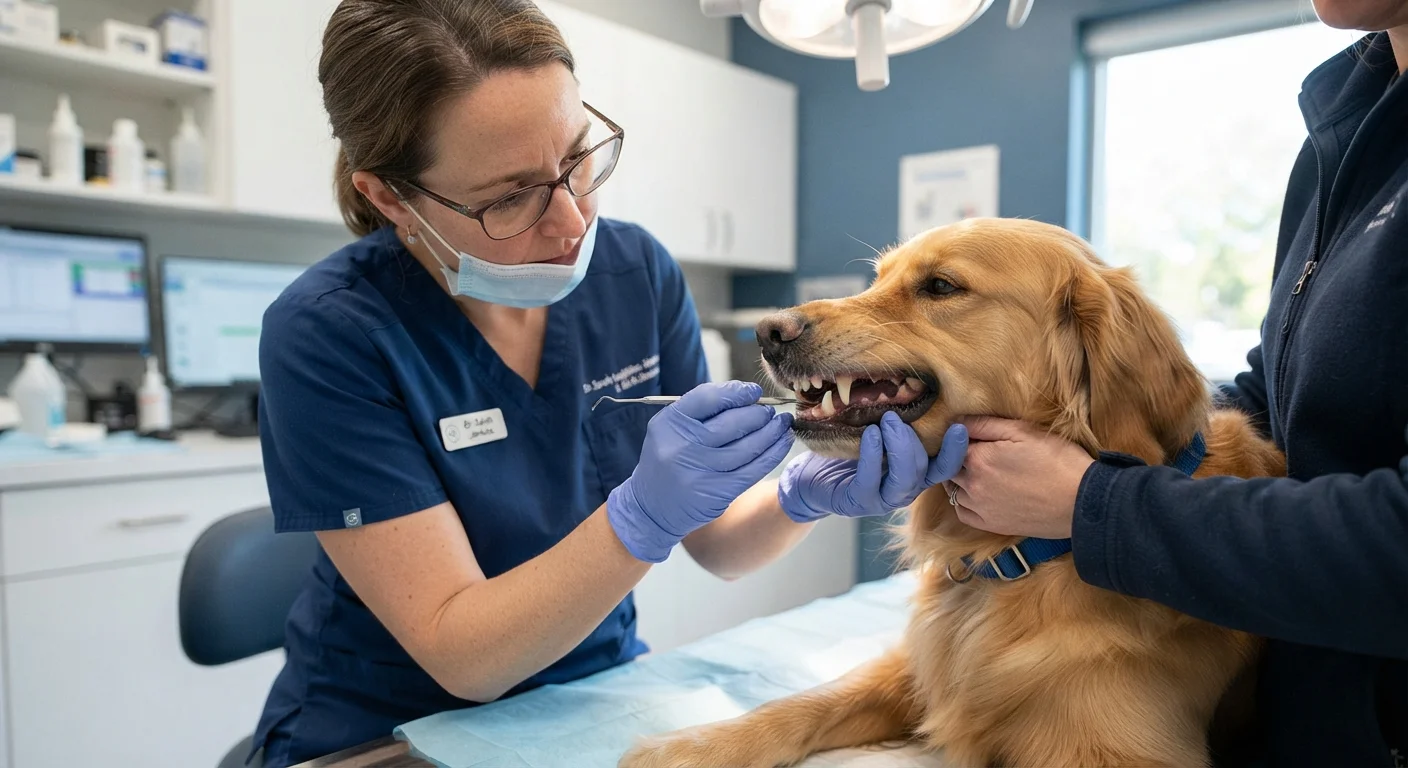
Why Dental Disease Flies Under the Radar
Pet owners routinely monitor their animals for limping, lethargy, or changes in appetite — but oral health rarely gets the same attention. Part of the reason is that pets are remarkably good at concealing discomfort. By evolutionary instinct, animals mask vulnerability, which means a dog or cat can be living with a painful oral infection while still eating, playing, and appearing perfectly normal.
This is closely related to a broader challenge that many owners face. As explored in our article on recognizing hidden pain in pets, the subtle signs of suffering are easy to miss — and dental disease is a prime example. By the time an owner notices bad breath, visible tartar, or a reluctance to chew, the disease has often already progressed to a stage requiring significant veterinary intervention.
Bad Breath Is Not Normal
Many owners assume that persistent bad breath (halitosis) in dogs and cats is just a quirk of animal biology. In reality, strong or foul-smelling breath is one of the most consistent early indicators of active bacterial infection in the mouth. If your pet's breath has changed or is noticeably unpleasant, it warrants a veterinary dental evaluation — not just a dental treat.
What Periodontal Disease Actually Does to the Body
Dental disease is not just a mouth problem. It begins when bacteria in the mouth form plaque — a sticky film on tooth surfaces. Without removal, plaque mineralizes into tartar, and bacteria migrate below the gumline, triggering inflammation and destruction of the gum tissue and bone that anchor each tooth.
Beyond the mouth, the chronic bacterial load of periodontal disease has been associated with systemic health consequences. Veterinary research has linked severe or long-standing oral infections to changes in kidney function, liver health, and cardiac muscle — particularly in older animals. While the exact mechanisms are still being studied, the connection between oral and systemic health is now well-established in veterinary medicine.
~80%
Dogs showing dental disease signs by age 3
Veterinary dental specialists commonly cite that approximately 80% of dogs show evidence of periodontal disease by their third year of life.
~70%
Cats affected by age 3
A similar estimate applies to cats, with the majority showing gum disease indicators by age three according to veterinary dental literature.
Stage 3–4
Disease stage at which bone loss becomes irreversible
The four-stage periodontal grading scale used in veterinary dentistry classifies Stages 3 and 4 as involving permanent structural damage to the jawbone.
This systemic dimension makes dental disease particularly significant for aging animals. Our guide on how senior pets' health needs change covers how oral health screening typically becomes more frequent and urgent as dogs and cats enter their later years.
Prevention and Treatment: What Actually Works
The foundation of dental disease prevention is daily tooth brushing using a toothpaste formulated for pets (human toothpaste is not safe for animals). It sounds daunting, but most pets can be gradually acclimated to the process when introduced slowly with positive reinforcement. Even brushing three to four times per week provides a meaningful reduction in plaque accumulation.
Start Slow With Tooth Brushing
Introduce tooth brushing gradually — start by letting your pet lick pet-safe toothpaste off your finger, then slowly move to a finger brush, and finally a soft-bristled pet toothbrush. Pairing each session with praise or a small reward builds positive associations. Even one to two minutes of brushing several times a week is more beneficial than no brushing at all.
Beyond brushing, the Veterinary Oral Health Council (VOHC) recognizes certain dental chews, diets, and water additives that have demonstrated plaque- or tartar-reducing efficacy in controlled studies. These are adjuncts, not replacements, for brushing or professional care.
Professional veterinary cleanings remain the only way to fully treat established periodontal disease. Under general anesthesia, a veterinarian or veterinary dental specialist can probe the full depth of each gum pocket, take dental radiographs to assess bone loss, scale below the gumline, and extract teeth that are no longer salvageable. The anesthesia requirement is non-negotiable for safe, complete care — and the risk profile of a properly managed anesthetic procedure is generally far lower than the ongoing health impact of untreated disease.
Dogs and cats differ in some of the specifics of oral care, just as they differ across many dimensions of daily wellness — a distinction worth understanding if you're navigating care for both species. Our article on cat care vs. dog care responsibilities breaks down those day-to-day differences in practical terms.
This article is for general informational purposes only and is not a substitute for professional veterinary advice. Always consult a licensed veterinarian regarding your pet's specific health needs and treatment options.
Frequently Asked Questions
Veterinary dental specialists estimate that by age three, the majority of dogs and cats have some degree of periodontal disease. It is consistently ranked among the most frequently diagnosed conditions in companion animals during routine wellness exams.
Yes. Chronic oral infections allow bacteria to enter the bloodstream, which research has linked to damage in the kidneys, liver, and heart muscle over time. Severe tooth root abscesses can also cause significant localized tissue damage and pain.
Yes — a thorough veterinary dental cleaning requires general anesthesia. This allows the vet to probe beneath the gumline, take dental X-rays, and safely clean areas that an awake animal would not tolerate. Anesthesia-free cleanings only address visible surfaces and do not treat the underlying disease.
Frequency depends on the individual animal's breed, age, diet, and disease history. Many veterinarians recommend an annual professional cleaning as a general guideline, but your vet can recommend a schedule tailored to your pet's specific needs.
Bad breath is the most common owner-noticed sign, but others include drooling, reluctance to eat hard food, pawing at the mouth, and visible tartar (yellow-brown buildup) on teeth. Because pets instinctively mask discomfort, many show no obvious signs even with significant disease.
Diet plays a role in oral health, but no food alone prevents plaque buildup reliably. Daily tooth brushing with a pet-safe toothpaste is the most effective home-care method recognized by veterinary dental organizations. Even brushing a few times per week provides meaningful benefit.
The content on this site is for informational purposes only and is not a substitute for professional advice. Always consult a qualified professional for guidance specific to your situation.