

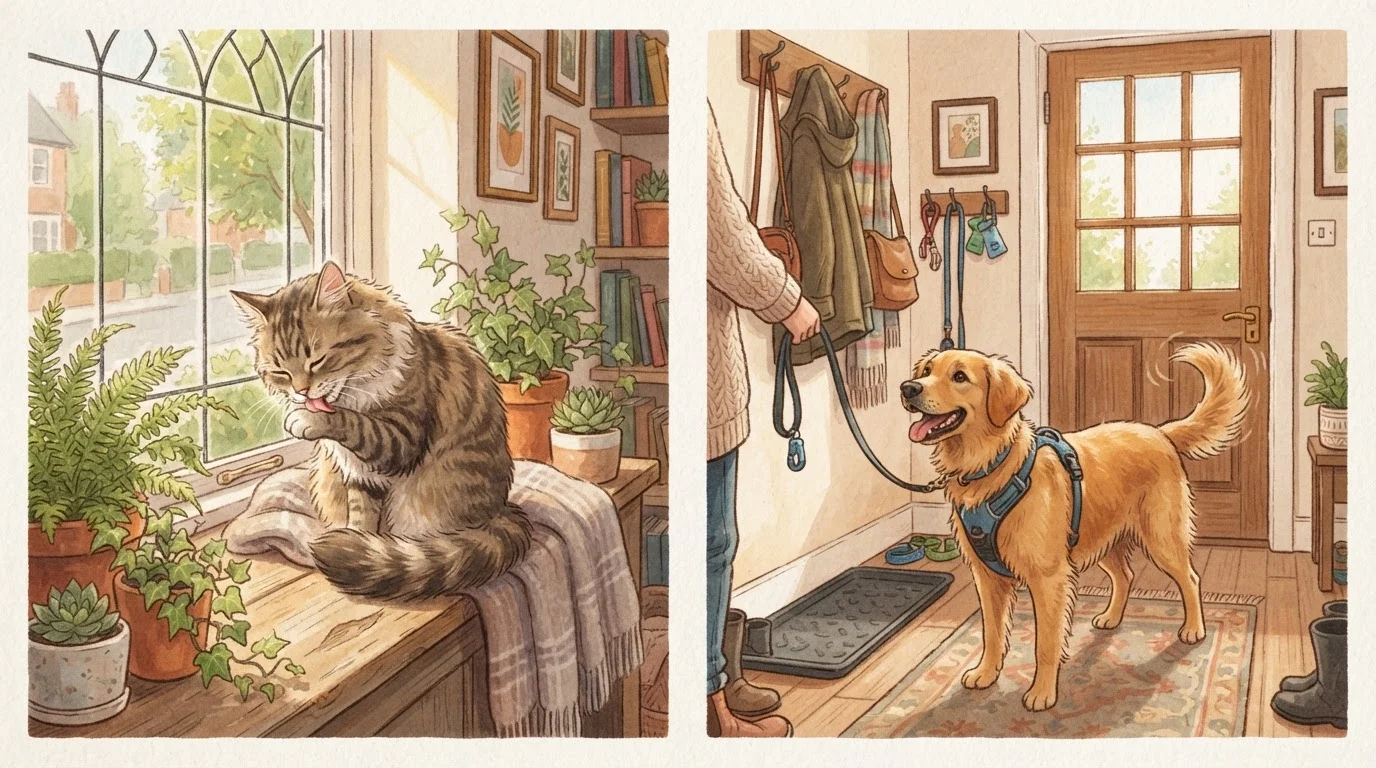
Option A
Cat Care
The independent, lower-schedule companion.
Best for: People who want a close bond with a pet but have limited time for structured daily routines or outdoor access.
Option B
Dog Care
The engaged, routine-driven partnership.
Best for: People who enjoy active schedules, outdoor time, and interactive daily engagement with their pet.
The Daily Time Commitment: Where the Gap Is Biggest
The single largest practical difference between cat and dog ownership is how much structured time you must dedicate each day. Dogs need to go outside — typically three to five times daily for bathroom trips and exercise, depending on breed, age, and size. That schedule doesn't flex much; a dog that misses its walks becomes uncomfortable and often destructive. Morning routines, work hours, and evening plans all bend around the dog's needs.
Cats, by contrast, use a litter box and largely set their own activity schedules. A cat's need for your direct involvement on any given day is lower, though that doesn't mean zero. Interactive play — ideally two or more short sessions daily — is important for a cat's physical health and mental stimulation, particularly for indoor-only cats. See our guide to indoor vs. outdoor cat trade-offs for context on how lifestyle affects those needs.
The takeaway: dog ownership operates on a schedule you keep; cat ownership requires attention you choose when to give — but genuinely must give.
| Criterion | Cat Care | Dog Care |
|---|---|---|
| Daily outdoor requirement | Not required | 3–5 trips daily |
| Self-grooming ability | Yes (still needs help) | No |
| Training demand | Low to moderate | Moderate to high |
| Separation tolerance | Generally high | Low to moderate |
| Boarding complexity | Lower | Higher |
| Average annual cost | Generally lower | Generally higher |
| Routine vet care needed | Yes | Yes |
Grooming, Hygiene, and Preventive Health
Cats are self-grooming animals, which reduces (but doesn't eliminate) owner effort. Long-haired cats need regular brushing to prevent matting, and all cats benefit from routine nail trims and periodic ear checks. Dental disease is a significant concern for both species — the American Veterinary Medical Association estimates the majority of adult pets show some signs of periodontal disease. Our article on why dental disease is underestimated in pets covers this in depth.
Dogs vary enormously in grooming needs by breed, but most require more frequent bathing than cats, regular nail trims, ear cleaning, and coat brushing. Some breeds need professional grooming every four to eight weeks. Dogs also track in more outdoor debris and odor, increasing household cleaning demands.
Both cats and dogs need core vaccinations, annual or semi-annual veterinary exams, and year-round flea, tick, and heartworm prevention — though the specific protocols differ. Understanding what routine care looks like as your pet ages is worth exploring early; our guide to senior pet health needs is a useful reference.
~90%
Adult pets with periodontal disease signs
Veterinary dental organizations estimate the majority of dogs and cats over age three show evidence of periodontal disease, making oral care a top preventive priority.
3–5x
Daily outdoor trips required for dogs
Most veterinary and humane society guidelines recommend dogs go outside three to five times per day for bathroom breaks and physical activity.
Social Needs, Training, and Behavioral Demands
Dogs are pack animals by nature and generally require active socialization, structured training, and consistent behavioral guidance — especially in the first one to two years. Basic obedience training is not optional for a safe, well-adjusted dog; it's an ongoing practice. Separation anxiety is also significantly more common in dogs than cats, which means extended time away from home requires planning. For a closer look at how anxiety presents in both species, see our piece on anxiety in dogs and cats.
Cats are more independent and generally require less formal training, though litter box habits, scratching behavior, and basic boundaries benefit from consistent reinforcement early on. Cats form genuine bonds with their owners but on their own terms — they're less likely to follow you from room to room and more likely to seek interaction when they choose it.
If you're considering adding a second pet to a household with an existing one, what owners get wrong about pet introductions outlines where the process commonly breaks down.
Cost, Logistics, and Long-Term Planning
Both cats and dogs carry meaningful financial responsibilities — food, routine veterinary care, preventive medications, grooming supplies, and unexpected health costs. Dogs tend to run higher on the cost side overall, particularly for larger breeds: food volume, grooming, boarding, and veterinary care for some conditions scale with size.
Boarding and pet-sitting logistics are more complex for dogs, since they need multiple daily outings. Cats can often be managed by a trusted neighbor or pet-sitter visiting once daily, which is generally simpler and less expensive than dog boarding or in-home dog care.
Pet insurance is worth evaluating for both species, since emergency and specialty veterinary costs can be substantial. Our overview of how pet insurance works explains what policies typically do and don't cover in plain terms.
This article is for general informational purposes only and does not constitute veterinary advice. Consult a licensed veterinarian for guidance specific to your pet's health and needs.
The content on this site is for informational purposes only and is not a substitute for professional advice. Always consult a qualified professional for guidance specific to your situation.