

Why Patterns Matter More Than Perfection
Most people abandon a budget not because the math was wrong, but because the habits never took hold. A budget is only as reliable as the behaviors behind it — and behaviors become reliable when they're predictable and low-effort to maintain. That's where spending patterns come in.
Rather than overhauling your financial life all at once, the goal is to build a small set of deliberate patterns that run consistently in the background. Think of these as the structural habits that hold a budget together, regardless of which specific method you use — whether that's a percentage-based framework like 50/30/20 or a cash envelope system. The practices below apply across the board.
This article is for general informational and educational purposes only, and does not constitute personalized financial advice. For guidance tailored to your specific situation, consult a qualified financial professional.
Core Spending Habits That Hold a Budget Together
The following practices are drawn from widely recognized personal finance principles. They're not about extreme frugality — they're about creating structure that supports consistent decision-making over time.
Separate your fixed and variable expenses before assigning any category limits.
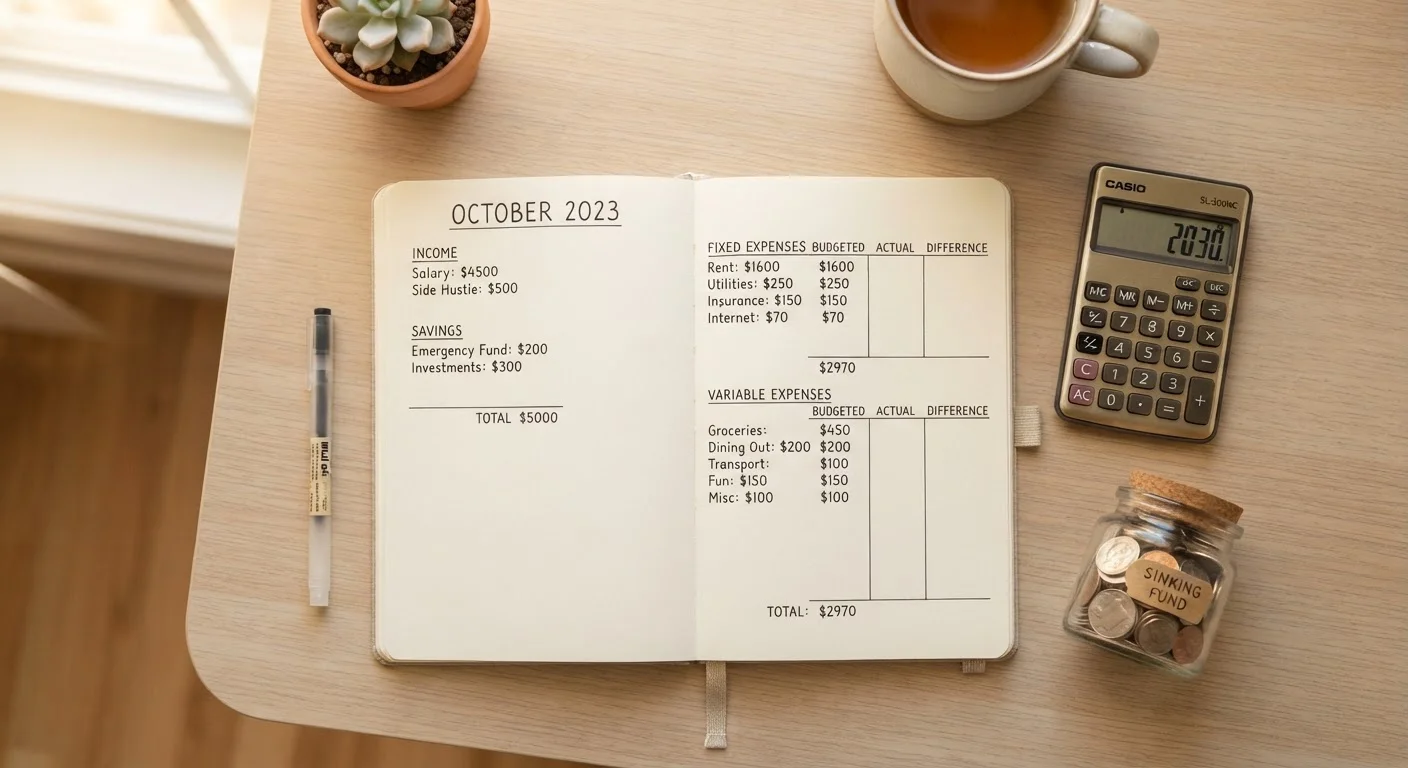
Fixed expenses (rent, loan payments, insurance) stay constant each month and are largely non-negotiable. Variable expenses (groceries, dining, entertainment) are where most spending flexibility exists. Conflating the two makes it impossible to know where your real choices lie.
Automate your savings transfer on payday before spending anything else.
Paying yourself first — moving savings before discretionary spending begins — removes the temptation to spend what you intended to save. This pattern is one of the most consistently recommended approaches in behavioral personal finance because it removes the need for willpower at the point of decision.
Create a named category for each predictable irregular expense.
Costs like annual subscriptions, car registration, and home maintenance don't appear every month — but they're not truly surprises. Without a budget category, these expenses often feel like emergencies that derail progress. Giving each one a named line item and contributing a small amount monthly eliminates the disruption.
Conduct a brief monthly review to catch budget drift early.
Budgets slip gradually, not all at once. A monthly check-in — even 20–30 minutes — lets you spot categories that are consistently over or under budget, cancel forgotten subscriptions, and adjust for the month ahead. Without this feedback loop, small gaps accumulate unnoticed. A monthly spending audit is a simple, structured way to do this.
Set a 24-hour pause before any unplanned purchase above a personal threshold.
Impulse spending is one of the most common ways budgets are quietly eroded. Establishing a personal pause rule — waiting at least 24 hours before buying something not in the budget — introduces a friction point that filters out purchases driven by momentary mood rather than genuine need or value.
For a fuller picture of how to track where your money is actually going each month, a structured spending audit can surface patterns you might otherwise miss.
Quick Moves You Can Make This Week
You don't need to redesign your entire budget to benefit from better spending patterns. These immediate actions can start producing results within days.
If your income varies month to month, these patterns are even more important — and slightly different in application. See our guide to budgeting on an irregular income for approaches tailored to freelancers, gig workers, and commission earners.
The Stats Behind Consistent Budgeting
Understanding why these habits work can make it easier to stick with them. Research consistently shows that automaticity — making good financial behavior the default — significantly reduces the mental friction that causes people to fall off track.
74%
Americans living paycheck to paycheck at some point
According to surveys by various financial research organizations, a significant majority of Americans report periodic difficulty covering expenses between paychecks, highlighting the need for proactive budgeting habits.
~$300
Average monthly spending on forgotten subscriptions
Consumer research has consistently found that households underestimate their recurring subscription costs, often by a significant margin, making a regular review an effective recovery tool.
2x
More likely to meet savings goals with automation
Behavioral finance research suggests that people who automate savings transfers are substantially more likely to maintain consistent contributions than those who rely on manual transfers each month.
Avoiding small daily spending habits that derail budgets is just as important as building positive ones. Both sides of the equation matter.
“A budget is telling your money where to go instead of wondering where it went.”
— Dave Ramsey, Personal finance author and radio host
Building Your Budget Around These Patterns
The real power comes from combining these habits into a system that runs with minimal friction. Consider pairing automatic savings transfers with a monthly review ritual — thirty minutes on the last Sunday of each month to check category balances, adjust for upcoming irregular costs, and confirm that your plan still reflects your priorities.
If you're looking to deepen your approach, the Everyday Money Tips hub covers a broad range of practical habits. For debt-specific strategies or building an emergency fund alongside a budget, explore the Saving & Debt hub.
Finally, note that sinking funds — small, ongoing contributions earmarked for future known expenses — integrate naturally with the patterns above. They transform irregular costs from surprises into planned line items.
The content on this site is for informational purposes only and is not a substitute for professional advice. Always consult a qualified professional for guidance specific to your situation.