

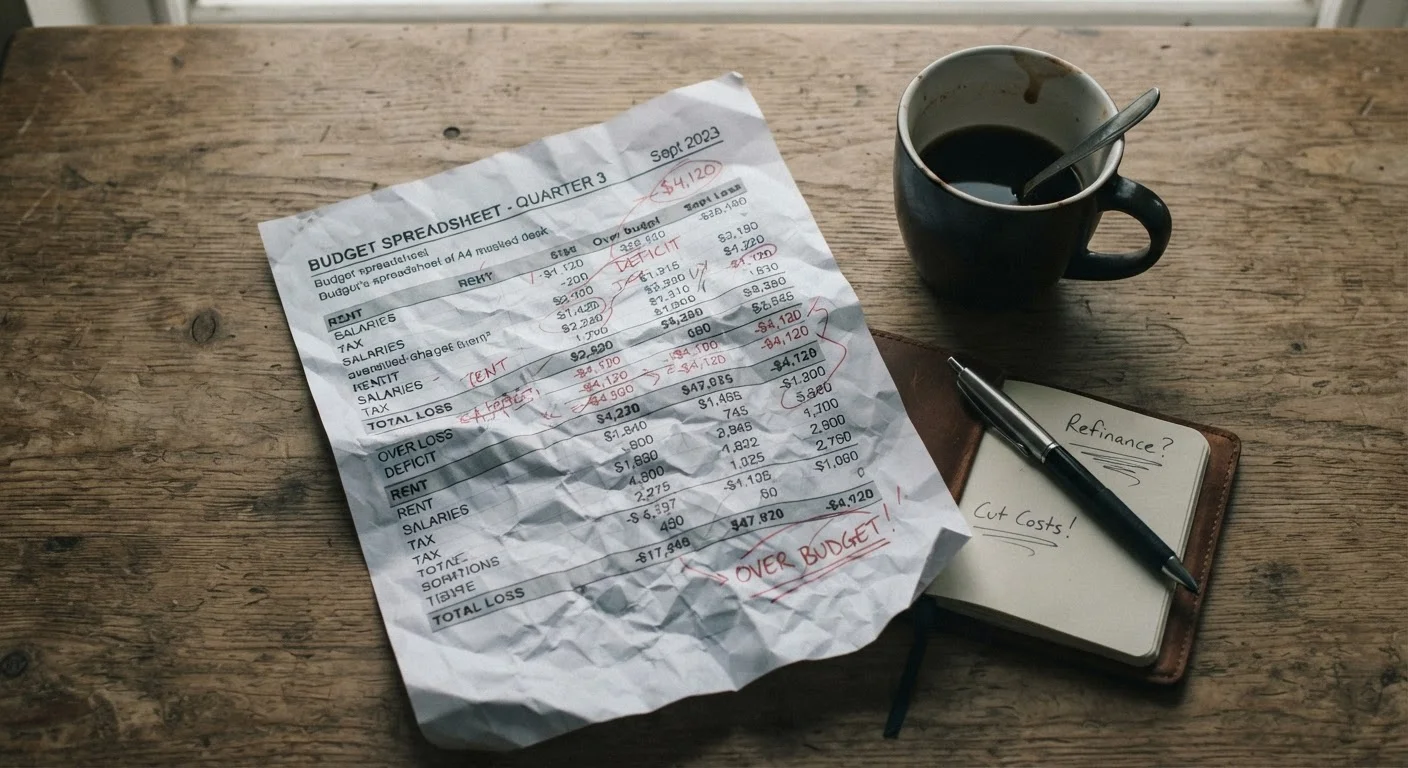
Why Month Two Is the Breaking Point
Month one of a new budget tends to feel energizing. You've mapped your income, assigned spending categories, and watched your numbers with fresh attention. Month two is different. The novelty is gone, an unexpected bill has arrived, and the plan you built on paper doesn't match the life you're actually living.
This is where most budgets quietly die — not with a dramatic decision, but with a gradual drift into ignoring the spreadsheet. If you've been through this cycle, you're not alone, and the cause is almost never a lack of discipline. It's a structural problem in the plan itself. If you haven't started yet, the six-step guide to your first budget is a useful place to begin before applying these corrections.
This Is a Design Problem, Not a You Problem
Budget failure in month two almost always reflects a flawed plan structure rather than poor self-control. If your budget collapsed, the most productive question isn't 'What's wrong with me?' — it's 'What did my budget fail to account for?' Diagnosing the structural error makes the next attempt far more likely to succeed.
The Structural Mistakes That Sink Most Budgets
Understanding why budgets collapse is more valuable than sheer willpower. The mistakes below are the most common culprits — each one fixable once you can see it clearly.
Building a budget around an idealized version of your spending rather than actual behavior.
Why it happens: Month one enthusiasm leads people to set aspirational limits — cutting dining out by 70%, eliminating all 'unnecessary' subscriptions overnight — that don't reflect real life. The numbers feel motivating in a spreadsheet but are unsustainable in practice.
Failing to account for irregular but predictable expenses like car registration, annual subscriptions, or holiday gifts.
Why it happens: These costs don't appear in a typical monthly snapshot, so first-time budgeters omit them. When they land unexpectedly, they blow the budget and create the feeling that budgeting 'doesn't work.'
Treating a budget as a fixed document rather than a living plan that needs regular adjustment.
Why it happens: Budgets often get created once and then treated as permanent rules. When life changes — a freelance payment arrives late, a medical bill appears — the rigid plan has no flex, and people abandon it rather than revise it.
Using an all-or-nothing standard — one overspend signals total failure, triggering full abandonment.
Why it happens: Perfectionism and a pass/fail mindset are common with new budgeters. Overspending in one category feels like proof the whole system has collapsed, so people stop tracking entirely.
Leaving no buffer for discretionary or 'fun' spending, making the budget feel punishing.
Why it happens: New budgeters often eliminate all non-essential spending in an attempt to accelerate savings goals. This creates a deprivation effect that leads to rebound spending — a larger splurge that undoes weeks of discipline.
For a broader look at the assumptions that make budgeting harder than it needs to be, see common budgeting myths that keep people stuck.
~80%
Of budgeters who quit within 3 months
Research on habit formation consistently shows that most new financial routines break down within the first 90 days, often due to unrealistic initial expectations rather than motivation.
12–18
Average irregular expense categories per household per year
Common irregular costs include vehicle registration, medical copays, holiday gifts, back-to-school supplies, and annual insurance premiums — most go unplanned in a first budget.
Building a Budget That Survives Month Two
The habits that make budgets durable are less about discipline and more about design. A realistic baseline, a sinking fund for irregular costs, a monthly review, and a small discretionary buffer are the four structural elements most often missing from failed first attempts.
Explore spending patterns worth building into any budget for evidence-backed practices that support consistency without making personal finance a second job. And if debt repayment is also part of the picture, the Saving & Debt hub covers strategies for managing both goals at once.
Skipping a Review Locks In the Pattern
Without a monthly review, the same structural mistakes repeat in every budget cycle. Even a 15-minute check-in — comparing planned spending to actual spending — can surface problems before they compound. Use a monthly spending audit to build this habit from the start.
This article is for general informational and educational purposes only and does not constitute personalized financial advice. For guidance specific to your situation, consult a qualified financial professional.
The content on this site is for informational purposes only and is not a substitute for professional advice. Always consult a qualified professional for guidance specific to your situation.