

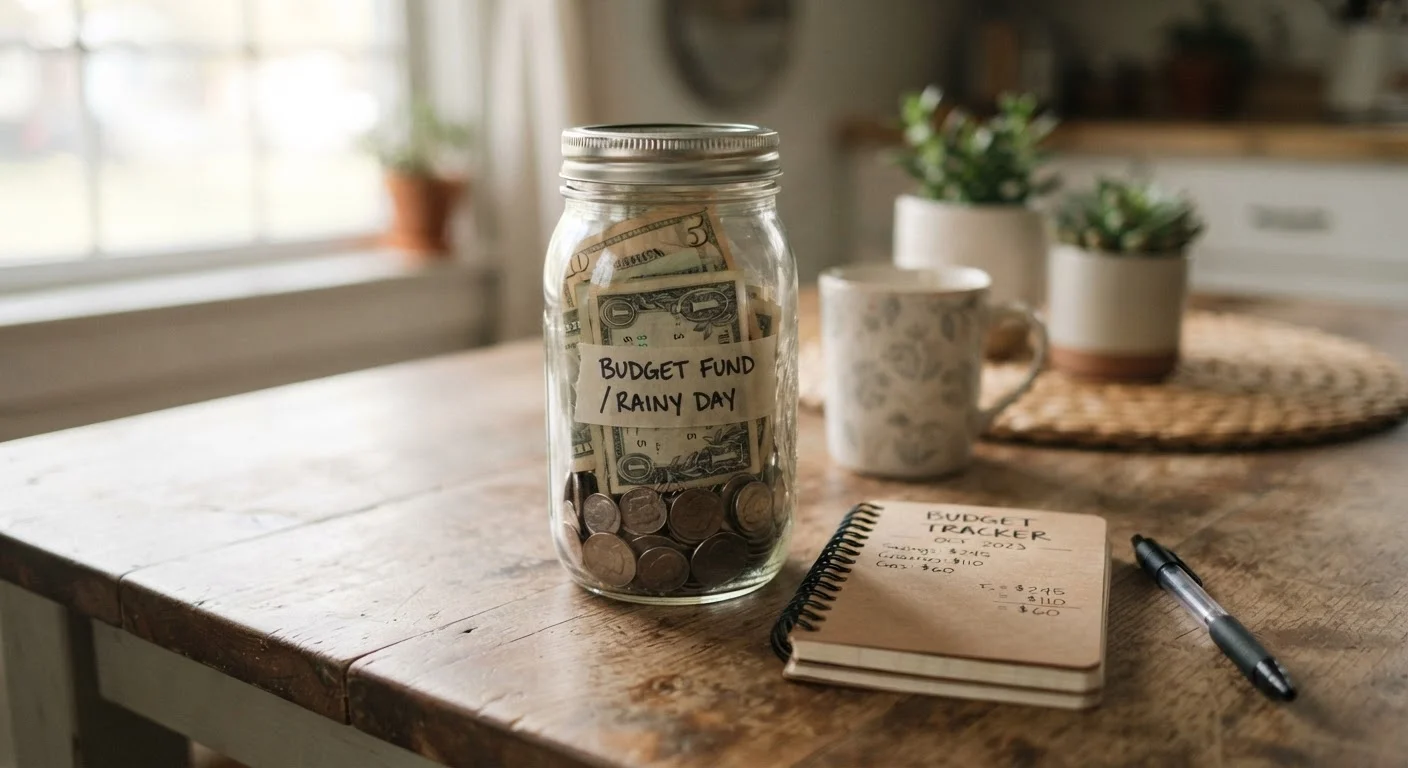
What an Emergency Fund Is Actually For
The term "emergency fund" gets thrown around so often that its meaning has blurred. People use theirs for vacations, appliance upgrades, or holiday gifts — and then wonder why it wasn't there when the transmission failed.
An emergency fund has one job: cover genuine financial emergencies. These are expenses that are unplanned, necessary, and time-sensitive. The clearest examples include:
- Job loss or a significant income disruption
- Unexpected medical or dental bills
- A car repair required to maintain employment
- A sudden home system failure (furnace, roof, plumbing)
Notice what's not on that list: a flight sale you want to act on, a new phone, or a scheduled annual expense you simply forgot to plan for. Those costs have their own solution — a sinking fund, which sets aside money over time for predictable future expenses. Conflating the two weakens both.
The emergency fund's real purpose is to keep a bad day from becoming a bad year — specifically, to prevent you from reaching for a credit card at 20% interest when something urgent goes wrong.
Emergency Fund vs. Sinking Fund: A Key Distinction
An emergency fund and a sinking fund are often confused, but they serve opposite purposes. A sinking fund is for costs you know are coming — annual fees, a planned appliance replacement, holiday spending. An emergency fund is for costs you can't predict. If you're saving for a pet's routine vet visit, that's a sinking fund. If your dog swallows something and needs emergency surgery, that's what your emergency fund (or a separate pet emergency plan) is for. Keeping them separate ensures neither gets depleted by the wrong category of expense.
How Much Is Actually Enough
The widely cited guideline — three to six months of living expenses — is a useful anchor, but it's not a universal prescription. The right number for you depends on several personal factors.
~37%
Americans who cannot cover a $400 unexpected expense
According to Federal Reserve surveys on household economic well-being, a significant share of U.S. adults would struggle to cover a modest unexpected expense without borrowing.
3–6 months
Recommended essential expenses to keep in reserve
This range is the standard guideline cited by major financial education organizations and planners as a starting point for emergency fund sizing.
$1,000
Recommended starter emergency fund milestone
Many financial educators recommend a $1,000 starter goal as a first milestone that covers the most common single-incident emergencies before working toward a full fund.
Calculate Your Monthly Baseline First
Your target isn't three to six months of your total take-home pay. It's three to six months of your essential expenses: rent or mortgage, utilities, groceries, transportation, insurance premiums, and minimum debt payments. Discretionary spending — dining out, subscriptions, entertainment — doesn't count. Stripping your budget to necessities usually reveals a much smaller number than people expect.
Adjust for Your Risk Profile
Not everyone needs the same cushion. Consider leaning toward the higher end if:
- Your income is variable, freelance, or commission-based
- You work in a sector with high layoff risk or seasonal employment
- You support children, elderly parents, or others who depend on your income
- You have significant recurring medical expenses or a chronic health condition
Conversely, a dual-income household with stable employment and no dependents may find three months fully adequate.
Building the Fund When Money Is Tight
For many households, the challenge isn't knowing the target — it's reaching it on an ordinary budget. The good news is that a partial emergency fund still provides real protection. Research in behavioral economics consistently shows that even a small financial buffer reduces stress and improves decision-making during crises.
A practical sequence:
- Set a starter milestone. Aim for $500–$1,000 before anything else. This handles most single-incident emergencies — a car repair, an ER copay — without debt.
- Automate the contribution. Set up a recurring transfer on payday, even if it's $25 or $50. Automating removes the decision and the temptation to skip it.
- Use a separate account. Keep the fund out of your checking account. Separation creates friction that discourages casual spending.
- Apply windfalls strategically. Tax refunds, work bonuses, or side-income can accelerate your timeline without requiring lifestyle changes.
For a deeper look at building savings on a constrained income, see savings principles grounded in behavioral research. And if you're also budgeting for a major trip, remember that travel savings belong in a separate bucket — not in your emergency fund.
Make Your Emergency Fund Boring on Purpose
The ideal emergency fund account is slightly inconvenient to access — no debit card attached, no instant transfer to checking. A small amount of friction reduces the temptation to dip into it for non-emergencies. Opening a savings account at a separate institution from your primary bank is a simple structural guardrail many financial planners recommend.
Where to Keep It — And What to Avoid
An emergency fund has two non-negotiable requirements: it must be liquid (accessible immediately) and safe (not subject to market loss). This rules out stocks, mutual funds, and retirement accounts, where withdrawal may be delayed, penalized, or reduced by a market downturn — precisely when you'd most need the money.
The most practical home for an emergency fund is a savings account or money market account at an FDIC-insured institution. These accounts are accessible within one to three business days, carry no market risk, and often earn more than a standard checking account. The goal isn't growth — it's availability and preservation.
One final note: if you draw from your emergency fund, rebuilding it becomes a budget priority. Treat the replenishment like a bill until the fund is whole again. For a broader overview of account types and sizing strategies, the emergency fund basics guide covers additional options in detail.
This article provides general financial education and is not personalized financial advice. Consider consulting a qualified financial professional for guidance tailored to your individual circumstances.
Frequently Asked Questions
True emergencies are unplanned and necessary: a sudden job loss, an urgent medical bill, a car repair needed to get to work, or a critical home system failure. Discretionary purchases, planned travel, or predictable costs like annual insurance premiums don't qualify. When in doubt, ask whether delaying the expense would cause immediate harm.
The standard guidance is three to six months of essential living expenses — housing, food, utilities, transportation, and minimum debt payments. If your income is variable, you're self-employed, or you support dependents, leaning toward six months (or more) is prudent. Start with a smaller milestone, like $1,000, and build from there.
Keep it in a liquid, federally insured account — typically a savings account or money market account — where it earns some interest but can be accessed quickly without penalty. Avoid investing it in stocks or bonds, since market fluctuations could reduce its value exactly when you need it most.
No. A sinking fund is built for known, predictable future costs — like a car registration, holiday spending, or a home repair you can see coming. An emergency fund covers unforeseeable events. Both serve important roles in a healthy budget, but they should be kept separate and funded for different purposes.
Start smaller. Even $500 to $1,000 can prevent a minor crisis from becoming a debt spiral. Automate a small weekly or monthly transfer — even $25 — and treat it like a fixed bill. Progress matters more than perfection, and any cushion is better than none.
The content on this site is for informational purposes only and is not a substitute for professional advice. Always consult a qualified professional for guidance specific to your situation.