

How Debt Consolidation Actually Works
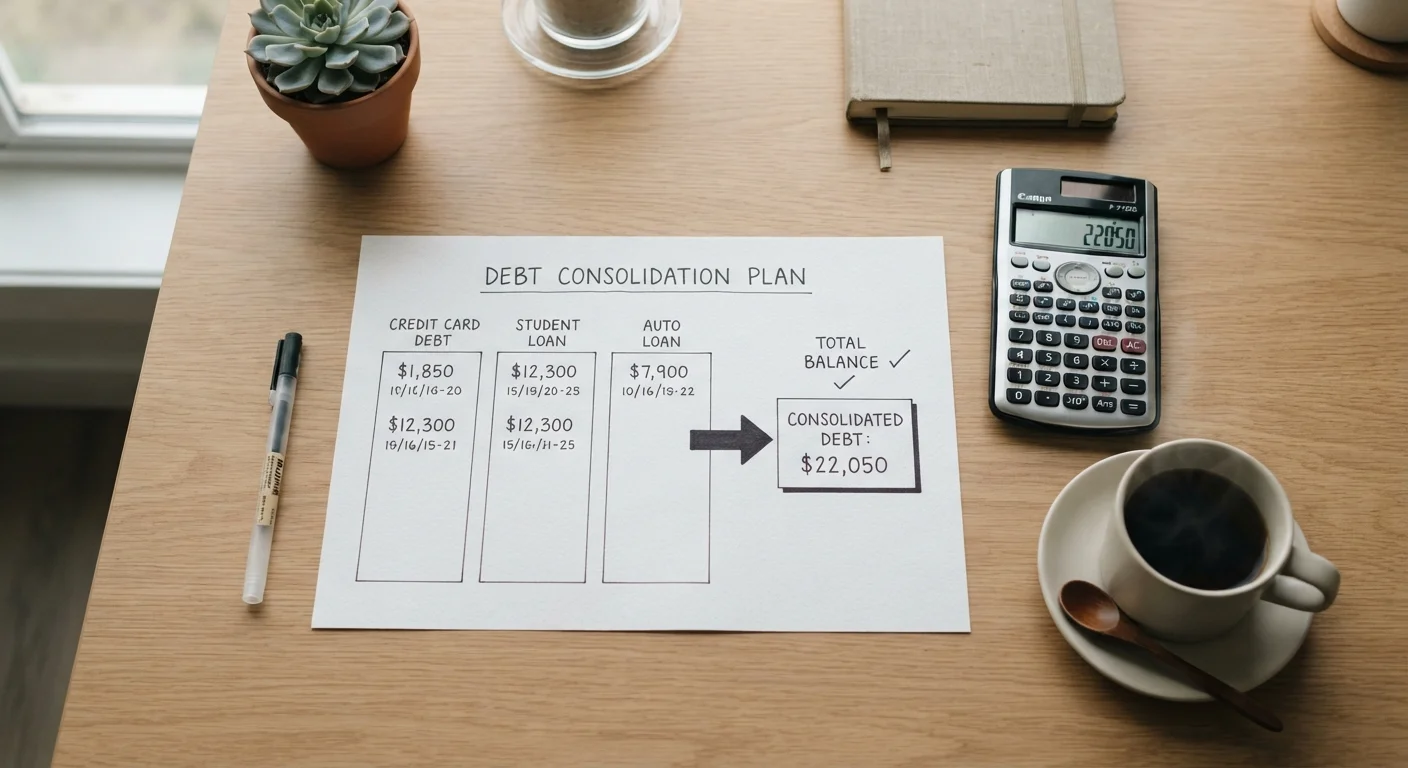
At its core, debt consolidation is a financial reorganization tool. You take out a new credit product — typically a personal loan, a balance transfer credit card, or a home equity loan — and use it to pay off several existing debts at once. From that point forward, you owe money to one lender under one set of terms.
The mechanics differ depending on the method:
- Personal consolidation loans: An unsecured loan from a bank, credit union, or online lender. You receive a lump sum, pay off existing balances, and repay the loan in fixed monthly installments at a set interest rate.
- Balance transfer credit cards: You move balances from high-interest cards to a single card, often with a promotional 0% APR period. See the pros and cons of balance transfers before choosing this route — promotional periods end, and the fees and rates after that matter significantly.
- Home equity loans or HELOCs: Secured against your home, these typically offer lower interest rates but carry real risk — defaulting could result in foreclosure.
The lender you choose will evaluate your credit score, income, and existing debt load to determine whether you qualify and at what interest rate.
22%+
Average credit card interest rate in the U.S.
Federal Reserve data indicates average credit card interest rates have exceeded 20% in recent years, highlighting why rate reduction is the central goal of consolidation.
2–7 years
Typical personal loan repayment terms
Personal consolidation loans commonly offer repayment terms in this range, affecting both monthly payment size and total interest paid over the life of the loan.
670+
Credit score generally needed for competitive rates
Most lenders use credit score thresholds to determine eligibility and rate pricing; borrowers above 670 tend to access more favorable consolidation terms.
When Consolidation Makes Financial Sense
Debt consolidation isn't a universal solution, but there are clear situations where it can genuinely help your financial picture.
You qualify for a meaningfully lower interest rate. This is the most important test. If your current debts carry average interest rates of 22% and you can consolidate at 12%, you'll pay less in interest over time — assuming the repayment term isn't dramatically extended. Run the numbers on total repayment cost, not just monthly payment size.
You're managing multiple due dates. Juggling five different payment deadlines each month increases the risk of a missed payment. Consolidating into one monthly payment reduces that operational complexity and the fee risk that comes with it.
Your credit is in solid shape. A stronger credit profile means you're more likely to qualify for a rate that actually beats what you're currently paying. If your credit is damaged, consolidation may not offer a better rate — and could cost more overall.
Compare Total Cost, Not Just Monthly Payment
A longer repayment term will lower your monthly payment but usually increases the total interest you pay over time. Always calculate the full repayment cost — principal plus interest — for any consolidation offer and compare it against what you'd pay staying on your current path. Most loan estimators and amortization calculators can help you run this comparison in minutes.
Before consolidating, it's also worth reviewing the checklist of factors to assess before tackling debt aggressively, including your income stability and emergency savings position.
When to Consider a Different Strategy Instead
Consolidation is one tool — not always the right one. If you have a manageable number of debts and strong cash flow, strategies like the debt avalanche (paying highest-interest balances first) or debt snowball (paying smallest balances first for psychological momentum) may cost less and work just as effectively. Compare these approaches in our breakdown of the debt avalanche and debt snowball methods.
Consolidation is also less effective if:
- The new loan's interest rate isn't meaningfully lower than what you already have
- You'd extend your repayment timeline so far that total interest paid actually increases
- You're likely to run up balances again on the credit cards you've just paid off
- Your credit score is too low to qualify for competitive rates
Consolidation Doesn't Erase Debt
It's important to understand that consolidation restructures your debt — it doesn't reduce the principal you owe. If you close or stop using credit cards after consolidating and don't adjust your spending habits, there's a meaningful risk of accumulating new balances on top of your consolidation loan. A realistic budget plan is an essential companion to any consolidation strategy.
Finally, consolidation and saving aren't mutually exclusive goals. If you're carrying debt while trying to build financial resilience, the guide to saving while carrying debt offers a practical starting point for balancing both simultaneously.
This article is for general informational and educational purposes only and does not constitute personalized financial, tax, or legal advice. Consult a qualified financial professional before making decisions about your specific debt situation.
Frequently Asked Questions
Applying for a consolidation loan typically triggers a hard credit inquiry, which can cause a small, temporary dip in your score. Over time, making consistent on-time payments on the new loan can help rebuild your credit. Closing old accounts after consolidating may also affect your credit utilization ratio and average account age.
No — these are very different strategies. Consolidation restructures what you owe into a single loan, and you repay the full balance. Debt settlement involves negotiating with creditors to accept less than the full amount owed, which typically causes significant credit damage and may have tax implications.
Requirements vary by lender and product. Generally, a score of 670 or above improves your chances of qualifying for a consolidation loan with a competitive interest rate. Lower scores may still qualify but often at higher rates, which can reduce or eliminate the financial benefit of consolidating.
Federal student loans have their own consolidation program through the U.S. Department of Education. Mixing federal student loans into a private consolidation loan would cause you to lose federal borrower protections, such as income-driven repayment options. It's generally advisable to keep federal loans separate.
The application and funding process for a personal consolidation loan typically takes anywhere from a few days to a few weeks. The repayment period itself varies — loan terms commonly range from two to seven years, depending on the lender and loan amount.
Key risks include paying more in total interest if the repayment term is much longer, losing collateral if you use a secured loan and miss payments, and accumulating new debt on paid-off credit cards. A consolidation plan without a budget adjustment often leads back to the same debt levels.
The content on this site is for informational purposes only and is not a substitute for professional advice. Always consult a qualified professional for guidance specific to your situation.