

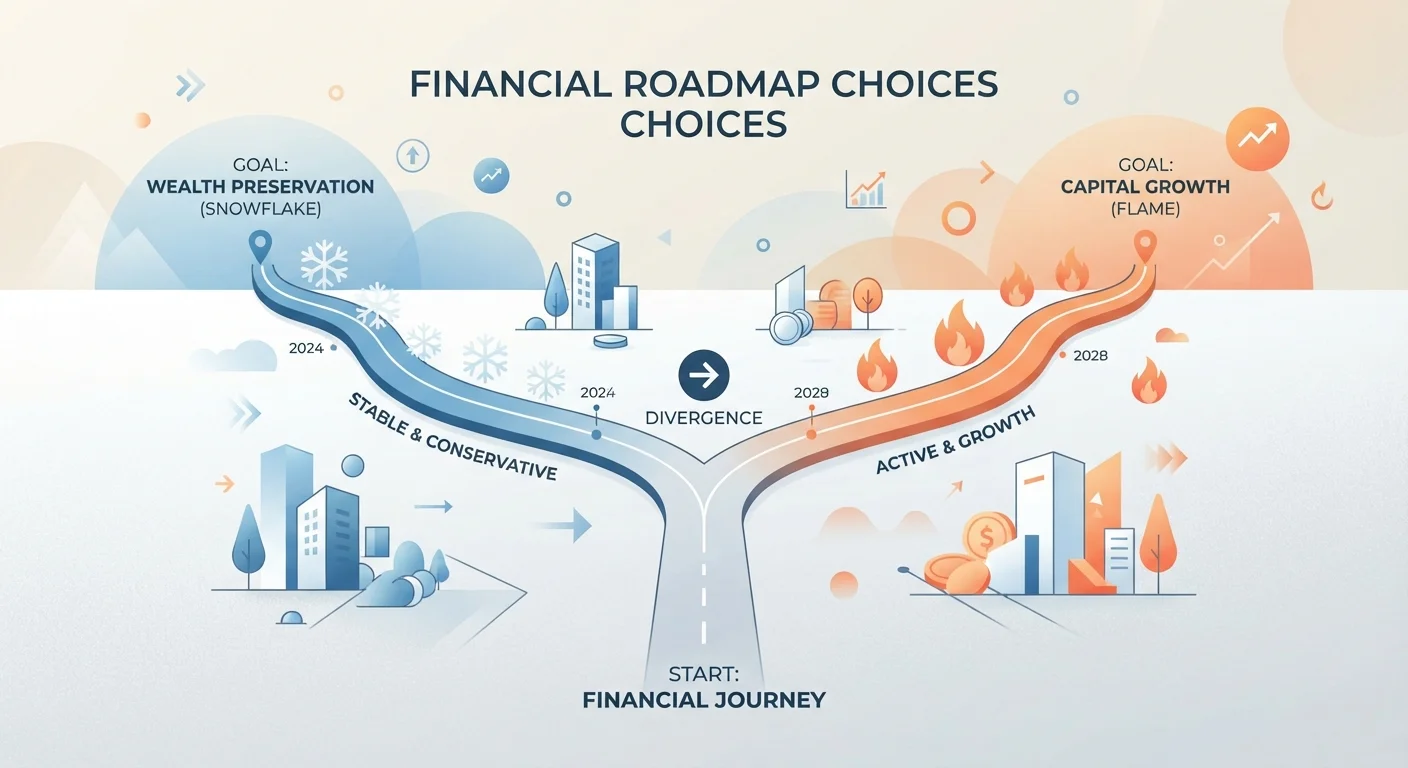
Option A
Debt Avalanche
The mathematically efficient, interest-minimizing approach.
Best for: Borrowers who want to pay the least amount of interest over time and are comfortable staying the course without quick wins.
Option B
Debt Snowball
The motivation-driven, momentum-building strategy.
Best for: Borrowers who need psychological reinforcement and quick early wins to stay committed to their debt payoff plan.
How Each Method Works
Both the debt avalanche and the debt snowball share the same core mechanic: pay the minimum required amount on every debt each month, then direct any extra money toward one specific target account. Where they differ is in how that target is chosen.
Debt Avalanche: You rank all your debts by interest rate, from highest to lowest. Every extra dollar goes toward the highest-rate balance first. Once that account reaches zero, you roll that payment into the next highest-rate debt, and so on. Because high-interest debt accumulates the most cost over time, eliminating it first shrinks your total interest bill.
Debt Snowball: You rank debts by outstanding balance, from smallest to largest, regardless of interest rate. Extra money attacks the smallest balance first. When that account is paid off, you add that freed-up payment to the next smallest debt — creating a snowball effect of growing payments and shrinking balances.
Before committing to either method, it's worth reviewing our checklist of things to assess before aggressive debt repayment, including income stability and whether you have a basic emergency fund in place.
| Criterion | Debt Avalanche | Debt Snowball |
|---|---|---|
| Payoff order | Highest interest rate first | Smallest balance first |
| Total interest paid | Typically lower | Typically higher |
| Time to first payoff | Potentially longer | Often faster (for small accounts) |
| Motivational structure | Interest savings as reward | Account closures as reward |
| Best suits | Disciplined, numbers-focused borrowers | Motivation-driven borrowers |
| Complexity | Low — sort by APR | Low — sort by balance |
The Math vs. The Psychology
On paper, the debt avalanche is the more cost-effective approach. By neutralizing high-interest balances first, you reduce the amount of interest accruing across your entire debt portfolio each month. The savings can be meaningful, particularly when high-rate credit card debt is involved.
The debt snowball, however, is backed by behavioral research. Eliminating an account entirely — even a small one — generates a concrete sense of progress. That early win can reinforce the habit of making extra payments and reduce the likelihood of abandoning the plan altogether. For many people, a strategy they'll stick with is more valuable than a theoretically optimal one they'll abandon.
~$1,000+
Potential interest savings with avalanche method
NerdWallet analysis estimates that choosing the avalanche over the snowball can save hundreds to over a thousand dollars depending on balances and rates involved.
77%
Americans carrying some form of debt
According to Experian's State of Credit report, the vast majority of U.S. consumers carry at least one form of debt, making repayment strategy a widely relevant decision.
The right choice depends on your honest self-assessment. If you're disciplined and the interest savings are a meaningful motivator, the avalanche may suit you well. If past debt payoff attempts have stalled or you're juggling several accounts at once, the snowball's momentum-building structure might keep you on track longer.
Blending Savings With Debt Repayment
Neither method operates in a vacuum. While you're working through debt, maintaining at least a small savings cushion matters — an unexpected expense without one could push you back into higher-cost borrowing. Our guide to saving money while carrying debt explains how to balance both goals without derailing either.
For those managing multiple debts across several lenders, debt consolidation is another option worth understanding. Consolidating balances into a single lower-rate loan can sometimes complement either payoff method by simplifying your repayment structure and reducing the interest rate you're working against.
Over the longer term, how you handle debt today shapes your broader financial picture. The relationship between savings and debt across life stages is worth understanding as your income and goals evolve. For more everyday money habits that support long-term financial health, small consistent decisions compound just as powerfully as the payoff method you choose.
Both Methods Require Financial Minimums
Whichever approach you choose, you must continue making at least the minimum payment on every debt each month. Missing minimums can trigger penalty rates, late fees, and credit score damage — all of which undermine your payoff plan. The extra funds you direct toward your target account come from your budget surplus, not from reducing other required payments.
This article is for general informational and educational purposes only and does not constitute personalized financial or legal advice. Consult a licensed financial professional for guidance tailored to your specific situation.
The content on this site is for informational purposes only and is not a substitute for professional advice. Always consult a qualified professional for guidance specific to your situation.