

Start here
Why Most Adult Wardrobes Start Wrong
Next
The Foundational Pieces Worth Prioritizing
Then
How to Shop Intentionally on Any Budget
Apply it
Building Outfits, Not Just Clothes
Maintain it
When to Expand and What to Audit
Why Most Adult Wardrobes Start Wrong
Most people accumulate clothes rather than build a wardrobe. The result is a closet full of items that don't work together — impulsive purchases, gifts that don't fit your style, and pieces kept out of guilt rather than usefulness. Starting fresh as an adult means breaking that cycle deliberately.
The foundational mistake is shopping without a system. Without knowing what you already own, what occasions you actually dress for, and what fits your body well today, every purchase is essentially a guess. Before spending a dollar on anything new, do a quick honest inventory of what you're working with. Our wardrobe audit guide walks through exactly how to do this efficiently.
Capsule wardrobe
A small collection of versatile clothing items that work together in many combinations, reducing the need for large quantities of clothes.
Wardrobe staples
Core clothing pieces — like plain t-shirts, dark jeans, or a blazer — that remain useful across seasons, trends, and occasions.
Outfit versatility
How many different outfits or looks a single clothing item can contribute to by pairing with other pieces in your wardrobe.
Fit (in clothing)
How closely and proportionally a garment follows your body's shape. Good fit means no excess fabric pooling and no pulling at seams.
Neutral palette
A set of colors — such as white, black, navy, grey, and tan — that mix easily with each other and with most accent colors.
Transitional pieces
Clothing items — like light knits or unlined jackets — that work across multiple seasons rather than being limited to one temperature range.
The Foundational Pieces Worth Prioritizing
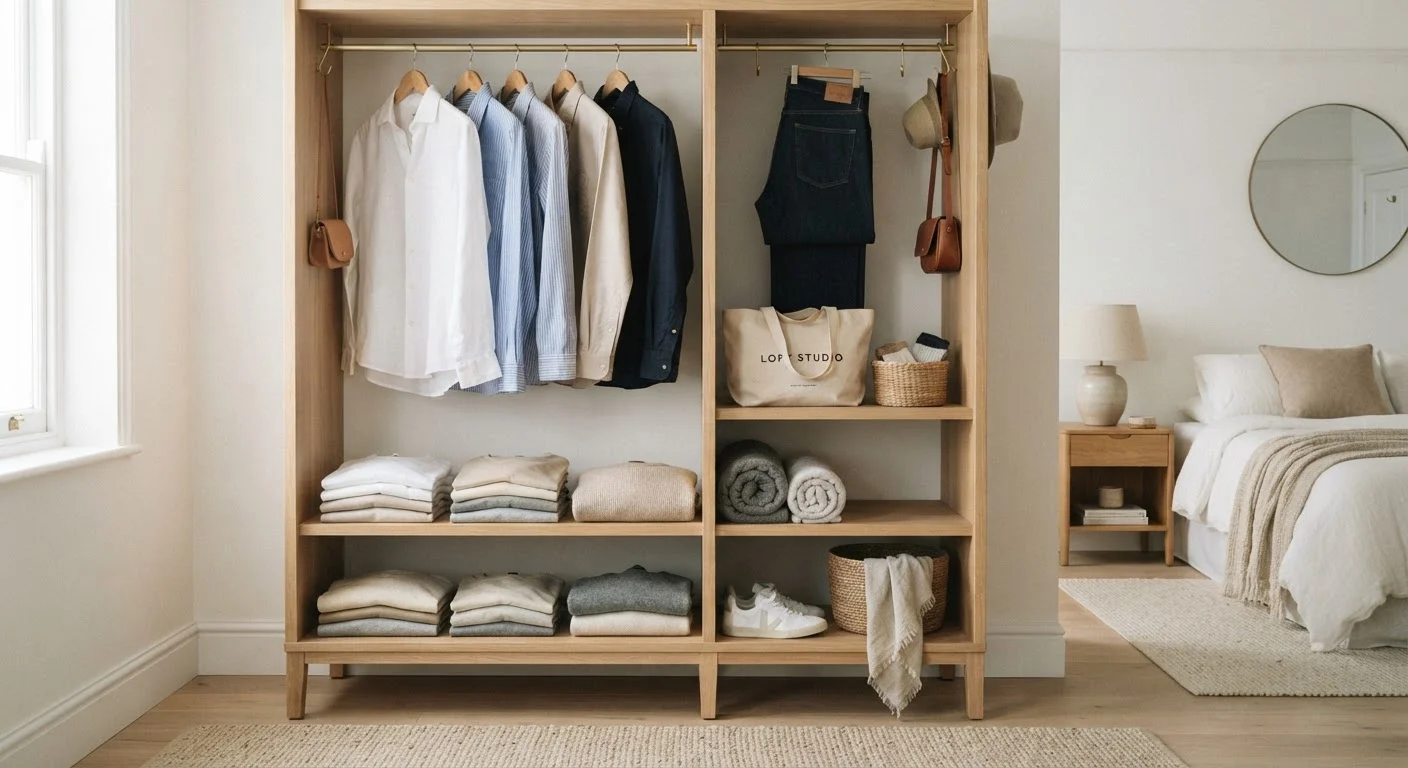
A functional wardrobe is built on a core set of items that work across multiple occasions. These aren't trendy pieces — they're the reliable workhorses that make getting dressed easier every day. For most adults, the true essentials fall into these categories:
- A well-fitting pair of dark jeans — dressable up or down, season-spanning, and endlessly versatile.
- Neutral crewneck or V-neck t-shirts in white, grey, or navy — the base layer for most casual outfits.
- A crisp button-down shirt — works for offices, dinners, and casual settings depending on how it's worn.
- Chinos or tailored trousers in a neutral tone — a step up from jeans for professional or semi-formal occasions.
- A structured outer layer — a simple blazer or unlined jacket covers a wide range of situations.
- Clean, minimal footwear — a white or neutral sneaker and one more versatile leather or leather-look shoe handle most situations.
For a deeper look at which of these staples genuinely earn their place in a long-term wardrobe, see the wardrobe staples that actually earn their space.
Fit First, Label Second
When trying on any foundational piece, focus entirely on how it fits across the shoulders and through the torso — these are the hardest areas to alter. Sleeve length and trouser hems are simple and inexpensive to adjust by a tailor. Buying something that fits perfectly in the body and having the length adjusted is almost always a better outcome than buying something that fits the length but bunches elsewhere.
How to Shop Intentionally on Any Budget
Intentional shopping means buying for your actual life, not an aspirational version of it. If you work from home and rarely attend formal events, a tuxedo jacket isn't a gap worth filling. Map your real weekly schedule — work, errands, social occasions, exercise — and let that drive your priorities.
Budget matters, but it doesn't determine whether you build a good wardrobe. It determines where you spend strategically. Allocate more toward items you'll wear most frequently and in which fit is hardest to fake. Spend less on pieces worn occasionally or that are easy to replace. If you need help thinking through what a clothing budget should look like alongside your other expenses, our budgeting primer can help you set realistic limits.
Avoid Shopping for an Aspirational Life
It's easy to buy clothes for who you want to be rather than who you are day-to-day. A structured blazer for dinners you rarely attend or workout gear for a gym routine you haven't started yet are common examples. These purchases feel productive but typically go unworn, wasting both money and closet space. Build around your actual weekly life first.
Building Outfits, Not Just Clothes
Individual pieces matter less than how they work together. When evaluating any potential purchase, the key question is: how many outfits does this actually unlock? A navy blazer that pairs with jeans, chinos, and trousers in three different color combinations is doing real work. A brightly printed statement shirt that only works with one specific bottom is a narrow investment.
This is where a neutral color palette pays off structurally. When your foundational items share a compatible color family, mixing and matching becomes almost automatic. As your wardrobe grows, you can introduce pattern and color deliberately rather than reactively. Thinking seasonally also helps — a few transitional layering pieces can extend your existing wardrobe considerably. Our guide on dressing for the season without rebuilding your wardrobe covers this in practical detail.
When to Expand and What to Audit
A wardrobe is never truly finished — it should evolve with your life circumstances, not your impulses. The right time to add pieces is when a genuine gap appears: a new job with different dress expectations, a move to a different climate, or a recurring social situation where you consistently feel underdressed or overdressed.
Equally important is the discipline of removing items. Keeping pieces that don't fit, don't suit you, or haven't been worn in over a year creates visual clutter that makes the entire wardrobe harder to use. A periodic review — even just seasonal — keeps the system working. Return to the wardrobe audit process whenever your closet starts feeling overwhelming again rather than useful.
Building a real wardrobe as an adult is less about fashion and more about self-awareness — knowing your life, your body, and your actual needs well enough to dress for them confidently every day.
Wardrobe Audit Guide
A structured, room-by-room checklist to evaluate what's already in your closet, identify genuine gaps, and decide what to keep, donate, or replace before buying anything new.
Seasonal Dressing Guide
Practical advice on layering and transitional pieces that carry your existing wardrobe through seasonal changes without requiring a full rebuild each time.
First Budget Walkthrough
A plain-language primer on building a personal budget from scratch — useful for determining how much to realistically allocate to clothing alongside other expenses.
Frequently Asked Questions
There's no magic number, but most people function well with around 30 to 40 items covering basics, workwear, and casual occasions. The goal is having enough to dress appropriately for every situation in your life without excess. Quality and versatility matter far more than quantity.
Prioritize fit above everything else. A well-fitting item in a simple style will always look more intentional than a poorly fitted piece from a premium label. If something doesn't fit off the rack, basic tailoring for common items like trousers is often inexpensive.
It depends on the item. High-wear basics like everyday t-shirts can reasonably be bought at a lower price point and replaced periodically. Pieces you wear constantly or that anchor outfits — like a well-cut jacket or dark jeans — often reward a modest investment in durability and fit.
Start by auditing what you already own, then identify the single biggest gap in your current rotation. Fill that gap first before buying anything else. Thrift stores and resale platforms can be excellent sources for quality basics at lower prices — look for natural fabrics and minimal wear.
Neutral tones — navy, white, grey, black, and tan — are the most practical starting point because they mix with almost anything. Once your neutral base is set, you can introduce one or two accent colors that complement your skin tone and personal preference.
The clearest signal is a consistent gap: a recurring situation in your life — a new job, a social context, a season — where nothing you own feels right. Expanding to fill a real need is different from buying because something looked appealing in a store.
The content on this site is for informational purposes only and is not a substitute for professional advice. Always consult a qualified professional for guidance specific to your situation.