

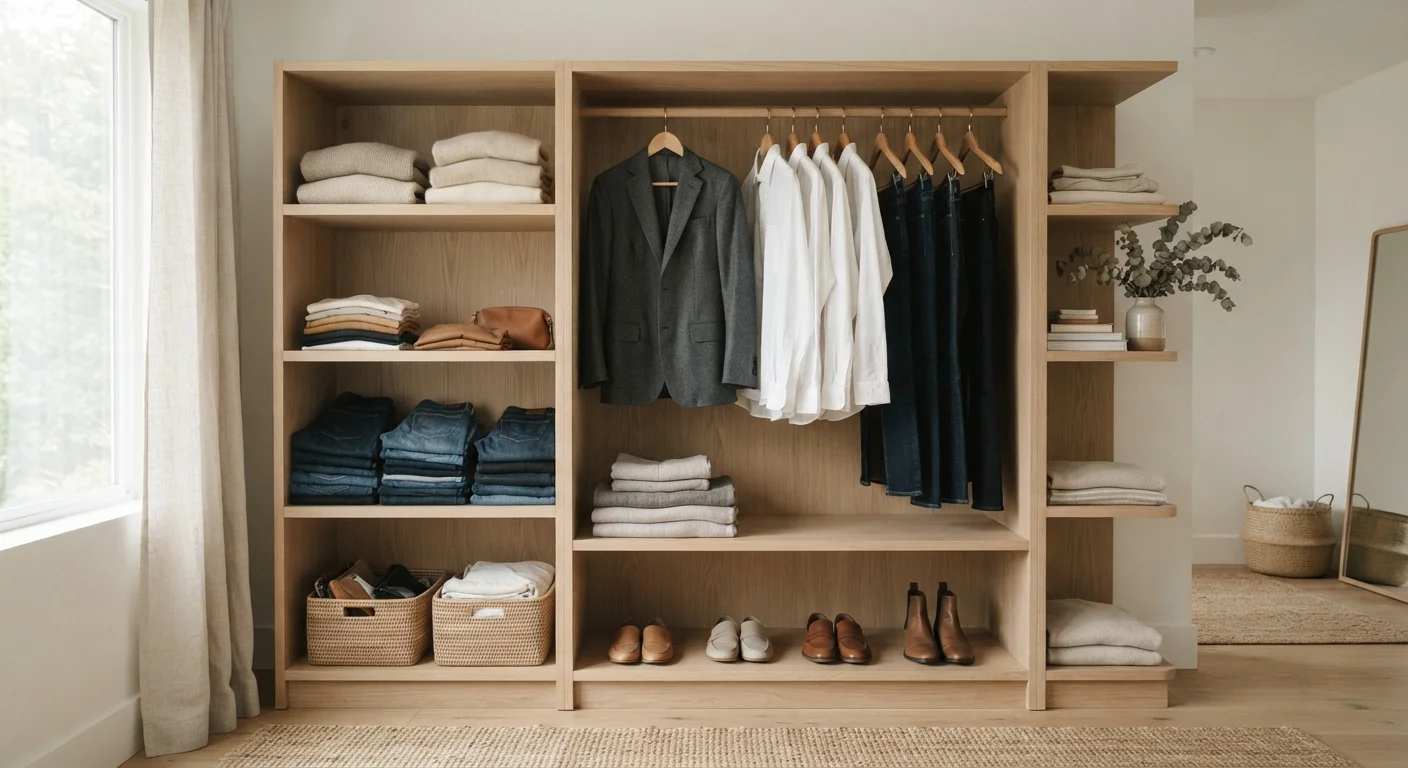
Why most 'essentials' lists miss the mark
The word essential gets applied to a lot of clothing that isn't essential at all — it's aspirational, trend-adjacent, or simply what editors happened to be wearing that season. A genuine wardrobe staple does something specific: it earns its physical space by combining with multiple other pieces, working across different social contexts, and holding up to regular wear without looking tired.
If you've ever stared at a full closet and felt like you had nothing to wear, the problem often isn't quantity — it's that too many pieces only work in narrow conditions. As our guide on why outfits don't come together explains, versatility gaps are one of the most common underlying causes of that frustration.
The six pieces below are selected not because they appear on every style list, but because they genuinely multiply outfit options without requiring a wardrobe overhaul to support them. Each one is assessed by the same practical standard: how many combinations does it unlock, and how many occasions can it handle?
Test versatility before you commit
Before adding a piece to your wardrobe, mentally run it against at least three outfits you already own. If you can't combine it with existing pieces without buying additional items, it's likely filling a gap in a trend rather than your actual wardrobe. True staples slot in immediately — they don't require supporting purchases to function.
The six pieces that genuinely earn their hanger space
A well-fitting white or light-toned shirt
Few pieces carry as much quiet versatility as a well-cut shirt in white or a pale neutral. It reads polished under a blazer, relaxed tucked into jeans, and effortlessly layered under a sweater. The key word is well-fitting — shoulder seams that sit correctly, a body that skims without pulling, and sleeves at the right length. A shirt that genuinely fits your frame does more work than a trendy piece that doesn't.
Fabric matters too: a tightly woven cotton or a cotton-linen blend tends to hold its shape longer and survive more washes than thin, sheer alternatives.
A shirt that truly fits your frame outperforms any trendy piece that doesn't.
Dark, straight-leg trousers
Dark trousers — navy, charcoal, or black — in a straight or slightly tapered cut are among the most dependable pieces you can own. They translate convincingly from office settings to casual dinners without needing a wardrobe change. They pair with almost everything above the waist: knitwear, blouses, structured jackets, and simple tees.
When assessing a pair, check the rise (how high they sit at the waist), the break at the ankle, and the fabric weight. Heavier fabrics hold their structure and drape better across most body types.
Dark straight-leg trousers move from desk to dinner without missing a beat.
A medium-weight, neutral-toned knitwear piece
A crew-neck or V-neck sweater in camel, oatmeal, grey, or navy is a layering workhorse. It softens structured pieces, adds warmth without bulk, and works tucked, untucked, or tied at the shoulders. Medium-weight knitwear hits the sweet spot between a lightweight tee and a heavy coat — making it genuinely useful across three of the four seasons in most U.S. climates.
Natural fiber blends (wool, cotton, or cashmere blends) tend to breathe better and pill less over time than purely synthetic options, though care instructions vary — always check the label.
Medium-weight knitwear layers across three seasons without adding bulk.
A structured outer layer
Whether it takes the form of a tailored blazer, a clean-lined trench, or an unstructured linen jacket, a structured outer layer is what elevates an outfit from assembled to intentional. It signals effort without requiring it. Crucially, it extends the wearability of pieces underneath — jeans and a tee become a considered look the moment you add a well-cut jacket.
Opt for a silhouette that works with both casual and semi-formal combinations. Avoid overly trendy cuts that date quickly; a classic shape will earn its hanger space for years.
A structured outer layer is what turns assembled clothing into an intentional outfit.
Dark or mid-tone denim in a classic cut
Denim is one of the most socially flexible fabrics in American wardrobes. A darker rinse reads more formally than a faded or distressed pair, giving you genuine range. A straight, slim-straight, or bootcut silhouette tends to age better stylistically than extreme cuts that come in and out of trend rapidly.
Good-quality denim with a small percentage of stretch (around 1–2%) holds its shape better through repeated wear than rigid raw denim, particularly for everyday use. The fit across the seat and thighs determines comfort; length can always be hemmed.
A darker denim rinse gives jeans genuine range from casual to semi-formal settings.
A versatile, low-profile shoe in a neutral
Footwear anchors an outfit and can shift its register significantly. A low-profile shoe — a clean leather sneaker, a simple loafer, or a low ankle boot — in white, tan, black, or warm grey pairs with the widest variety of clothing without competing for attention. Shoes that work across outfit categories earn their space far more than statement footwear reserved for specific looks.
Comfort matters just as much as appearance. A shoe you won't wear because it's uncomfortable is not actually a staple — it's just storage.
A shoe you won't wear because it's uncomfortable is not a staple — it's just storage.
Staples are personal, not universal
While these categories apply broadly, what qualifies as a genuine staple depends on your lifestyle, climate, and how you actually dress day to day. A person who rarely wears trousers has no obligation to own a pair simply because a style guide says so. The value of a staple comes from how often it's actually worn, not from its inclusion on a list. Use these categories as a starting framework, then adjust based on what your real life requires.
How to use this as a starting point
These six categories aren't a prescription — they're a diagnostic tool. Run your current wardrobe against them. If you own an item in each category that genuinely fits well and sees regular use, your foundation is solid. If a category is missing or filled by a piece that doesn't actually work for you, that's where focused attention (and future spending) makes sense.
For those building a wardrobe more deliberately, our article on building your first real wardrobe as an adult walks through how to prioritize purchases in sequence. And if you're working with an existing closet full of pieces you're not sure about, a structured wardrobe audit can help you identify what's genuinely earning its space and what's just occupying it.
It's also worth remembering that fit is the variable that most determines whether a staple actually functions as one. Our piece on fit versus style makes a strong case for why proper fit outranks price, brand, or trend in determining how good clothing actually looks on your body. A $40 shirt that fits perfectly will outwork a $200 shirt that doesn't every single time.
The content on this site is for informational purposes only and is not a substitute for professional advice. Always consult a qualified professional for guidance specific to your situation.