

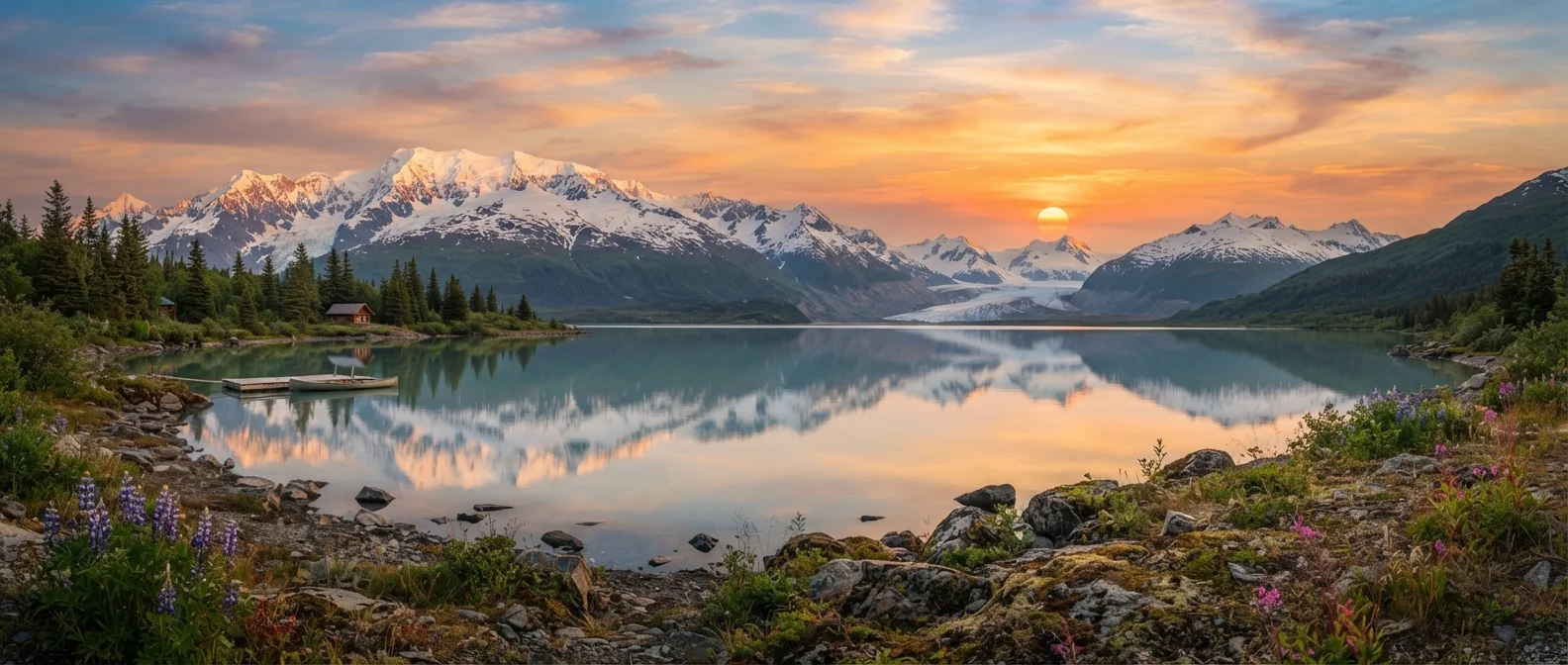
The Midnight Sun: What It Really Feels Like
Few natural phenomena catch travelers off guard quite like Alaska's midnight sun. Depending on where you are in the state, you can experience anywhere from 19 to nearly 24 hours of daylight during peak summer. Fairbanks, near the Arctic Circle, sees the sun dip below the horizon for only a couple of hours in late June — producing a long, amber twilight rather than true darkness.
What surprises most visitors isn't the novelty — it's the physical and psychological adjustment. Falling asleep when it's bright outside takes real effort. Bring a quality sleep mask and consider blackout curtains if you're sensitive to light. Many travelers find their internal clocks shift within a day or two, but it's worth building in recovery time at the start of your trip.
The flip side? You gain extraordinary flexibility. Hiking a glacier trail at 10 p.m. with full visibility isn't unusual. Wildlife is often more active in the cooler late-evening hours, and popular sites like Denali's visitor corridors are far less crowded after dinner.
| Peak Summer Daylight (Fairbanks) | Up to 22+ hours around summer solstice (National Weather Service Alaska) |
| Salmon Run Peak | July – early August (Alaska Department of Fish and Game) |
| State Size | 663,268 sq miles — largest U.S. state (U.S. Census Bureau) |
| Average Summer High in Anchorage | Approximately 65°F (18°C) in July (NOAA Climate Data) |
| Denali Visitor Season | Late May through early September (National Park Service) |
Wildlife Access: Expectations vs. Reality
Alaska's summer wildlife is genuinely spectacular — but it rewards patience and realistic expectations. Brown bears congregate at fish-rich rivers like the Brooks River in Katmai National Park during salmon runs, which typically peak in July and early August. Viewing platforms put you in close range safely, but permits and advance reservations are essential; spots fill months ahead.
Moose are surprisingly common near roadways and even suburban Anchorage. Humpback whales surface regularly in Southeast Alaska's Inside Passage, particularly around Juneau and Sitka. Puffins, bald eagles, and Dall sheep round out a list that genuinely delivers on the brochure's promise — if you know where to look.
One honest caveat: wildlife sightings are never guaranteed. Book guided excursions with naturalists who understand seasonal movement patterns. They significantly improve your odds and keep encounters safe and respectful. Never approach wildlife on your own to get a closer look — Alaska's animals are wild, large, and unpredictable.
Midnight Sun
A natural phenomenon above the Arctic Circle where the sun remains visible at midnight during summer months. In Alaska, extended daylight rather than continuous sunlight applies to most visited regions.
Bush Plane
A small aircraft used to reach remote Alaskan communities, parks, and lodges not connected by road. Flights are weather-dependent and typically operate on flexible schedules.
Inside Passage
A coastal waterway running through Southeast Alaska (and British Columbia), sheltered by islands. It's a key route for ferries and cruise ships and a prime area for marine wildlife viewing.
Alaska Marine Highway
A state-operated ferry network connecting coastal Alaskan communities and linking to Bellingham, Washington, offering an alternative to flying for travelers with flexible schedules.
Logistics: Distances, Transportation, and Planning Realities
Alaska is bigger than Texas, California, and Montana combined. That scale defeats travelers who underestimate it. Driving from Anchorage to Fairbanks takes roughly eight hours on the Parks Highway — and that's only a fraction of the state. Many iconic destinations, including Katmai, Lake Clark, and most of Southeast Alaska, are accessible only by small plane or ferry.
The Alaska Marine Highway System connects coastal communities from Bellingham, Washington, to Kodiak and beyond — a scenic and practical option for those with time. Bush planes serve remote lodges and parks; flights can be weather-dependent and occasionally delayed by days, so always build buffer time into your itinerary.
Rental vehicles book out early in summer. Campgrounds in Denali and Kenai Fjords fill by spring. Tour operators with limited capacity — whale watching boats, bear-viewing flights — sell out months in advance. The honest message: Alaska in summer rewards early planners. For a deeper dive into how seasonality affects your entire trip-planning approach, see our guide to planning around seasonal considerations.
Plan Reservations Further Ahead Than You Think
Popular Alaska summer experiences — Denali bus tours, bear-viewing flights, whale-watching boats — routinely sell out by February or March for peak-season dates. The National Park Service and many licensed tour operators release availability windows well in advance. Waiting until spring to book often means choosing from limited or backup options.
Travel conditions, entry requirements, and wildlife regulations in Alaska can change. Always verify current information with official sources such as the National Park Service and the Alaska Department of Fish and Game before your trip.
The content on this site is for informational purposes only and is not a substitute for professional advice. Always consult a qualified professional for guidance specific to your situation.