

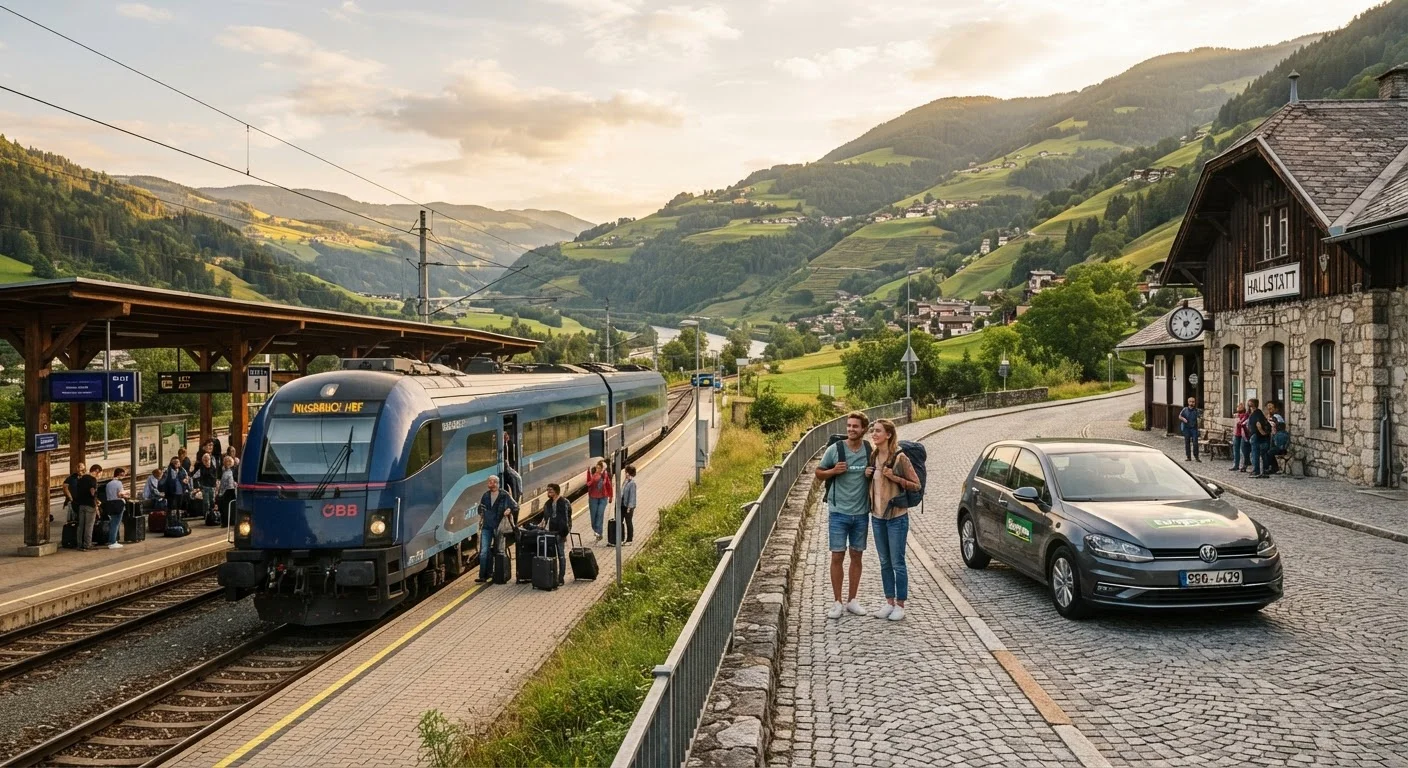
Option A
Europe by Train
The city-hopping, stress-free classic.
Best for: Travelers moving between major European cities who want convenience, comfort, and no parking headaches.
Option B
Europe by Rental Car
The flexible, off-the-beaten-path explorer.
Best for: Travelers wanting to reach rural villages, national parks, and coastal backroads on their own schedule.
How Europe's Two Transport Modes Actually Stack Up
Choosing between a rail pass and a rental car is one of the most consequential decisions in any European trip plan — and it shapes everything from your daily rhythm to your total budget. Neither option is universally superior. The right answer lives in the details of your specific itinerary.
Europe's train network is genuinely world-class in many regions. Countries like France, Germany, Switzerland, Italy, Spain, and the Netherlands offer high-speed and regional rail connections that make city-hopping fast, comfortable, and often affordable when tickets are purchased in advance. Trains drop you in city centers, eliminating the urban navigation that intimidates many American drivers abroad.
A rental car, on the other hand, offers a kind of freedom that no rail timetable can match. The Amalfi Coast, the Scottish Highlands, Slovenia's countryside, Portugal's wine regions — these places reveal themselves slowly, along roads that trains never touch. If your version of a dream European trip involves spontaneous detours and lingering in small towns, wheels of your own make that possible.
| Criterion | Europe by Train | Europe by Rental Car |
|---|---|---|
| Best route type | City-to-city, multi-country | Rural, coastal, countryside |
| Flexibility | Tied to schedules | Fully on your own timeline |
| Luggage handling | Carry-on and overhead only | Store everything in the trunk |
| City center access | Direct to central stations | Parking required; often costly |
| Hidden costs | Seat reservation fees, pass surcharges | Fuel, tolls, parking, insurance |
| Environmental impact | Lower carbon footprint | Higher emissions overall |
| Group travel ease | Multiple seats needed | One vehicle for 4–5 people |
| Learning curve for Americans | Minimal; signage is clear | Higher; unfamiliar rules and roads |
For more on estimating the real costs of each approach before you book, see our guide to building a travel budget that holds.
What American Travelers Need to Know Before Deciding
Several practical realities affect this choice in ways that don't come up for European travelers making the same decision.
Driving Considerations
Most European rentals use manual transmissions. Automatic vehicles exist but typically cost more and must be reserved specifically — don't assume one will be available. Additionally, many US states' licenses are accepted across Europe, but an International Driving Permit (IDP) is strongly recommended and required in some countries. Verify entry requirements with your destination country's official tourism or transport authority well before departure.
Road rules also vary meaningfully. Speed limits, roundabout etiquette, toll systems (some require pre-purchased vignettes), and city-center low-emission zones can catch unprepared visitors off guard. Research the rules of each country you'll drive through.
Rail Passes vs. Point-to-Point Tickets
A Eurail pass sounds appealingly simple, but it's not always the most economical choice. If you're booking routes well in advance, individual tickets — especially on high-speed lines — can undercut pass prices significantly. Passes deliver the best value for spontaneous travelers covering many routes, or for those wanting unlimited flexibility without advance planning.
Low-Emission Zones Are Expanding Across Europe
Many European cities — including London, Paris, Milan, and Amsterdam — have introduced or expanded low-emission zones (LEZs) that restrict certain vehicle types from entering without a fee or permit. Rental vehicles may or may not be compliant, and penalties for entering without authorization can be significant. Always confirm your rental vehicle's eligibility and register it if required before driving into a major city center.
Seasonality also plays a role: summer travel means packed trains and limited last-minute car availability. Our article on planning travel around seasonal considerations breaks down how timing affects both pricing and experience across European destinations.
Making the Call — or Combining Both
The smartest approach for many American visitors is a hybrid. Take the train between major cities — where speed and convenience shine — then pick up a rental car for a focused rural chapter of the trip. For instance, arrive in Florence by high-speed rail from Rome, then rent a car for four days to explore Chianti and Siena before returning the vehicle and boarding a train to Venice.
This strategy lets you sidestep the worst of each option's drawbacks: you're not wrestling a rental through Rome's chaotic traffic, but you're also not missing the Tuscan farmhouses that no train station serves.
32,000+
Miles of high-speed rail track in Europe
According to the International Union of Railways, Europe has the world's most extensive high-speed rail network, with routes spanning dozens of countries.
~60%
European destinations unreachable by rail alone
Industry travel researchers estimate a significant majority of Europe's smaller villages and rural attractions lack direct rail access, highlighting the car's unique reach.
Worth noting: some travelers assume that renting a car is always cheaper than buying rail tickets for a group. That's not always true once you factor in fuel, tolls, parking fees, and insurance. Run the numbers for your specific group size and route before committing. Common travel myths that steer American vacationers often lead to assumptions that don't hold up under scrutiny.
Whatever you choose, the richness of Europe rewards deliberate planning. Think through your destinations first, then let the best transport method follow naturally from the map you draw.
The content on this site is for informational purposes only and is not a substitute for professional advice. Always consult a qualified professional for guidance specific to your situation.