

Why Solo Travel Demands a Different Mindset
Traveling alone is one of the most rewarding ways to see the world — but it does shift the responsibility equation. When you're with a group, a travel companion might notice the car following too close or remind you to grab your passport off the café table. Solo, that safety net is yours to build. The good news: a handful of consistent habits make an enormous difference, and none of them require paranoia or giving up spontaneity.
Before any trip, start with solid destination research. Understanding local customs, neighborhoods, and entry requirements sets the stage for smart decisions on the ground. Our structured destination research guide walks you through exactly what to investigate before you go.
“The solo traveler sees more, hears more, and connects more deeply — but only when they've done the quiet work of preparation that makes true openness possible.”
— Rolf Potts, Author of 'Vagabonding' and widely cited voice on independent travel philosophy
Before You Leave: The Habits That Pay Off Most
The safest solo trips are built at home, not improvised abroad. A few pre-departure steps dramatically reduce stress and risk once you're out there.
Share a detailed itinerary with at least one trusted person at home.
If something goes wrong — a missed check-in, an accident, an unexpected delay — someone who knows your route and accommodations can act quickly. A vague "I'm going to Europe" leaves rescuers with almost nothing to work with.
Download offline maps and save local emergency numbers before landing.
Cell service can be unreliable, data plans can fail, and roaming charges can cause travelers to avoid using their phones when they need them most. Offline maps work without any connectivity at all.
Keep digital and physical copies of key documents in separate locations.
Losing a passport or having a phone stolen can turn manageable situations into genuine crises. Redundancy gives you options when originals are unavailable.
Blend in with local dress and behavior norms as much as practical.
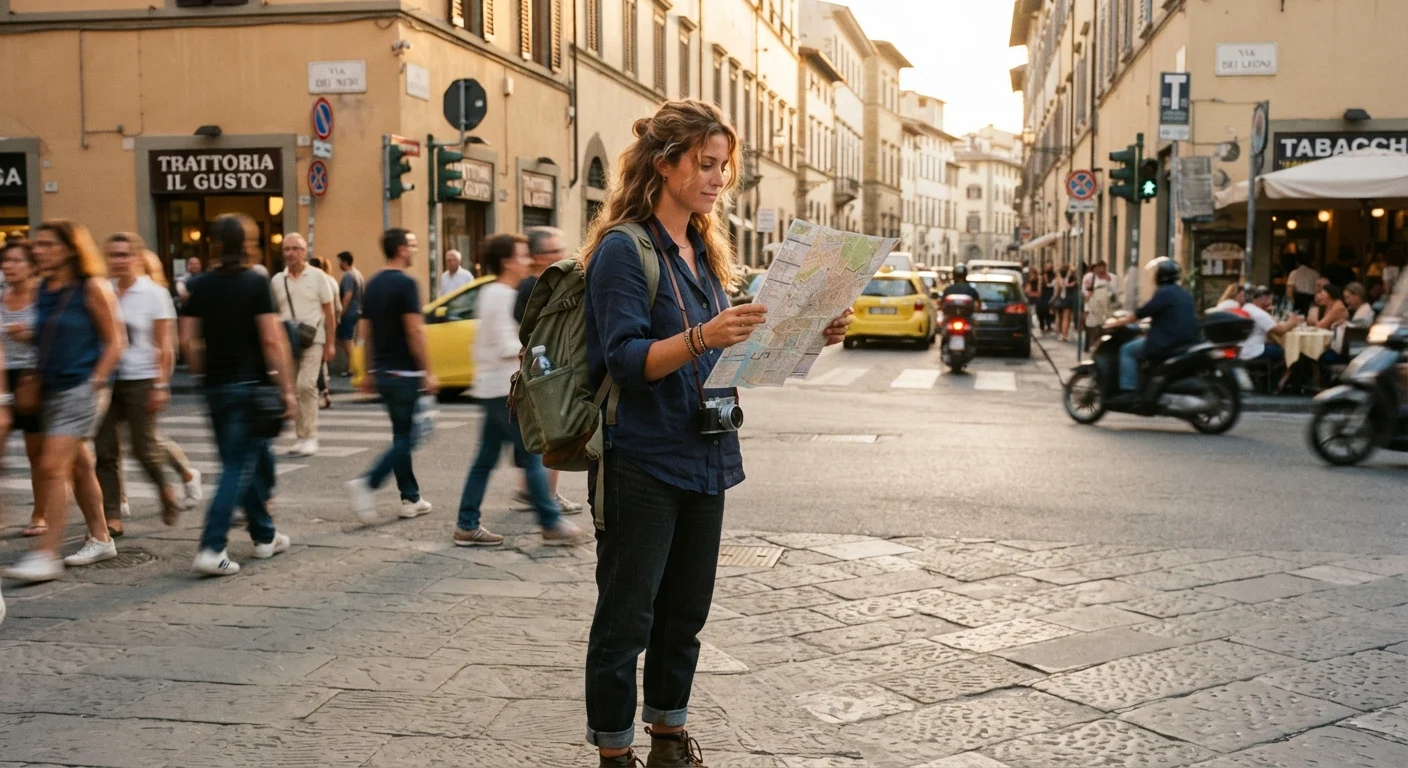
Looking conspicuously like a tourist — clutching an open guidebook, wearing loud branded gear, or loudly consulting a phone at every corner — can attract unwanted attention in some environments. Adapting reduces that signal.
Trust and act on your gut when a situation feels off.
Experienced solo travelers consistently cite intuition as a key safety tool. Feeling uncomfortable in a space or with a person is valid information — not rudeness — and acting on it quickly is almost always the right call.
For a full checklist of pre-departure tasks — from passport validity to mail holds — see Your Pre-Trip Checklist.
On-the-Ground Habits That Keep You Sharp
Once you've landed, situational awareness becomes your most valuable tool. That doesn't mean staying on high alert 24/7 — it means developing small, automatic habits that help you read your environment accurately.
72%
Solo travelers who report feeling unsafe at least once per trip
According to a solo travel survey cited by Solo Traveler World, the majority of incidents involved minor issues like getting lost or being approached by aggressive vendors — not violent crime.
3x
Higher risk of bag theft in crowded tourist areas vs. residential neighborhoods
Travel security experts broadly note that petty theft concentrates in high-traffic tourist zones; spreading itineraries across varied neighborhoods reduces exposure.
It also helps to understand how solo travel differs logistically from group travel. Our comparison of solo vs. group travel planning breaks down exactly how costs, flexibility, and safety calculus shift when you're flying solo.
First Night in a New City? Go Low-Key
Arrive, orient yourself, and keep your first evening simple — a neighborhood walk, a local meal, an early night. Fatigue from travel degrades judgment and awareness. Giving yourself one calm night before diving into exploration pays dividends for the entire trip.
This article provides general travel safety information for educational purposes. Always verify entry requirements, local laws, and safety advisories through official government sources — such as the U.S. Department of State — before traveling. Conditions vary by destination and can change without notice.
The content on this site is for informational purposes only and is not a substitute for professional advice. Always consult a qualified professional for guidance specific to your situation.