

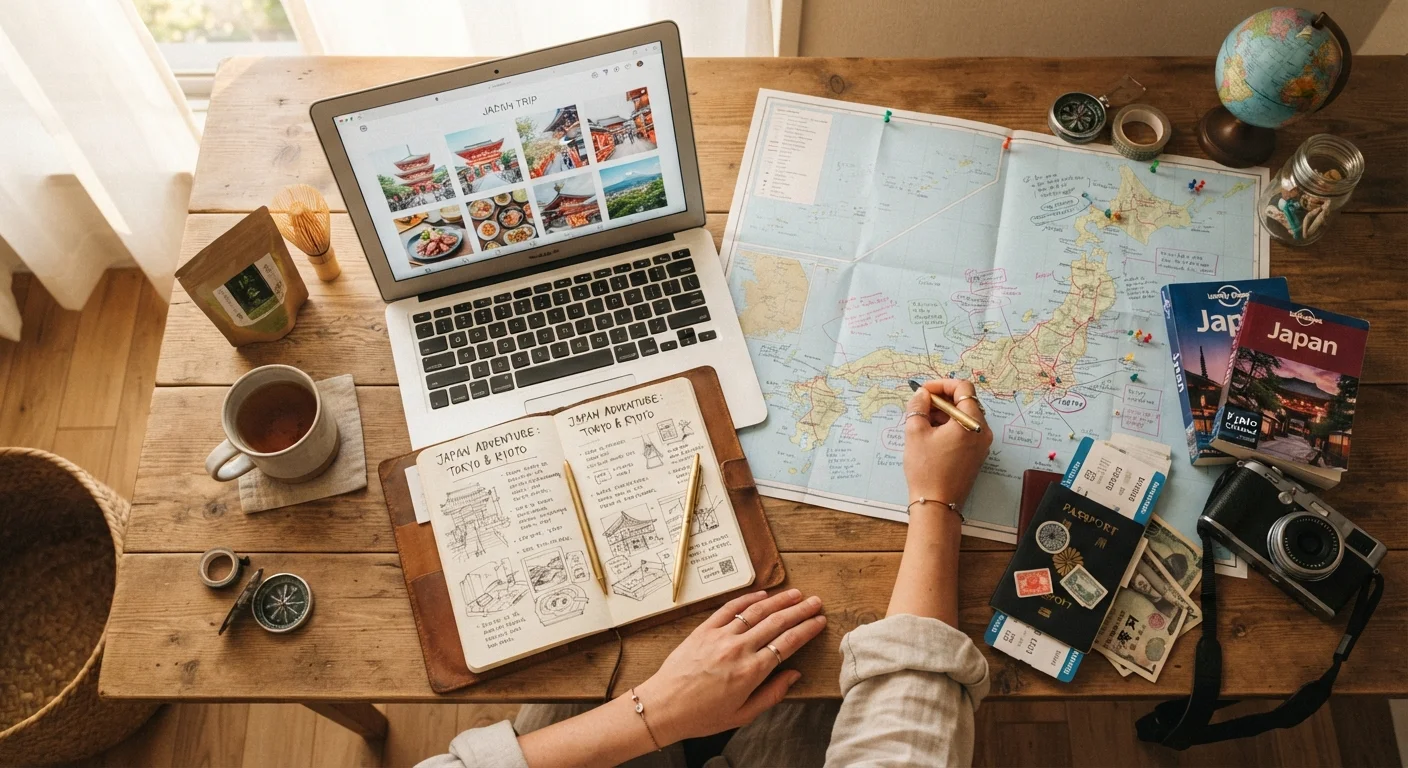
Why structured research changes everything
Wandering into a destination you've never heard of is one of travel's great thrills — but showing up unprepared is a different story entirely. A missed visa requirement, a surprise rainy season, or a cultural misstep can derail even the most enthusiastic traveler. The good news: methodical research doesn't take the adventure out of travel. It gives you a foundation confident enough to improvise on.
This guide walks you through a repeatable research process you can apply to any destination, anywhere on the planet. Whether you've just seen a photo that captivated you or a friend dropped a destination name you've genuinely never heard of, these steps will move you from zero to genuinely informed — fast.
For a broader look at how destination research fits into the full planning picture, see our guide to the anatomy of a well-planned trip. And if this is your first time planning international travel from scratch, our ground-up planning primer covers the full journey from destination selection to packing.
What you will need
What you'll need before you start
You don't need specialty tools or a travel agent to do this well — just a few reliable sources and a system for capturing what you find. Here's what we recommend having on hand:
U.S. State Department Travel Website (travel.state.gov)
Check official travel advisories, visa requirements, and country-specific safety information.
CDC Travelers' Health Portal (wwwnc.cdc.gov/travel)
Review recommended vaccinations and health precautions for your destination country.
Note-taking app or travel planning notebook
Organize research findings, open questions, and logistics into a single reference document.
Google Maps or equivalent mapping tool
Visualize geography, distances between areas, and ground transport options at the destination.
Destination country's official tourism board website
Access locally curated, accurate information on entry rules, regions, and visitor guidance.
Once you've gathered your tools, work through the steps below in order. Each layer of research builds on the last, so geography and entry requirements come before logistics for a reason.
Anchor yourself with geography and climate
Pull up a map and spend a few minutes genuinely orienting yourself. Where is this place in relation to its neighbors? Is it landlocked, coastal, mountainous? How large is it — can you realistically cross it in a day, or does it take a domestic flight? These spatial basics shape everything from your itinerary to your packing list.
Next, look up the climate for the specific months you plan to travel. A destination can have wildly different weather by region and season — the north may be dry while the south floods. Search for average temperatures, precipitation patterns, and whether your travel window falls during a monsoon, hurricane, or peak tourist season.
Verify passport validity and entry requirements
Check your passport's expiration date immediately. Many countries require at least six months of validity beyond your travel dates — a passport expiring in three months may get you denied at the border even if it hasn't technically expired.
Then visit travel.state.gov and locate the official country information page. This tells you whether U.S. citizens need a visa in advance, can obtain one on arrival, or qualify for visa-free entry, and for how long. Never rely solely on a third-party site for this information; entry rules change, and the stakes are too high to get wrong.
Review the current travel advisory
The U.S. State Department assigns every country a travel advisory level — from Level 1 (exercise normal precautions) to Level 4 (do not travel). Read the full advisory, not just the headline level. Advisories often call out specific regions within a country that are higher risk while others remain safe for visitors.
Supplement this with a quick check of recent news for your destination. A country may carry a long-standing caution for reasons unrelated to tourist areas, or a previously safe destination may have recently experienced civil unrest. Getting current context matters.
Research health requirements and precautions
Visit the CDC Travelers' Health portal and search your destination. You'll find recommended and required vaccinations, notes on food and water safety, malaria or other disease risk zones, and any active health alerts. Some destinations require proof of yellow fever vaccination for entry — missing this can mean being turned away or vaccinated at the port of entry under less-than-ideal conditions.
This is general information to guide a conversation with your healthcare provider, not a substitute for one. Book a travel health appointment well in advance of departure, as some vaccine courses take weeks to complete.
Learn the cultural basics and local customs
Even a surface-level understanding of local customs goes a long way. What's the predominant religion, and does it affect dress codes at sites you want to visit? Are there greeting norms, tipping customs, or photography restrictions you should know? Are there behaviors that are legal at home but illegal or deeply offensive locally?
The destination country's official tourism board is a good starting point. Guidebooks from established publishers (available at most libraries) often include well-researched cultural context that travel blogs skip. Aim to understand norms around dress, public behavior, religious observance, and bargaining etiquette if relevant.
Map out on-the-ground logistics
Now get practical. Research what currency is used and whether credit cards are widely accepted or cash is king in most transactions. Understand how people get around — is there a reliable metro system, do ride-hailing apps operate there, or is renting a vehicle the most realistic option? Check whether your U.S. cell plan offers international coverage or whether a local SIM card makes more sense.
Look into airport-to-city transport, typical travel times between regions you want to visit, and whether there are internal transport options (trains, buses, ferries) that affect your schedule. These logistics — often researched last — have a direct impact on how much time and money you actually spend moving versus experiencing a place.
Putting it all together
After working through these steps, you should have a clear, honest picture of your destination: what it looks and feels like, what it takes to get in legally, how safe it is for your specific travel window, what health precautions are warranted, how locals live and what they expect from visitors, and how you'll actually move through the place once you're there.
Capture all of this in one document — a simple notes file works fine — so you can return to it as your planning evolves. Conditions change, and a detail that seemed minor in early research can become important when you're finalizing an itinerary.
Build a living research document
Save your research in a single shareable document and revisit it every few weeks as your trip approaches. Policies, advisories, and even seasonal conditions can shift between the time you start planning and your departure date. A quick refresh two to four weeks out ensures your information stays accurate and actionable.
For comprehensive end-to-end planning guidance once your research is solid, our trip planning from start to finish resource picks up where destination research ends. Traveling solo? Solo travel safety habits are worth reviewing before you head anywhere unfamiliar on your own. And for more destination ideas and inspiration, explore our destinations and trips hub.
This article provides general travel information for educational purposes. Always verify entry requirements, health advisories, and safety conditions through official government and health authority sources before traveling. Consult a qualified healthcare provider for personalized medical advice related to travel health.
The content on this site is for informational purposes only and is not a substitute for professional advice. Always consult a qualified professional for guidance specific to your situation.