

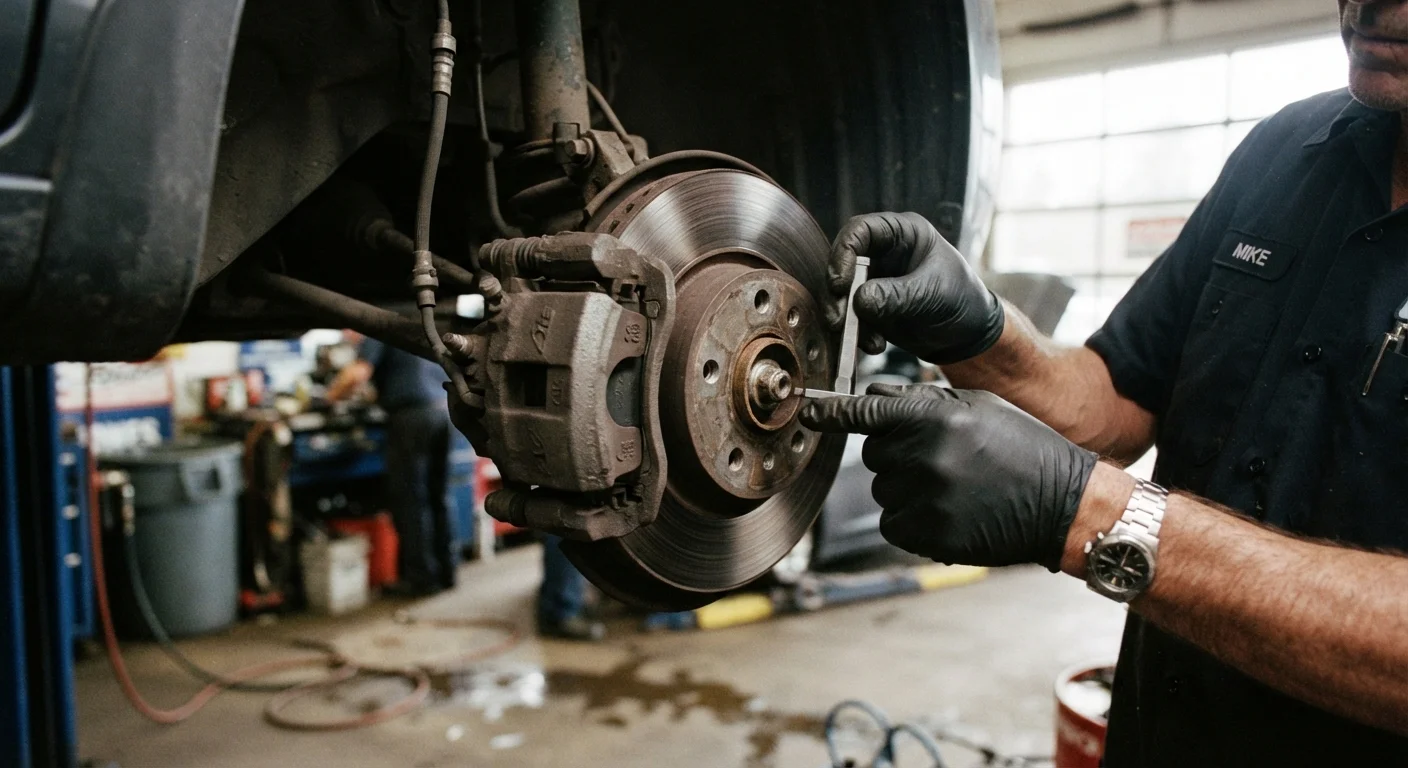
Why Brake Intervals Aren't a Simple Mileage Number
Most drivers have heard a rough figure - replace brake pads every 50,000 miles, or get brakes checked annually. The reality is more nuanced. Brake wear is driven by how, where, and what you drive. A delivery driver navigating urban stop-and-go traffic will burn through pads in a fraction of the time a highway commuter does. A heavy pickup truck towing a trailer puts far more thermal stress on its brakes than a compact sedan on the same road.
Rather than chasing a single mileage target, think of brake maintenance as a system of overlapping checks. Pads, rotors, fluid, calipers, and brake lines each have their own wear patterns and failure modes. For a broader look at how brake service fits into your vehicle's overall upkeep, see your car's complete maintenance schedule.
25,000-65,000 mi
Typical brake pad lifespan range
The National Highway Traffic Safety Administration notes brake performance depends heavily on driving conditions, not mileage alone.
2-3 mm
Minimum pad thickness before replacement
Most vehicle manufacturers specify pad replacement when friction material reaches this thickness; some performance applications use higher thresholds.
2-3 years
Recommended brake fluid flush interval
Many automakers and brake system specialists recommend fluid replacement on this cycle due to moisture absorption degrading performance over time.
What Each Brake Component Actually Does - and When It Wears Out
Brake pads are the consumable friction material that clamps against the rotor to slow your vehicle. They're designed to wear down gradually and are the component you'll replace most often. Most include a built-in wear indicator - a small metal tab that produces a high-pitched squeal when pads are nearing the end of their useful life.
Rotors (also called discs) are the metal discs the pads clamp against. They don't wear out as quickly as pads but are subject to warping from heat and scoring from metal-on-metal contact when pads are neglected. A pulsating brake pedal or vibration during braking often signals rotor problems.
Brake fluid transfers the force from your pedal through hydraulic lines to the calipers. Because it absorbs moisture over time, degraded fluid can reduce braking effectiveness and corrode internal components - a problem that doesn't announce itself with noise or sensation until it's serious.
Calipers squeeze the pads against the rotor. A sticking caliper can cause uneven pad wear, pulling to one side, or excessive heat buildup. Caliper failure is less common but more expensive to address than pad replacement.
Align Brake Checks With Tire Rotations
Every tire rotation - typically every 5,000 to 7,500 miles - requires removing each wheel, making it an efficient opportunity to visually inspect pads and rotors. Ask your technician to measure pad thickness and note rotor condition at each rotation. This builds a useful record of wear progression over time. See how brake service fits alongside tire rotation and wheel balancing for a complete picture of wheel-end maintenance.
Warning Signs That Override Any Schedule
Service intervals tell you when to look - warning signs tell you to act immediately regardless of where you are in that schedule. If you experience any of the following, have your brakes inspected before relying on mileage guidelines:
- Squealing or squeaking during normal braking - often the wear indicator doing its job.
- Grinding or metal-on-metal sounds - pads are likely gone; rotor damage is probable.
- Pulling to one side during braking - can indicate a stuck caliper or uneven pad wear.
- Soft or spongy pedal feel - may point to air in the brake lines or fluid loss.
- Vibration or pulsation through the pedal - commonly associated with warped rotors.
- Burning smell after driving - overheated brakes from a dragging caliper or prolonged heavy use.
These symptoms don't improve on their own. Addressing them promptly almost always costs less than waiting. For context on which maintenance concerns are urgent versus routine, common car maintenance myths explains how misunderstanding service needs can cause real damage.
DIY Inspection vs. Professional Service
Some brake checks are accessible to attentive owners. Looking through the wheel spokes can give you a rough sense of pad thickness remaining, and listening carefully during braking costs nothing. However, a meaningful inspection requires removing the wheel to measure pad thickness with calipers, assess rotor surface condition, check fluid color and level, and test caliper operation.
Brake pad replacement is within reach for mechanically inclined owners with proper tools and workspace - but it requires correct torque specs, safe vehicle support, and the ability to properly seat new pads against rotors. Understanding the honest tradeoffs of DIY maintenance is worthwhile reading before deciding. When brakes are involved, the consequences of an error are severe - this is one area where honest self-assessment matters most.
Frequently Asked Questions
Most brake pads last between 25,000 and 65,000 miles, but this range is wide for a reason. City driving with frequent stops wears pads faster than highway driving. Check your owner's manual and have pads inspected at every tire rotation.
A thorough brake inspection covers pad thickness, rotor condition and thickness, brake fluid level and quality, caliper operation, and brake lines for leaks or corrosion. A visual check through the wheel spokes is not a full inspection - the wheel must come off.
Yes. Brake fluid is hygroscopic, meaning it absorbs moisture from the air over time. Moisture lowers the fluid's boiling point, which can cause brake fade under heavy use. Most manufacturers recommend a flush every two to three years regardless of mileage.
Grinding typically means the brake pad friction material is gone and metal is contacting the rotor directly. Continuing to drive in this condition damages rotors rapidly and, more critically, compromises stopping power. Have the vehicle inspected immediately.
Resurfacing (also called 'turning') removes a thin layer from the rotor surface to eliminate grooves or minor warping. It's only viable if the rotor remains above its minimum discard thickness after machining. Many modern rotors are cast thin from the factory, making replacement more common than resurfacing.
Generally, no. Front brakes handle the majority of braking force during deceleration - often 60-70% on typical passenger vehicles - so they tend to wear faster. However, rear brakes on vehicles with rear-biased brake balance or integrated parking brake mechanisms may wear at a comparable rate.
The content on this site is for informational purposes only and is not a substitute for professional advice. Always consult a qualified professional for guidance specific to your situation.