

What a Maintenance Schedule Actually Covers
A maintenance schedule is not a single event - it's a layered series of tasks that fall due at different intervals throughout your car's life. Some items recur frequently, others appear only once every several years. Understanding the categories helps you plan ahead rather than react to problems.
Frequent intervals (every 5,000-10,000 miles or 6-12 months): Oil and filter changes, tire rotation, brake inspection, and fluid level checks. These are the backbone of ongoing engine health.
Intermediate intervals (every 20,000-30,000 miles): Air filter replacement, cabin air filter, fuel filter (where applicable), and battery inspection. These keep your engine breathing clean and your electrical system stable.
Major milestones (60,000-100,000 miles): Spark plugs, timing belt or timing chain inspection, coolant flush, transmission fluid, and serpentine belt. These are the high-stakes items - neglecting them risks serious mechanical failure.
For a detailed look at what's flowing through your engine and why each fluid matters, see our fluid guide.
1 in 3
Cars on US roads are overdue for service
According to the Car Care Council, a significant share of vehicles inspected at public car care events show at least one maintenance item past due.
$1,200+
Average annual cost of vehicle repairs
AAA estimates that US drivers pay over $1,200 per year on average in unplanned vehicle repairs, many of which are linked to deferred maintenance.
200,000 mi
Realistic lifespan with consistent maintenance
Automotive experts broadly agree that vehicles maintained on schedule can realistically reach 200,000 miles or more before requiring major drivetrain work.
How to Read Your Schedule Correctly
Two triggers govern every maintenance task: mileage and elapsed time. Whichever threshold arrives first is the one that applies. A driver who puts only 5,000 miles per year on their car still needs to change their oil annually - engine oil degrades through heat cycling and moisture absorption even when the car sits mostly idle.
Manufacturers also distinguish between normal and severe driving conditions. Severe doesn't mean racing - it includes frequent short trips under five miles, sustained stop-and-go traffic, towing, driving in extreme heat or cold, or operating on dusty roads. If any of those describe your routine, your service intervals may need to be shorter than the standard schedule suggests.
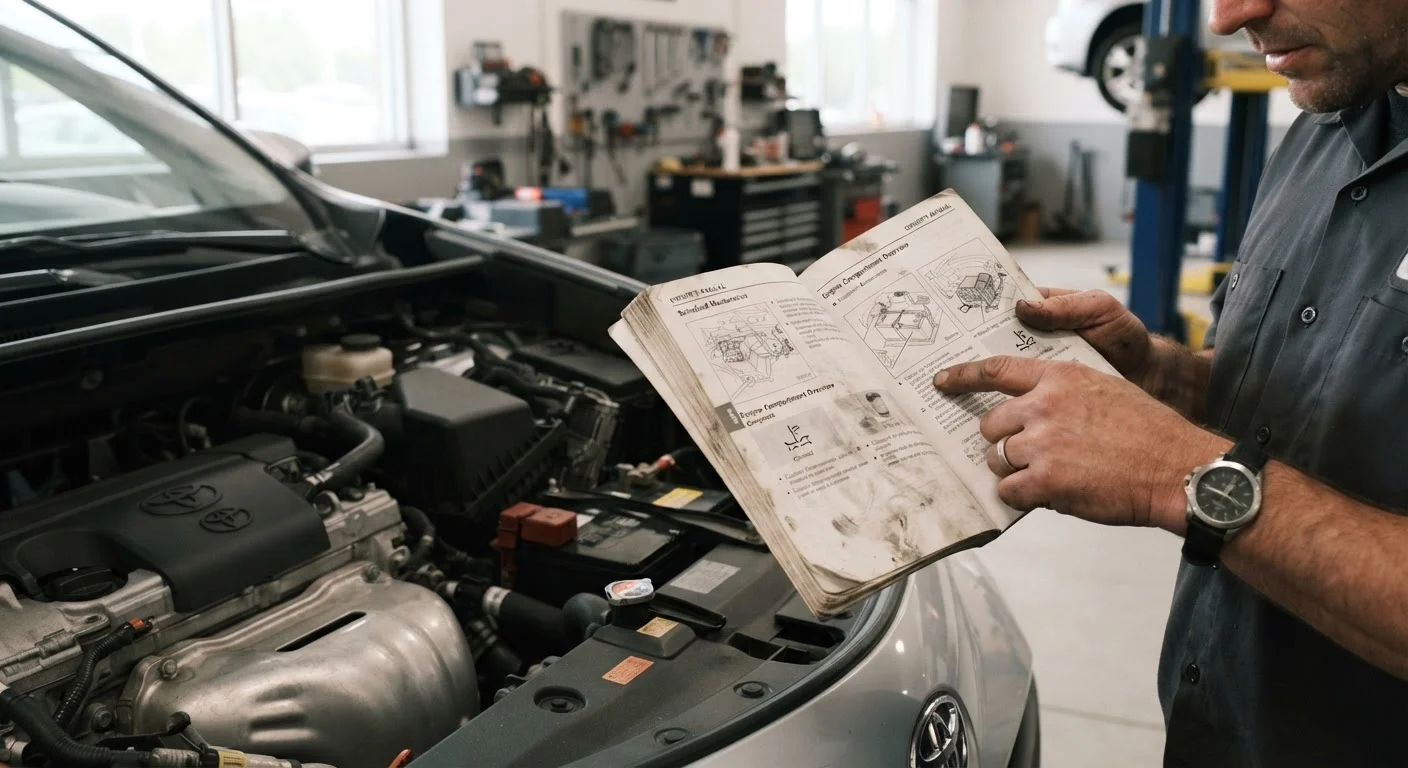
Your owner's manual is the definitive source. Generic advice from outside sources - including well-meaning mechanics applying experience from other vehicles - can't account for your specific engine design, oil capacity, or manufacturer specifications.
Set Dual Reminders for Every Service
Use both a mileage threshold and a calendar date as your reminder triggers - whichever arrives first means it's time for service. A simple note in your phone's calendar, set six months out, costs nothing and prevents the most common reason drivers miss services: they simply forgot how long it had been.
The Real Cost of Skipping Services
Deferred maintenance feels like a money-saving move in the moment. In practice, it tends to multiply costs. A neglected coolant system can lead to overheating and a warped cylinder head - a repair that can run into the thousands. A worn timing belt that snaps destroys valves and pistons in interference engines, often totaling the vehicle entirely.
Beyond catastrophic failures, skipping services accelerates gradual wear. Dirty transmission fluid, for instance, increases friction inside the gearbox. Each mile driven on degraded fluid shortens the transmission's lifespan incrementally. By the time a problem is noticeable, significant damage has already accumulated.
Our guide on deferred maintenance breaks down the most common patterns and the compounding damage that follows. The financial case for staying on schedule is straightforward: routine maintenance costs far less than emergency repair.
Tracking Your Schedule Over Time
A maintenance schedule only works if you know where you stand relative to it. Keeping a written or digital log of every service performed - including the date, mileage, and what was done - gives you a reliable reference and prevents duplicate or missed work.
A well-maintained log also builds documented service history, which holds real value when selling a vehicle. Buyers and dealers consistently place higher value on cars with verifiable records. See how to set up and maintain a car maintenance log for a practical approach.
Pair your schedule with a seasonal maintenance checklist to ensure changing weather conditions don't catch you off guard. Together, these tools give you a complete picture of your vehicle's health across every mile and every season.
This article provides general vehicle maintenance information for educational purposes. For guidance specific to your vehicle, consult a qualified mechanic and refer to your owner's manual.
Frequently Asked Questions
It's printed in your owner's manual, usually in a dedicated section titled 'Maintenance Schedule' or 'Scheduled Maintenance.' Many automakers also publish this information on their official websites. Your <a href="/auto/car-maintenance/how-to-read-and-actually-use-your-owners-manual">owner's manual guide</a> explains how to navigate it.
Engine oil breaks down over time, losing its ability to lubricate moving parts effectively. Skipping oil changes can lead to sludge buildup, accelerated engine wear, and ultimately engine damage that costs thousands of dollars to repair.
For most modern vehicles, no. Many cars today can go 5,000 to 10,000 miles or more between oil changes, depending on the oil type and engine design. Always defer to your owner's manual rather than outdated rules of thumb.
A minor service typically covers basics like an oil change, filter replacement, and visual inspection. A major service - often at 30,000, 60,000, or 90,000 miles - adds items like spark plugs, belts, coolant flush, and transmission fluid, and carries a higher cost.
Yes. Manufacturers often list 'severe' and 'normal' driving conditions. Frequent short trips, stop-and-go traffic, towing, and extreme temperatures qualify as severe and usually require more frequent service intervals.
Some tasks - like checking tire pressure, topping off fluids, or replacing cabin air filters - are straightforward for most drivers. More complex work, such as timing belt replacement or brake system service, should be handled by a qualified mechanic to avoid injury or vehicle damage.
The content on this site is for informational purposes only and is not a substitute for professional advice. Always consult a qualified professional for guidance specific to your situation.