

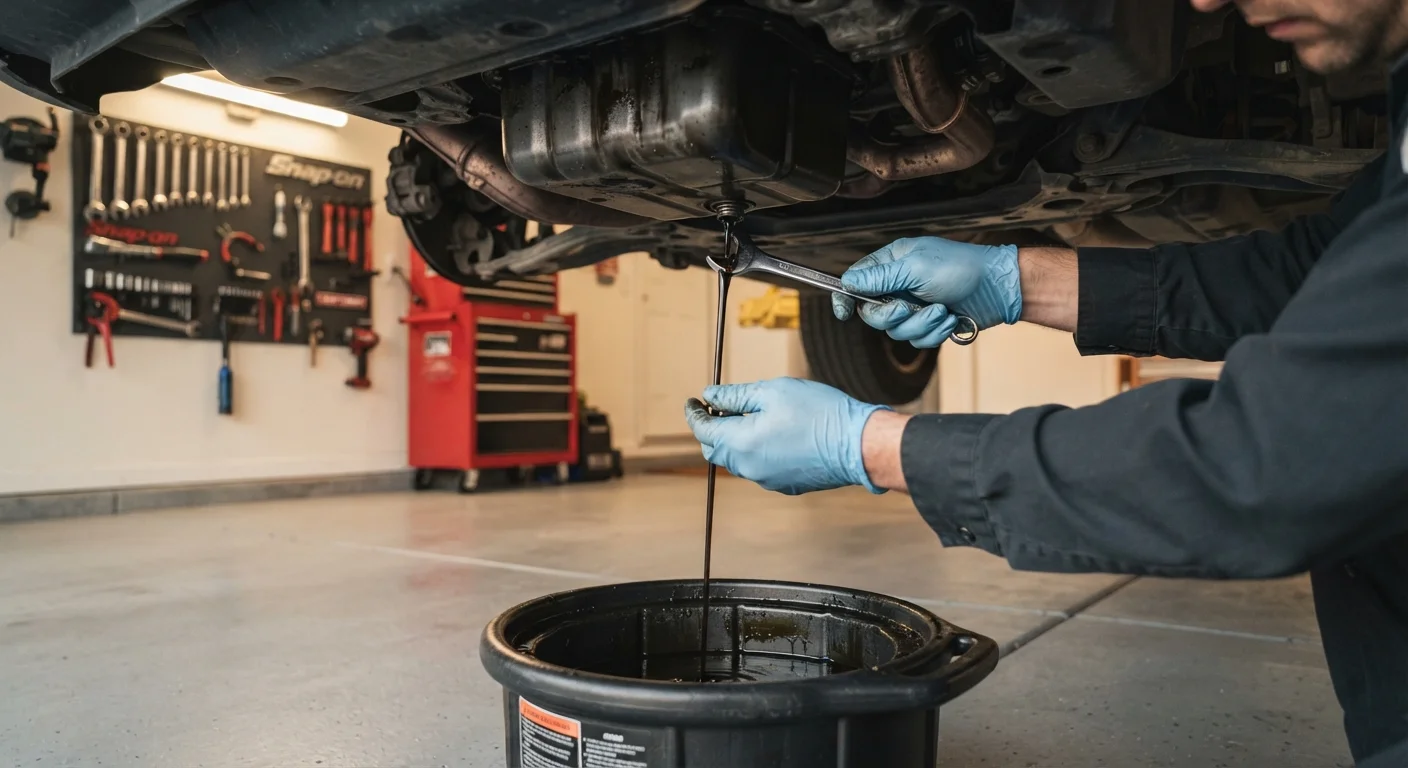
Option A
DIY Oil Change
The hands-on, cost-conscious approach for capable home mechanics.
Best for: Drivers who are comfortable under a vehicle, have basic tools, and want full control over the products used.
Option B
Professional Oil Change
The convenient, worry-free option backed by trained technicians.
Best for: Drivers who prioritize speed, convenience, and a documented service record without getting their hands dirty.
The Real Cost Comparison
At first glance, a DIY oil change looks like an obvious money-saver. A standard 5-quart jug of conventional oil and a new filter might run you $25-$40 at an auto parts store - noticeably less than the $50-$100 range common at many service shops. But that math only holds once you own the tools.
A quality floor jack, jack stands, a drain pan, a filter wrench, and a funnel can add up to $80-$150 in initial investment. For a driver who changes oil twice a year, the break-even point arrives after a few years of consistent DIY work. Factor in the cost of properly disposing of waste oil - though most auto parts retailers accept used oil at no charge - and the savings are real but not immediate.
Professional shops also occasionally include multi-point inspections, tire rotations, or fluid top-offs bundled into their service price. These add-ons have genuine value and can offset some of the cost premium. As you compare your options, it helps to understand where oil changes fit into the broader picture - see our car maintenance schedule guide for context on intervals and other services worth tracking.
5,000-10,000 mi
Typical modern oil change interval
Most vehicle manufacturers now recommend intervals of 5,000 to 10,000 miles for synthetic oil, replacing the old 3,000-mile rule of thumb.
~$75
Average professional oil change cost (US)
Industry service data suggests the national average for a full-synthetic professional oil change falls in the $65-$85 range, varying by region and vehicle type.
Head-to-Head: Key Criteria
Both approaches get the job done when executed correctly. But they differ substantially across several practical factors that matter to everyday drivers.
| Criterion | DIY Oil Change | Professional Oil Change |
|---|---|---|
| Typical Cost (per service) | $25-$40 (parts only) | $50-$100 (labor + parts) |
| Time Required | 45-90 minutes | 20-45 minutes |
| Tool Investment | $80-$150 upfront | None |
| Skill Level Needed | Basic mechanical ability | None |
| Service Record Created | Only if self-documented | Yes, automatic |
| Waste Oil Disposal | Driver's responsibility | Handled by shop |
| Risk of Error | Moderate without experience | Low (professional accountability) |
| Convenience | Requires workspace & prep | Drop off and go |
One area where the DIY route carries real risk is procedure accuracy. Using the wrong oil viscosity, over-tightening the drain plug, or failing to seat the filter properly can cause oil leaks or engine damage that far exceeds what you would have paid a shop. If you're unsure where DIY maintenance makes sense versus where it doesn't, our honest tradeoffs of DIY car maintenance breaks this down clearly.
Skill, Safety, and What Can Go Wrong
An oil change is widely considered one of the more approachable DIY maintenance tasks - but approachable doesn't mean risk-free. Working under a vehicle requires proper jack stands rated for your car's weight; never rely on a floor jack alone. Cross-threading the drain plug, stripping the oil pan, or installing the wrong filter are mistakes that can cost hundreds to repair.
Selecting the correct oil is equally important. Your owner's manual specifies the viscosity grade (such as 5W-30 or 0W-20) and whether synthetic, synthetic-blend, or conventional oil is appropriate. Using the wrong specification can affect fuel economy, engine protection, and in some cases, warranty compliance. It's also worth reading up on common car maintenance myths, including the persistent but outdated idea that every vehicle needs a change every 3,000 miles.
Used Oil Disposal Is Your Responsibility
If you change your own oil, you are legally responsible for disposing of the used oil properly. Pouring it down a drain or onto the ground is illegal in all 50 states and harmful to the environment. Fortunately, most auto parts retailers - such as national chain stores - accept used motor oil at no charge. Call ahead to confirm your local store participates before your next change.
Professional technicians handle these details routinely and are accountable for their work. Most shops back their oil changes with at least a short-term service guarantee, which provides a meaningful safety net if something goes wrong post-service.
Which Option Fits Your Situation?
Neither choice is universally superior. A mechanically inclined driver with a proper workspace, the right tools, and a reliable parts source can perform safe, cost-effective oil changes at home over many years. A driver who lacks storage space, lives in an apartment without garage access, or simply values their time may find that a professional service is worth every dollar.
Consider your vehicle type as well. Some modern cars - particularly hybrids and vehicles with low ground clearance - make DIY access genuinely difficult without specialized equipment. Turbocharged engines and performance vehicles often require full-synthetic oil at specific grades; getting this wrong matters more in those applications. If you're evaluating DIY versus professional care more broadly, the framework in our article on doing your own car maintenance applies well beyond oil changes.
Whichever route you choose, the priority is consistency. Regular oil changes - on the schedule your manufacturer recommends - are one of the most important things you can do for long-term engine health.
The content on this site is for informational purposes only and is not a substitute for professional advice. Always consult a qualified professional for guidance specific to your situation.