

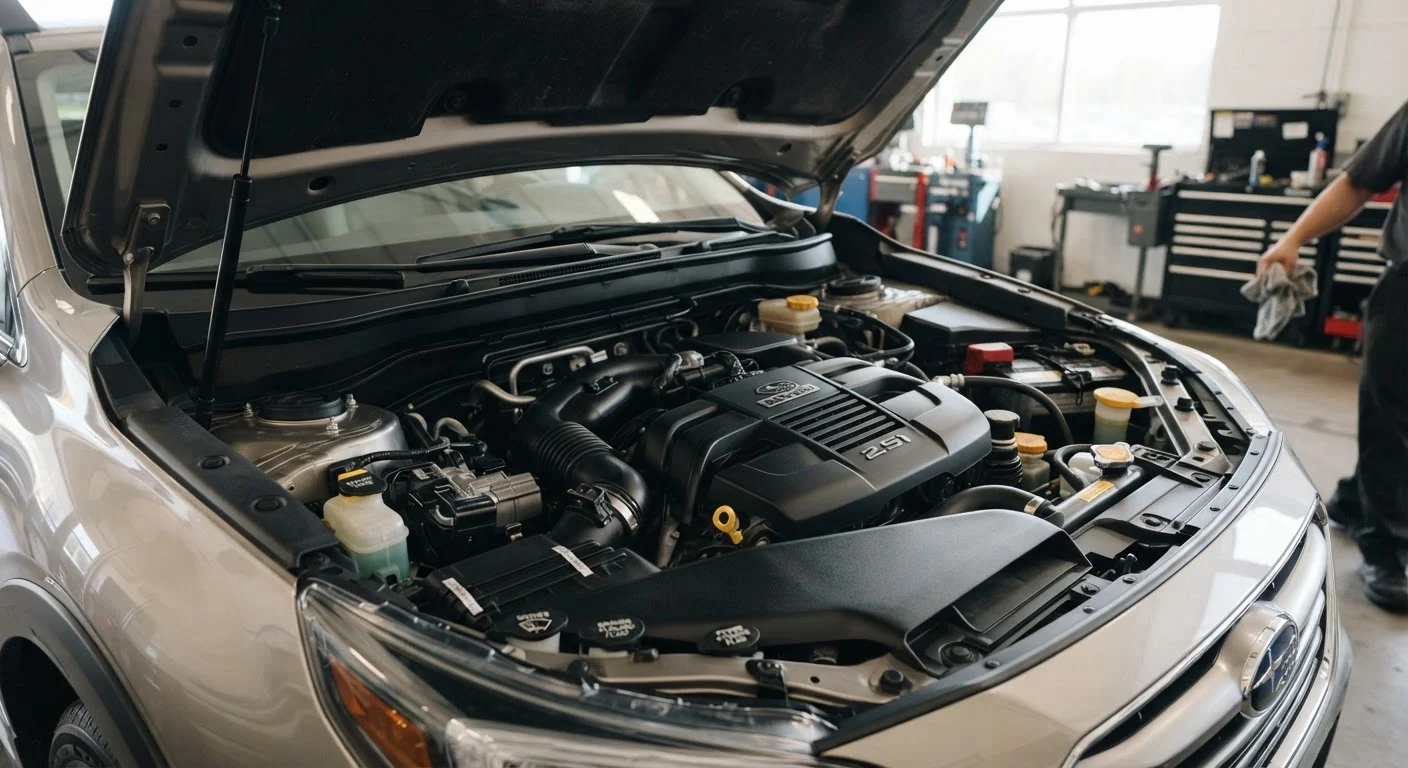
Why Fluids Matter More Than Most Drivers Realize
Your car is essentially a collection of systems that rely on specialized liquids to lubricate, cool, pressurize, and protect moving parts. When any one of these fluids drops too low or degrades past its useful life, the consequences range from reduced performance to serious - and expensive - mechanical damage.
The good news: most fluid checks take less than five minutes and require nothing more than a clean rag and your owner's manual. Understanding what each reservoir holds, what it does, and what warning signs to watch for puts you firmly in control of your vehicle's health. For a broader view of how fluid maintenance fits into your vehicle's overall care, see your car's maintenance schedule explained.
Engine Oil
Engine oil is the lifeblood of your motor. It lubricates hundreds of moving metal parts, reduces friction-generated heat, helps suspend contaminants, and forms a protective film that prevents metal-on-metal wear. Without adequate oil, an engine can seize within minutes.
To check it, locate the dipstick (usually marked with a bright handle), pull it out, wipe it clean, reinsert it fully, and withdraw it again to read the level. The oil should fall between the two marks on the dipstick and appear amber to dark brown. Black, gritty oil or a milky appearance signals it's overdue for a change or that coolant may be mixing in - both require prompt attention.
For a deeper look at oil types, see engine oil types compared.
Without adequate oil, an engine can seize in minutes - it's the most critical fluid to monitor.
Engine Coolant (Antifreeze)
Coolant circulates through your engine and radiator to regulate operating temperature - preventing overheating in summer and freezing in winter. Modern coolants are a mixture of water and ethylene glycol, often pre-mixed at a 50/50 ratio.
Check coolant only when the engine is cold; opening a hot radiator cap can cause serious burns from pressurized steam. Most vehicles have a translucent overflow reservoir with min/max markings. Coolant should be bright green, orange, pink, or blue depending on the formulation - never brown or rust-colored, which indicates contamination or a degraded system.
Never open a hot radiator cap - pressurized steam can cause serious burns.
Brake Fluid
Brake fluid transmits the force from your brake pedal through hydraulic lines to the calipers that clamp your rotors. It operates under extreme pressure and must maintain a high boiling point to prevent brake fade - a dangerous reduction in stopping power under heavy use.
Brake fluid is hygroscopic, meaning it absorbs moisture from the air over time. As water content rises, the boiling point drops. Most manufacturers recommend flushing brake fluid every two to three years regardless of mileage. The reservoir is typically a small, semi-transparent plastic container near the firewall. Fluid should be clear to light yellow - dark brown fluid is a strong indicator it's time for a flush.
Brake fluid absorbs moisture over time, lowering its boiling point and reducing stopping reliability.
Power Steering Fluid
Power steering fluid pressurizes the hydraulic system that makes turning your steering wheel effortless. While many newer vehicles use electric power steering (which requires no fluid), a large share of cars on US roads still use hydraulic systems with a dedicated reservoir.
A whining or groaning noise when turning is a common symptom of low power steering fluid. The reservoir often has a dipstick built into the cap. Fluid should be clear to pinkish-red; dark or foamy fluid suggests contamination or air in the lines. Always use the fluid type specified in your owner's manual, as mixing incompatible types can damage seals.
A whining noise when turning often signals that power steering fluid needs attention.
Transmission Fluid
Transmission fluid lubricates and cools the gears, clutch packs, and valve bodies inside your transmission. For automatic transmissions, it also serves as hydraulic fluid that enables smooth gear changes. Manual transmissions use a gear oil that serves a similar lubricating role.
On many vehicles, transmission fluid is checked via a dipstick similar to the engine oil dipstick - though some modern vehicles have sealed transmissions with no user-accessible dipstick. Healthy automatic transmission fluid is typically bright red and slightly sweet-smelling. Dark red, brown, or burnt-smelling fluid is a clear sign it needs changing. Delayed or rough gear shifts are common performance symptoms of degraded transmission fluid.
Dark or burnt-smelling transmission fluid is a warning sign that shouldn't be ignored.
Windshield Washer Fluid
Windshield washer fluid is the simplest fluid to manage but often the most overlooked. It clears road grime, insects, and salt spray from your windshield - all of which directly affect visibility and safety. Unlike plain water, properly formulated washer fluid contains detergents and antifreeze agents that prevent freezing in cold weather and inhibit bacterial growth.
Never substitute plain water in climates that experience freezing temperatures, as it can crack the reservoir or lines. The reservoir is typically marked with a windshield icon and is straightforward to refill. Keep a spare jug in your trunk, particularly during winter months when fluid depletes faster.
Plain water in the washer reservoir can freeze and crack lines - always use proper washer fluid.
Staying Ahead of Problems Before the Dashboard Lights Up
Dashboard warning lights are useful, but they're a last resort - not a first alert. By the time a low-fluid light illuminates, your vehicle may already be operating under stress. Building a habit of periodic visual checks keeps you a step ahead.
Build a Monthly Under-Hood Routine
Set a recurring reminder once a month to pop the hood and do a quick visual scan of your fluid reservoirs. Many checks take under two minutes and require no tools. Catching a slow leak or low level early is far less costly than dealing with a breakdown. Your owner's manual will list the correct fluid specifications and recommended check intervals for your specific vehicle.
If you notice any fluid pooling beneath your parked car, the color can help narrow down the source: bright green or orange typically indicates coolant, dark brown points to engine oil, and clear or light yellow suggests brake fluid or power steering fluid. Any active leak warrants prompt attention from a qualified mechanic. You can also cross-reference what you find under the hood with warning lights every driver should know to better understand what your vehicle may already be trying to tell you.
This article is for general informational purposes only. Always consult a qualified mechanic for diagnosis, repairs, or guidance specific to your vehicle.
The content on this site is for informational purposes only and is not a substitute for professional advice. Always consult a qualified professional for guidance specific to your situation.