

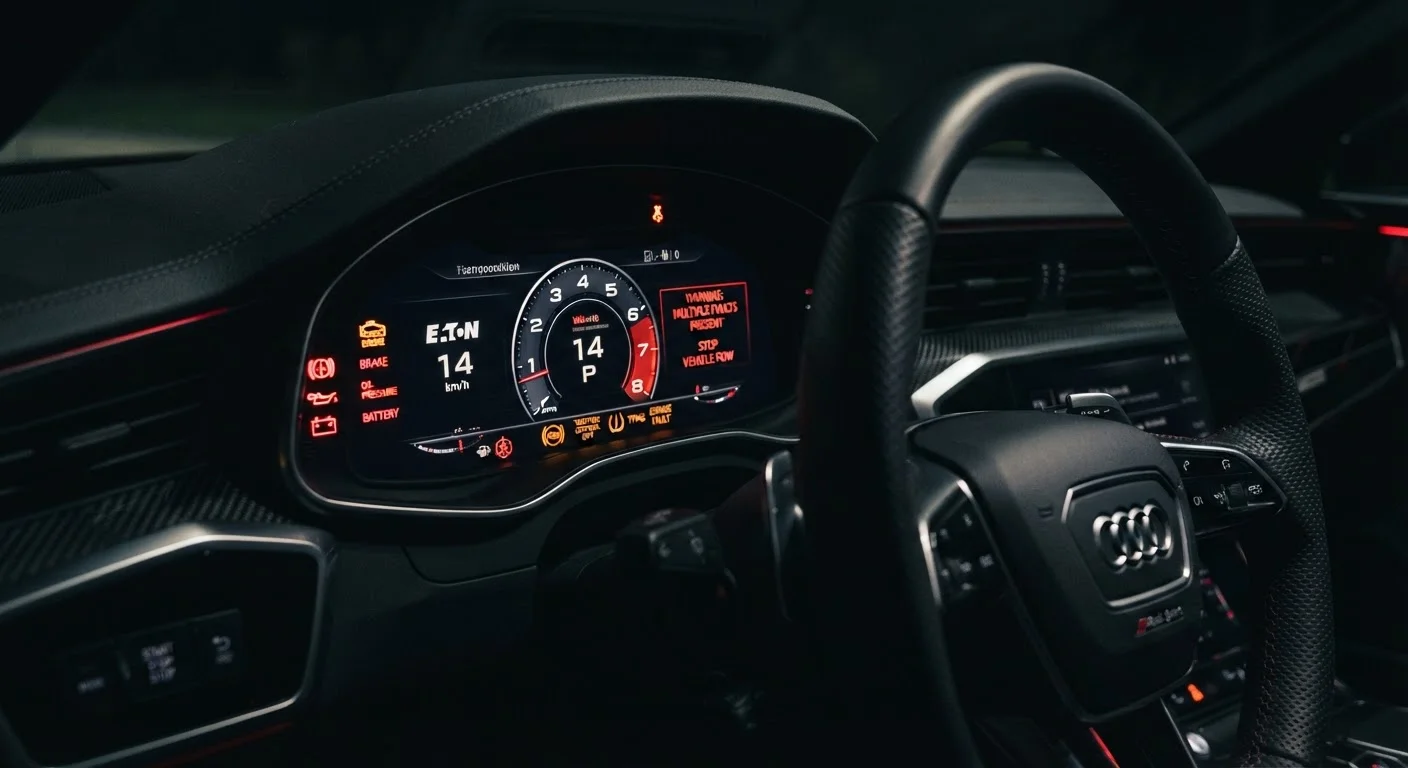
How Dashboard Warning Lights Work
Modern vehicles are equipped with an onboard diagnostic system (OBD) that continuously monitors dozens of sensors. When something falls outside normal operating parameters, the system triggers a warning light on your instrument cluster. Understanding these signals is one of the most practical skills any driver can develop - and it's covered in depth in our guide on keeping your vehicle running.
Warning lights generally follow a color-coded urgency system:
- Red: Stop driving or take immediate action. A red light typically signals a condition that can cause serious damage or create a safety hazard.
- Amber/Yellow: Service needed soon. The vehicle may still be drivable short-term, but the issue should be addressed promptly.
- Green/Blue: Informational. These indicate that a system is active, not that something is wrong.
| Color: Red | Stop or take immediate action |
| Color: Amber/Yellow | Schedule service soon |
| Color: Green/Blue | System active - informational only |
| Flashing Check Engine | Treat as urgent - active misfire detected |
| TPMS Threshold | Triggers when pressure drops ~25% below recommended PSI (National Highway Traffic Safety Administration (NHTSA)) |
| Correct Tire PSI Source | Driver's door jamb sticker (not tire sidewall) |
The Lights That Demand Immediate Attention
Some lights should prompt you to pull over safely and turn off the engine as soon as possible. Continuing to drive can result in severe engine damage, brake failure, or safety risks.
OBD (Onboard Diagnostics)
A standardized system built into vehicles since the mid-1990s that monitors engine and emissions performance. When a fault is detected, it stores a diagnostic trouble code (DTC) and illuminates a warning light.
Diagnostic Trouble Code (DTC)
A coded identifier stored by the OBD system when a sensor reading falls outside normal range. Mechanics use a scan tool to read these codes and identify the source of a problem.
Catalytic Converter
An emissions control device in the exhaust system that converts harmful gases into less harmful ones. Engine misfires can overheat and permanently damage it.
TPMS
Tire Pressure Monitoring System - a sensor-based system that alerts the driver when one or more tires drops significantly below the manufacturer's recommended inflation level.
Alternator
A generator driven by the engine that recharges the battery and powers the vehicle's electrical systems while the engine is running. A failing alternator causes the battery warning light to illuminate.
Hydraulic Brake System
The fluid-based system that transmits pedal force to the brake calipers at each wheel. A loss of fluid pressure reduces braking effectiveness and is a serious safety concern.
Engine Temperature Warning (Red Thermometer)
This light means your engine is overheating. Pull over, turn off the engine, and allow it to cool before opening the hood. Driving with an overheating engine can warp cylinder heads or destroy the engine entirely. Check coolant levels once the engine is cool - our guide to fluids under the hood explains exactly how to do this safely.
Oil Pressure Warning (Red Oil Can)
Low oil pressure means engine components are not being lubricated adequately. Stop driving immediately. This is not the same as a low oil level reminder - it indicates a potential pump failure or severe oil loss that can seize your engine within minutes.
Battery/Charging System (Red Battery Icon)
This light signals the vehicle is running on battery reserve power rather than the alternator. You may have limited time before the car loses power entirely. Reduce electrical load, avoid short trips, and get to a mechanic promptly.
Brake System Warning (Red Exclamation in Circle)
If this light appears while driving (and your parking brake is fully released), it may indicate low brake fluid or a hydraulic system fault. Have your brakes inspected immediately - compromised braking is a direct safety risk.
Amber Lights: Act Soon, Not Immediately
Amber lights don't require you to pull over on the spot, but they shouldn't be ignored for long. Delaying service can turn a minor repair into a costly one.
Check Engine Light (Amber Engine Outline)
One of the most misunderstood lights on the dashboard. It can indicate anything from a loose gas cap to a misfiring cylinder. If the light is steady, schedule a diagnostic scan soon. If it's flashing, treat it like a red light - reduce speed and avoid heavy acceleration until it's inspected. A flashing check engine light typically means a misfire is occurring that could damage the catalytic converter.
Tire Pressure Monitoring System - TPMS (Amber Exclamation in Tire)
One or more tires has dropped significantly below the recommended pressure. Underinflated tires reduce fuel efficiency, increase stopping distances, and raise blowout risk. Check pressure at the nearest gas station and consult your door jamb sticker - not the tire sidewall - for the correct PSI. This is also a key item on any pre-trip vehicle inspection.
Transmission Temperature (Amber Thermometer in Gear)
The transmission fluid is running hotter than normal. This is common when towing, hauling heavy loads, or driving in stop-and-go traffic. Pull over and let the vehicle idle or shut off to cool down. Continuing to drive can permanently damage the transmission.
Service Required / Maintenance Due
This is a mileage- or time-based reminder rather than a sensor-triggered alert. It typically means an oil change or scheduled service interval is approaching. Check your owner's manual for the specific service your vehicle is due for.
What To Do When a Light Comes On
Stay calm and assess the color and symbol. If it's red or the check engine light is flashing, reduce speed and find a safe place to stop. For amber lights, note when it appeared and schedule service within a few days. In all cases, consult your owner's manual - every vehicle has a dedicated section explaining each warning symbol specific to that model.
Never assume a warning light will resolve itself without investigation. Even if it turns off after a few miles, the diagnostic code is typically stored in the vehicle's computer and can be retrieved by a mechanic with a scan tool. Keeping a log of when lights appear and under what driving conditions helps technicians diagnose intermittent issues faster.
This article provides general educational information about vehicle warning lights and is not a substitute for professional mechanical diagnosis. If you are uncertain about the severity of a warning light, consult a qualified mechanic before continuing to drive.
The content on this site is for informational purposes only and is not a substitute for professional advice. Always consult a qualified professional for guidance specific to your situation.