

Summary
18 items · 10-20 minutes
Why a Pre-Trip Check Is Worth Your Time
Most vehicle breakdowns aren't random - they're the result of overlooked warning signs that a simple inspection would have caught. Whether you're heading out for a weekend road trip or a routine highway commute, spending 10 to 20 minutes walking around your vehicle can mean the difference between a smooth drive and an unplanned stop on the shoulder.
This checklist is designed for everyday American drivers - no mechanic's certification required. It covers what to look for, what to listen for, and when something warrants a professional's attention before you leave the driveway. If you're planning a longer journey, pair this with the road trip planning guide for a more complete picture of pre-drive preparation.
Tires
Fluids
Lights and Visibility
Brakes and Steering
Emergency Essentials
What You'll Need Before You Start
Most of this checklist requires nothing more than your eyes and a few minutes. For a thorough inspection, a few basic items will help you check fluid levels and tire condition accurately.
Tire pressure gauge
Used to accurately measure PSI in each tire and compare against the manufacturer's recommended level.
Flashlight or work light
Helps you inspect tires, underbody fluid leaks, and engine bay components in low-light conditions.
Clean rag or paper towels
Needed to wipe the dipstick when checking engine oil level for an accurate reading.
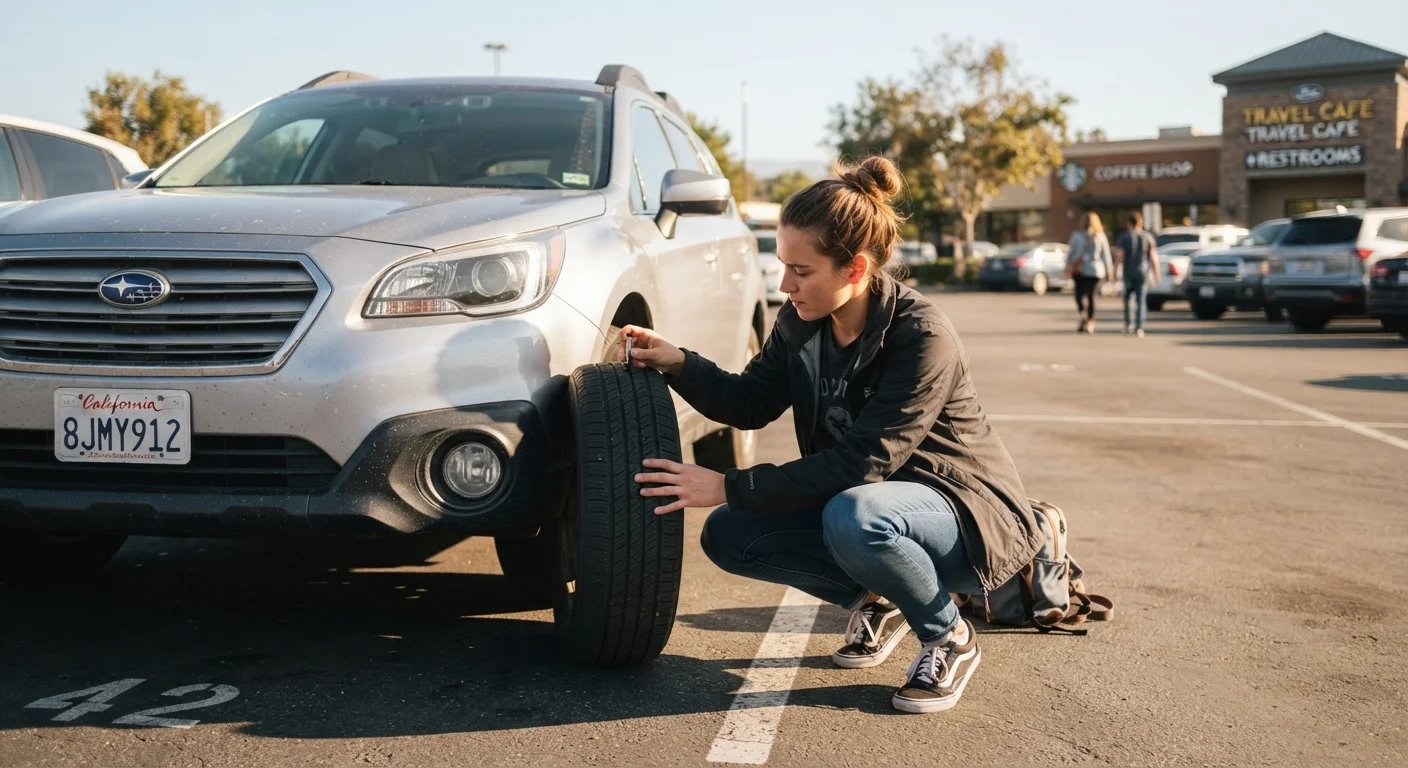
Penny (for tread test)
Used as a simple, no-cost tool to check whether tire tread depth has reached an unsafe level.
Roadside emergency kit
Should contain jumper cables, reflective triangles, a basic first-aid kit, and a flashlight for roadside situations.
If your dashboard is currently showing any warning indicators, review them before proceeding - understanding what they mean is the first step. Our guide to dashboard warning lights explains what triggers the most common alerts and which ones demand immediate action.
Don't Drive on an Unresolved Warning Light
If a dashboard warning light - especially the check engine, brake, or oil pressure light - is active when you start the vehicle, do not assume it's safe to proceed without investigation. Some warnings indicate conditions that can cause immediate mechanical failure or unsafe handling. Have the vehicle scanned for fault codes at a repair shop or with an OBD-II reader before a long drive. Ignoring these signals can turn a minor repair into a serious safety hazard.
After the Check: What to Do If Something's Off
If you find a problem during your inspection - a low tire, a fluid leak, a brake that feels soft - don't assume it will resolve itself on the road. Some issues are safe to address yourself (topping off windshield washer fluid, for example), while others require a qualified mechanic before the vehicle is safe to drive.
Know the Limit of DIY Checks
A visual and functional inspection is valuable, but it has limits. Soft brakes, persistent fluid loss, or unusual pulling while driving are not problems to monitor from the road - they require professional diagnosis before departure. A qualified mechanic can identify issues that aren't visible from a driveway walkthrough, and catching them early is nearly always less expensive than a roadside breakdown or accident.
For drivers keeping up with broader vehicle health, the seasonal car maintenance checklist maps out inspections that change with the weather - a useful complement to what you do before every trip. And if you're driving a recently purchased used vehicle, it's worth understanding what was flagged in any prior inspections; see how pre-purchase inspections work for context. More general car maintenance guidance is available if you want to build on today's habits.
The content on this site is for informational purposes only and is not a substitute for professional advice. Always consult a qualified professional for guidance specific to your situation.