

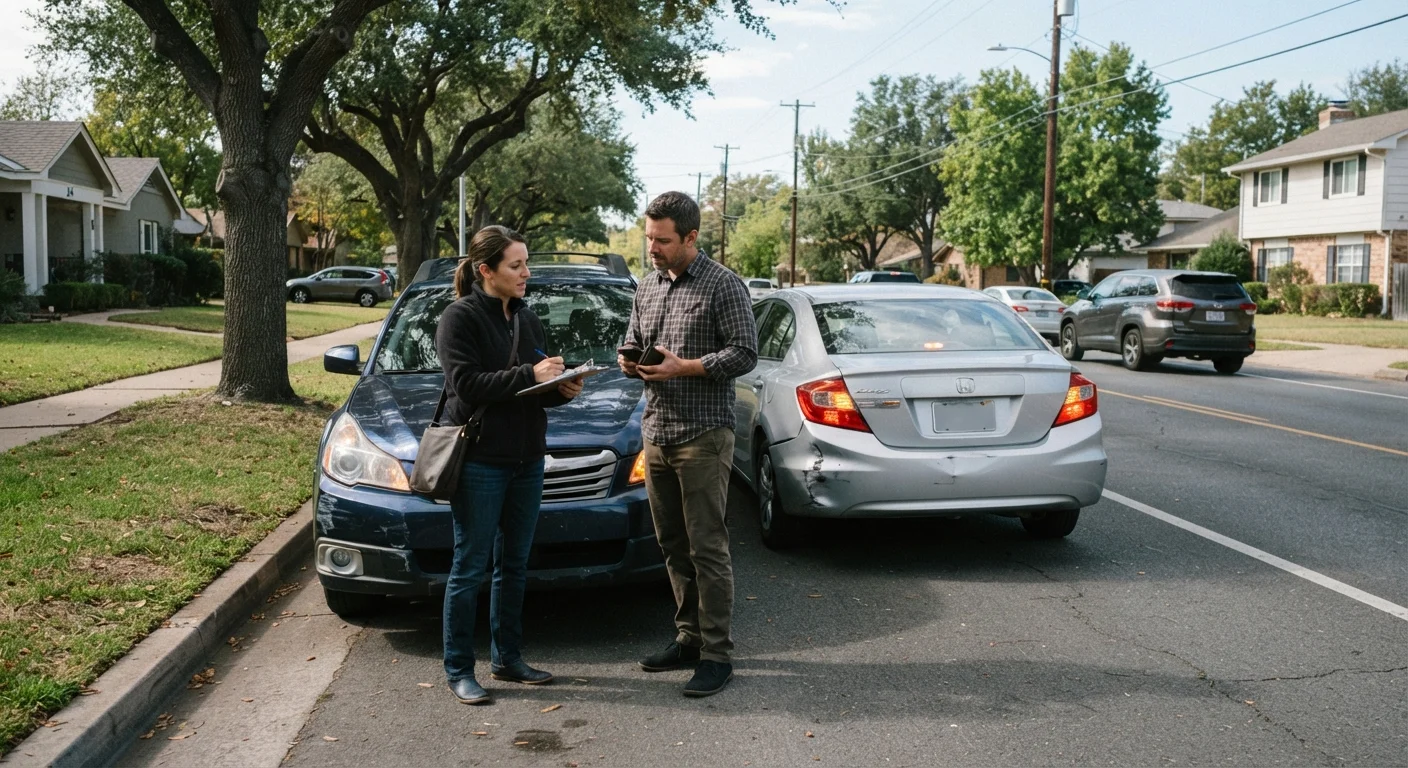
Why Your First Moves Matter Most
The minutes immediately following a crash are chaotic, and the decisions made in that window - where to move, what to say, what to photograph - have lasting consequences for your safety, your insurance claim, and your legal position. Many drivers make costly mistakes not out of negligence, but simply because they've never thought through what they'd do in advance.
Understanding common crash causes helps put post-accident procedures in context. Tailgating and following too closely is one of the leading causes of rear-end collisions, while blind spots during lane changes contribute to thousands of crashes annually. No matter the cause, your response protocol should be the same.
The steps below are sequenced to prioritize life safety first, legal and financial protection second. Walk through them now - before you ever need them.
What you will need
What You'll Need at the Scene
Being prepared before a crash happens is the most effective way to stay calm during one. The items below should live permanently in your vehicle so they're available without thinking.
Smartphone with camera
Photograph vehicle damage, license plates, the scene layout, and any visible injuries.
Pen and notepad (or notes app)
Record driver details, witness names, officer badge numbers, and your own account of events.
Insurance card and vehicle registration
Required to exchange insurance and ownership information with the other party.
Reflective warning triangles or road flares
Alert oncoming traffic to a disabled vehicle, especially on highways or at night.
Basic first-aid kit
Provide initial care for minor injuries while waiting for emergency services.
Keep an Accident Info Card in Your Glove Box
Print or download a simple accident information checklist and store it with your registration and insurance card. Under stress, it's easy to forget what details to collect. Having a prompt card ensures you don't miss critical information like the other driver's policy number or the responding officer's badge number.
Step-by-Step: What to Do After a Crash
Check for Injuries and Move to Safety
Before anything else, assess yourself and your passengers for injuries. Do not attempt to move anyone who may have a neck or spine injury - wait for paramedics. If the vehicles are drivable and it is safe to do so, move them out of active traffic lanes and onto the shoulder or a nearby parking lot. Turn on your hazard lights immediately.
Call 911
Call 911 whenever there are injuries, a vehicle is blocking traffic, a driver appears impaired, or there is significant property damage. In many states, you are legally required to report accidents above a damage threshold. Even for minor collisions, a police report creates an official record that is invaluable for insurance claims and any potential litigation.
Exchange Information with the Other Driver
Collect and provide the following from every driver involved:
- Full legal name and contact phone number
- Driver's license number and issuing state
- Insurance company name and policy number
- Vehicle make, model, year, and license plate number
If there are passengers or witnesses, note their names and contact information as well. Do not rely solely on verbal exchange - photograph the other driver's license and insurance card directly.
Document the Scene
Use your smartphone to photograph everything before vehicles are moved: all four sides of each vehicle involved, close-ups of damage, tire marks, road conditions, traffic signals or signs, and the overall scene layout. Note the time, weather, and lighting conditions in writing. If a police officer responds, ask for the report number and the officer's name and badge number - you'll need these when contacting your insurer.
Notify Your Insurance Company
Contact your insurer as soon as reasonably possible - ideally the same day. Most policies require prompt notification as a condition of coverage. Provide the facts: location, time, parties involved, and the police report number if available. Ask your insurer what next steps are required and whether you should arrange vehicle storage or a rental car through your policy.
Seek Medical Evaluation
Even if you feel fine immediately after the crash, some injuries - including whiplash, concussion, and internal soft-tissue damage - may not produce obvious symptoms for hours or days. Seeing a healthcare provider within 24-48 hours creates a documented medical record that can be essential if injury-related costs arise later. Follow your provider's guidance on treatment and follow-up care.
Never Leave the Scene of an Accident
Leaving the scene of an accident - even a minor one - before exchanging information or speaking with police can result in hit-and-run charges, which carry serious criminal and civil penalties in every US state. Stay until law enforcement releases you or all parties have exchanged the required information. If another driver flees, note their plate number and description for police.
Avoid Discussing Fault at the Scene
Statements made at the scene - including apologies or casual admissions - can be used against you during insurance claims or legal proceedings. Stick to factual exchanges: names, contact details, insurance, and vehicle information. Let your insurer and, if necessary, an attorney handle liability questions.
After You Leave the Scene
Once the immediate crisis is handled, a few follow-up actions help protect your interests. Write a detailed personal account of the accident - from your perspective, in your own words - while memory is fresh. Include what you observed, the sequence of events, road and weather conditions, and anything witnesses said. Store this alongside your photos and the police report number.
If injuries are involved or liability appears disputed, consulting an attorney who handles personal injury or auto accident cases is worth considering before signing any settlement documents. Many offer free initial consultations.
For newer drivers still building their situational awareness behind the wheel, our guide on building lasting road safety habits covers the defensive driving skills that reduce crash risk in the first place. Prevention is always the first line of defense.
This article is for general informational purposes only and does not constitute legal, insurance, or medical advice. Consult qualified professionals for guidance specific to your situation.
The content on this site is for informational purposes only and is not a substitute for professional advice. Always consult a qualified professional for guidance specific to your situation.