

Why Eating Well Doesn't Have to Cost More
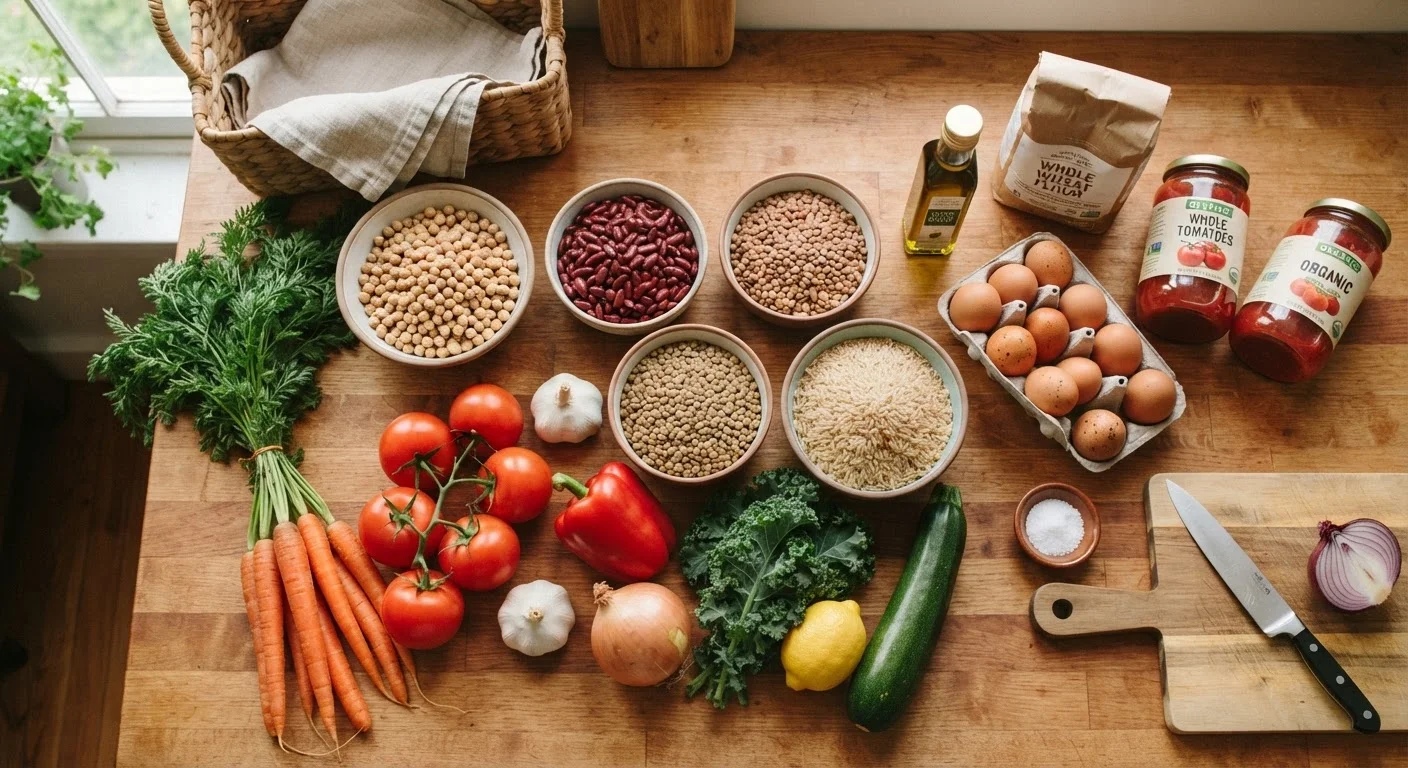
A persistent myth frames nutritious food as a luxury - reserved for households with generous grocery budgets or access to specialty stores. In practice, many of the most nutrient-dense foods available are also among the least expensive. Dried lentils, canned beans, oats, eggs, frozen spinach, and brown rice consistently deliver protein, fiber, vitamins, and minerals at a fraction of the cost of processed convenience foods.
The real barrier isn't money - it's information and planning. Without a clear framework, grocery runs tend to drift toward familiar packaged items that cost more per serving while providing less nutritional value. The strategies below are grounded in basic nutrition science and practical budgeting, not trendy diets or expensive superfoods. For a broader look at structuring your overall grocery routine, see our weekly grocery checklist for a nutritionally balanced kitchen.
This article is for general informational purposes only and is not a substitute for personalized advice from a registered dietitian or healthcare professional.
Core Practices for Nutritious, Budget-Friendly Eating
The following practices are straightforward to implement and don't require special equipment, a nutrition degree, or a Whole Foods membership.
Build meals around whole, minimally processed staples rather than packaged convenience foods.
Dried beans, lentils, oats, brown rice, and frozen vegetables deliver dense nutrition at the lowest cost per serving of any grocery category. Processed foods typically charge a significant premium for convenience while adding sodium and refined ingredients.
Plan a week of meals before writing your grocery list.
Shopping without a plan leads to impulse purchases, duplicate ingredients, and unused produce that ends up discarded. A simple weekly meal plan aligns what you buy with what you'll actually eat, eliminating one of the biggest sources of food budget waste.
Choose frozen and canned produce as nutritional equals to fresh.
Frozen vegetables are typically flash-frozen at peak ripeness, which preserves most vitamins and minerals. Canned vegetables and legumes are similarly shelf-stable and nutrient-retentive. Both cost significantly less than fresh equivalents, especially for out-of-season produce.
Select store-brand and generic products over name-brand equivalents.
Store-brand products are typically manufactured to the same food safety and quality standards as name-brand versions, often by the same producers. The price difference - commonly 20-40 percent - reflects marketing and packaging costs, not nutritional quality.
Prioritize seasonal, locally available produce.
Produce that is in season in your region requires less transportation and storage, which reduces cost and often improves freshness. Out-of-season imports carry logistical premiums that raise prices without nutritional benefit.
Reduce reliance on animal protein as the center of every meal.
Meat - particularly beef - is among the highest-cost items per gram of protein in the grocery store. Replacing some meat-centered meals with legume- or egg-based alternatives meaningfully lowers weekly spending without reducing protein intake.
Where Most Grocery Budgets Quietly Leak
Food waste is one of the largest hidden costs in a household grocery budget. Research from the USDA estimates that American consumers waste roughly 30-40 percent of the food supply, much of it at the household level. Buying produce without a use plan, over-purchasing perishables, and ignoring leftovers are the most common culprits.
30-40%
Food wasted at the consumer level in the U.S.
According to USDA estimates, food waste accounts for roughly 30-40 percent of the U.S. food supply, with a significant portion occurring in homes.
$1,500+
Estimated annual household food waste cost
The Natural Resources Defense Council has estimated that the average American family discards roughly $1,500 worth of food annually.
The fix isn't complicated: shop with a list built around a weekly meal plan, store perishables properly, and build at least one "use it up" meal into your week. For a deeper look at everyday spending patterns that chip away at a budget, see small daily habits that quietly derail a monthly budget.
Food Assistance Programs Can Help
If grocery costs are a consistent strain, federal nutrition assistance programs such as SNAP (Supplemental Nutrition Assistance Program) and WIC (Women, Infants, and Children) exist specifically to help eligible households access nutritious food. Eligibility criteria vary by household size and income. Visit benefits.gov or your state's social services agency for accurate, current information on how to apply.
Start Today: Quick Wins for Your Next Grocery Trip
You don't need to overhaul your entire kitchen to start eating better for less. A few targeted swaps and habits can produce noticeable results within a single week.
“The most nutritious diet is not necessarily the most expensive one. Legumes, whole grains, and vegetables are the foundation of dietary patterns consistently associated with long-term health - and they are among the most affordable foods on the planet.”
— Walter Willett, Professor of Epidemiology and Nutrition, Harvard T.H. Chan School of Public Health
Protein is one area where budget-conscious choices also align with sound nutrition. Legumes, canned fish, and eggs consistently outperform many premium proteins in cost-per-gram of protein. For a closer look at how plant and animal proteins compare nutritionally, see our guide to plant-based vs. animal protein trade-offs. And if you want to understand why fiber-rich staples like beans and oats deserve a central place in your diet, our article on fiber - the nutrient most Americans don't get enough of is a practical starting point.
The content on this site is for informational purposes only and is not a substitute for professional advice. Always consult a qualified professional for guidance specific to your situation.