

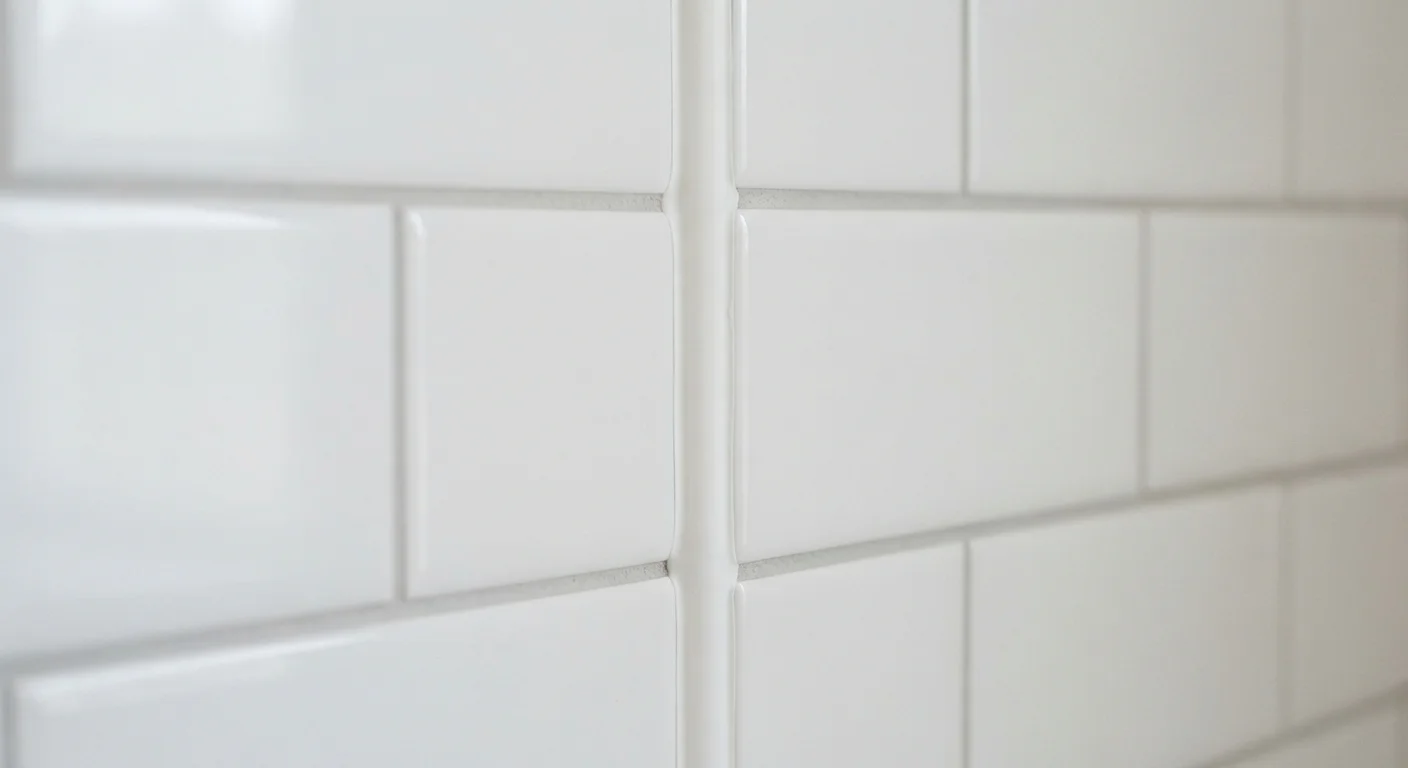
Option A
Grout & Sealant
The structural fill — and its protective finish.
Best for: Filling the fixed gaps between tiles on walls, floors, and countertops, then sealing those gaps against moisture infiltration.
Option B
Caulk
The flexible joint companion for movement-prone seams.
Best for: Sealing the transition points between two different surfaces — such as where a tub meets the wall or a sink meets the countertop.
What Each Material Actually Does
Walk into any hardware store and you'll find shelves of grout, caulk, and sealant products side by side. The packaging doesn't always make it obvious which one you need — and using the wrong material in the wrong place is one of the most common causes of preventable water damage in American homes.
Here's the clear breakdown:
- Grout is a cement- or resin-based filler that hardens rigidly between tile joints. It holds tiles in a stable formation and prevents debris from working into the gaps. Sanded grout is used for joints wider than 1/8 inch; unsanded for narrower ones.
- Sealant (grout sealer) is a liquid or spray applied over cured grout. It penetrates the porous surface to repel water and oils, protecting the grout from staining and moisture damage. It does not fill gaps — it protects what's already there.
- Caulk is a flexible, adhesive sealant — most commonly silicone or latex — used wherever two separate surfaces meet at a seam or corner. Unlike grout, it can compress and expand as materials shift with temperature and humidity changes.
These three products are designed to work together, not replace each other. A complete tile installation typically uses all three.
| Criterion | Grout | Caulk |
|---|---|---|
| Composition | Cement or epoxy — rigid when cured | Silicone or latex — flexible when cured |
| Primary use | Fills joints between tiles | Seals transition seams between surfaces |
| Handles movement? | No — cracks under flex | Yes — designed to flex |
| Waterproof on its own? | No — requires sealant | Yes (silicone) or moderate (latex) |
| Where NOT to use | Inside corners, tub edges, transition joints | Between tile field joints (too soft to hold) |
| Typical lifespan | 10–20+ years with proper sealing | 5–10 years in wet environments |
| Needs a sealant coat? | Yes — after curing | No — self-sealing |
Where Each One Belongs — and Where It Doesn't
The most costly mistake homeowners make is using grout at transition joints — the corners where a bathtub meets the wall, where a tile floor meets the baseboard, or where a tile countertop meets the backsplash. These spots experience movement. Grout, which is rigid, will eventually crack at these stress points and allow water to seep in behind the tile — often invisibly at first. For more on how water damage starts before it's visible, see our guide on catching water problems early.
Use grout: In the joints between tiles on floors, walls, shower stalls, and backsplashes — anywhere tiles sit next to other tiles on a flat plane.
Use caulk: At every inside corner in a tiled area (the 90-degree joint where a wall meets a floor, or where two walls meet), along the perimeter of a tub or shower base, around sink basins, and at the gap between a toilet base and the floor.
Use sealant: On all grout lines after the grout has fully cured — typically 48 to 72 hours after application. Reapply every one to two years in high-moisture areas like showers, or when water stops beading on the surface.
Grout and Caulk Can Look Nearly Identical
Many manufacturers offer caulk in colors that match popular grout shades. At a corner joint, the visual result looks continuous — but the material behaves very differently. If your installer used grout at inside corners instead of color-matched caulk, that's worth correcting before cracks appear. Always check corners carefully during any tile inspection.
Wondering whether a re-caulking job is within your DIY skill set? Our article on when a repair is DIY-friendly can help you read the situation correctly before you start.
Maintenance: Recognizing When Each Needs Replacing
Knowing where these materials go is only half the job. Recognizing when they've failed — and acting before water gets behind your surfaces — is equally important.
~$11,000
Average cost of water damage repair per incident
According to insurance industry estimates, water damage and freezing claims are among the most common and costly homeowner claims in the U.S.
1–2 years
Recommended grout sealant reapplication interval
Most tile industry guidelines suggest resealing grout in high-moisture areas like showers every one to two years to maintain effective water resistance.
- Grout failure signs: Cracking, crumbling, missing sections, or discoloration that doesn't respond to cleaning. Hairline cracks in the field are less urgent than cracks at corners or along transition edges, which should be addressed promptly.
- Caulk failure signs: Peeling, splitting, pulling away from the surface, visible mold growing inside the bead, or a dried-out appearance. Bathroom caulk typically needs replacement every five to ten years depending on moisture exposure and cleaning habits.
- Sealant depletion: The simplest test — drop a few beads of water onto the grout. If they soak in rather than bead up, the sealant has worn away and it's time to reapply.
Mold growing on caulk isn't always a surface problem. If mold reappears quickly after cleaning, water may be infiltrating behind the surface. That situation warrants professional assessment. For other overlooked maintenance areas that homeowners miss, see the hidden spots most people never clean.
The content on this site is for informational purposes only and is not a substitute for professional advice. Always consult a qualified professional for guidance specific to your situation.