

Start here
Why Most Organization Advice Fails Non-Organized People
First step
Start With One Zone, Not the Whole House
Build your foundation
The Core Principles That Actually Stick
Apply it
Room-by-Room Quick Wins
Make it permanent
Building Habits That Last
Why Most Organization Advice Fails Non-Organized People
Most home organization guides are written by people who already think in systems. They assume you have a baseline of tidiness to build on, or that you simply need prettier bins. If you've tried color-coded closet systems and given up within a week, that's not a character flaw — it's a mismatch between the advice and how you actually live.
The truth is that organization is a learned skill, not an inborn trait. The gap isn't motivation or discipline — it's usually the absence of a system designed around your real behavior, not an idealized version of it. Good organization reduces the number of daily decisions you have to make, so things find their way back to where they belong almost automatically.
Zone
A defined area of your home treated as a single organizational unit — like a counter, shelf, or drawer — rather than tackling a whole room at once.
Fixed home
A specific, assigned location where a particular item always lives. Having a fixed home for an object means it doesn't end up on a random surface.
Daily reset
A short routine — usually 5 to 10 minutes — where you return misplaced items to their fixed homes to prevent gradual clutter buildup.
Friction
Anything that makes an action harder or less likely. Reducing friction in an organizational system means making the tidy behavior the easiest default option.
Decluttering
The process of removing items you no longer need or use, which happens before — and separately from — setting up an organizational system.
Start With One Zone, Not the Whole House
The biggest mistake first-timers make is trying to organize everything at once. An overwhelmed weekend project almost always stalls halfway through, leaving the house in worse shape than before.
Instead, choose a single zone — ideally a space you use multiple times a day, like a kitchen counter, an entryway table, or a bathroom cabinet. The goal is a visible, fast win. Spend 30 minutes: remove everything, keep only what belongs there, give each item a fixed home, and return it.
That one tidy zone becomes your anchor. When the rest of the house feels chaotic, you have proof that a system can work. Before tackling the bigger spaces, it also helps to separate the organizing step from the decluttering step. See our guide to decluttering without losing things you actually need for strategies on clearing out thoughtfully before you set up any system.
Set a Timer Before You Start
Committing to just 30 minutes removes the psychological weight of an open-ended project. Set a timer, focus on one zone only, and stop when it goes off — even if you're not done. Returning to a contained, time-boxed task is far easier than returning to an overwhelming one.
The Core Principles That Actually Stick
A few principles separate systems that hold from systems that collapse after two weeks:
- Every item needs a fixed address. If something doesn't have a designated home, it defaults to whatever surface is closest. Assign a location to anything you use regularly.
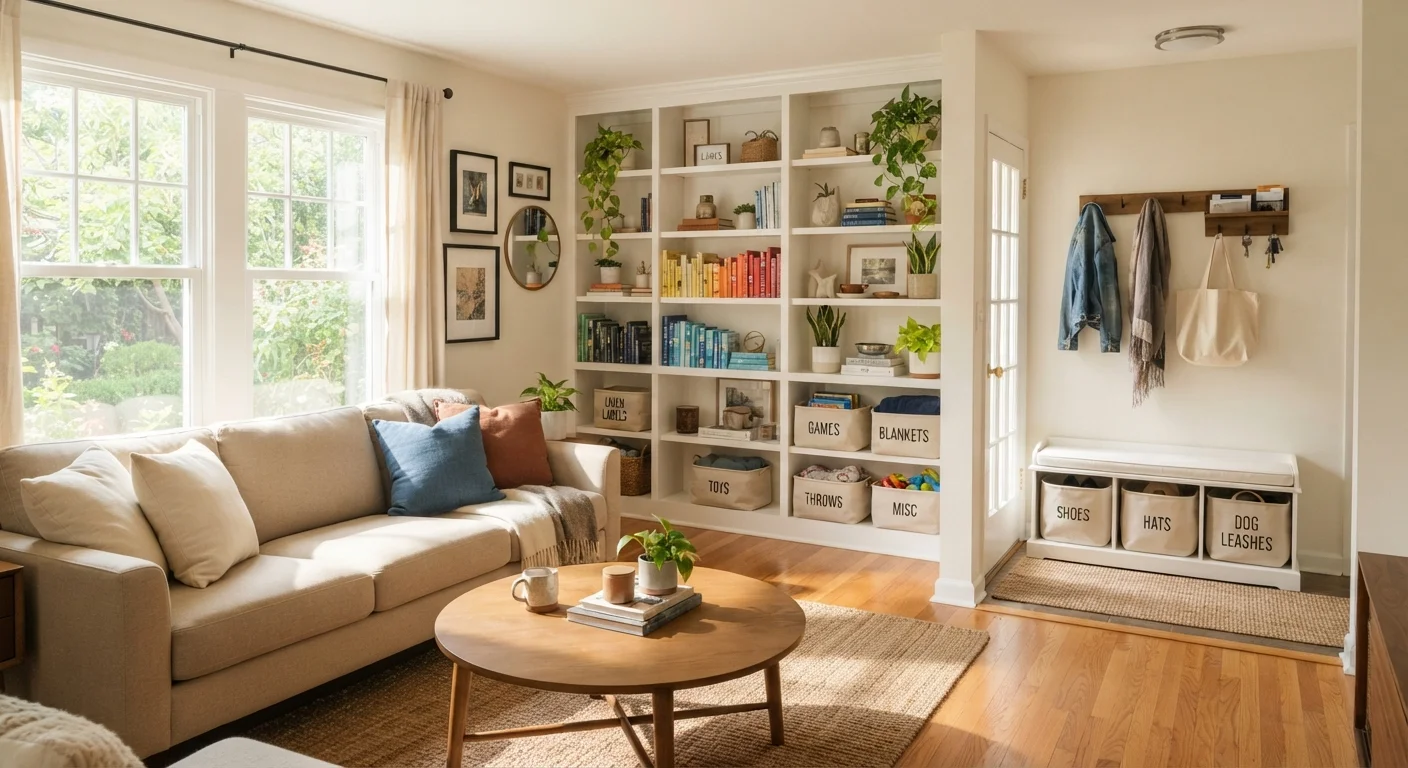
- Visibility beats concealment. For non-organized people, out of sight genuinely means out of mind. Open shelving, clear bins, and hooks keep frequently used items accessible without requiring extra memory.
- Match the system to your real habits. If you never open a drawer, don't organize things into that drawer. Design around what you actually do, not what you wish you did.
- Simpler is more durable. A two-category sorting system you'll actually use beats a twelve-category one you'll abandon by Thursday.
If your home is short on space, these principles pair well with creative storage approaches. Storage strategies for small homes can help you make the most of whatever footprint you have.
Room-by-Room Quick Wins
Once you have a working zone, expand methodically. Here's where to focus first for the highest impact:
- Entryway
- Install hooks for bags and coats at eye level. Add a small tray for keys, mail, and daily-carry items. The entryway sets the tone — when it's clear, the whole home feels more manageable.
- Kitchen
- Clear the counter of anything that doesn't get used daily. Group like items inside cabinets (baking supplies together, snacks together). A clean counter is the single biggest visual upgrade in most homes.
- Bedroom
- Tackle the surface closest to where you sleep first — usually a nightstand or dresser top. Limit it to three to five items maximum.
- Home office or paperwork area
- Designate one spot for incoming mail and papers. Process it weekly — act, file, or discard. A pile with no assigned home grows indefinitely.
You don't need to buy storage bins before you start. Work through each space first, decide what stays, then assess whether containers are genuinely needed.
Buying Containers Can Wait
It's tempting to head to a home goods store before organizing begins, but purchasing containers before knowing exactly what you're keeping often backfires. You may buy the wrong sizes, over-buy, or create the illusion of organizing without actually sorting. Complete the sort-and-assign phase first, then buy only what you demonstrably need.
Building Habits That Last
The physical setup is only half the job. Organization stays intact when maintenance habits are realistic enough to repeat without effort.
The most reliable habit is a short daily reset: 5 to 10 minutes at the end of the day to return items to their fixed homes. This sounds small, but it prevents the gradual drift that turns a tidy room into a chaotic one over two weeks. Pairing the reset with something you already do — like making coffee or winding down before bed — helps it become automatic.
Weekly, do a slightly longer pass: check for items that have migrated out of place and any surfaces that are accumulating clutter. Monthly, reassess whether your systems still fit your current habits. Life changes, and a system that worked six months ago may need adjusting.
Organization, like budgeting, rewards consistency over perfection. If you're also working on building financial habits alongside your home systems, everyday money tips offers a similar habit-building approach for managing your finances with less friction.
The goal isn't a magazine-ready home — it's a home that feels calm and functional on an ordinary Tuesday. That's a realistic and worthwhile target for anyone, regardless of how organized they consider themselves.
Frequently Asked Questions
Pick the smallest, most-used space — often an entryway, kitchen counter, or nightstand. Clearing and organizing one small area gives you a visible win that builds motivation. Once that zone holds, expand gradually to adjacent areas.
The key is reducing friction: make the organized behavior the easiest option. Assign fixed homes to frequently used items, keep storage visible and accessible, and build a short daily reset routine of 5–10 minutes rather than occasional big clean-ups.
Not at all. Many effective systems use items you already own — boxes, trays, or hooks. Only buy storage solutions after you've decided what you're keeping and where it needs to live. Buying containers first often creates more clutter.
Decluttering means removing items you no longer need or use. Organizing means creating a functional system for everything that remains. Both steps are necessary — trying to organize a space that still holds too much rarely works.
For most homes, expect to spend several weeks working room by room, especially if decluttering is part of the process. Doing short, focused sessions — 30 to 60 minutes — is more sustainable than marathon weekend projects.
Absolutely — small spaces actually benefit most from intentional organization. Vertical storage, multi-use furniture, and clear zones make a compact home feel significantly larger and more functional.
The content on this site is for informational purposes only and is not a substitute for professional advice. Always consult a qualified professional for guidance specific to your situation.