

Summary
22 items · 45–90 minutes
Why Preparation Makes All the Difference
A pet emergency can unfold in minutes — a dog that swallows something it shouldn't, a cat with sudden labored breathing, a paw laceration that won't stop bleeding. In those moments, scrambling to find a phone number or locate a thermometer costs time your pet may not have.
The good news: most of what you need can be assembled in an afternoon. This checklist walks you through four areas of readiness — contacts, supplies, records, and knowledge — so you can act quickly and calmly when the situation demands it.
If you're a new pet owner, this pairs well with what to expect at your pet's first vet visit, which covers how to establish a relationship with a veterinarian before any urgent situation arises.
Emergency Contacts
Pet First Aid Kit
Medical Records and Documentation
Transport and Containment
Basic Knowledge and Financial Readiness
Tools and Resources You'll Want on Hand
The items below aren't substitutes for professional veterinary care — they're the tools that support your ability to respond, document, and transport your pet safely until you can reach a professional.
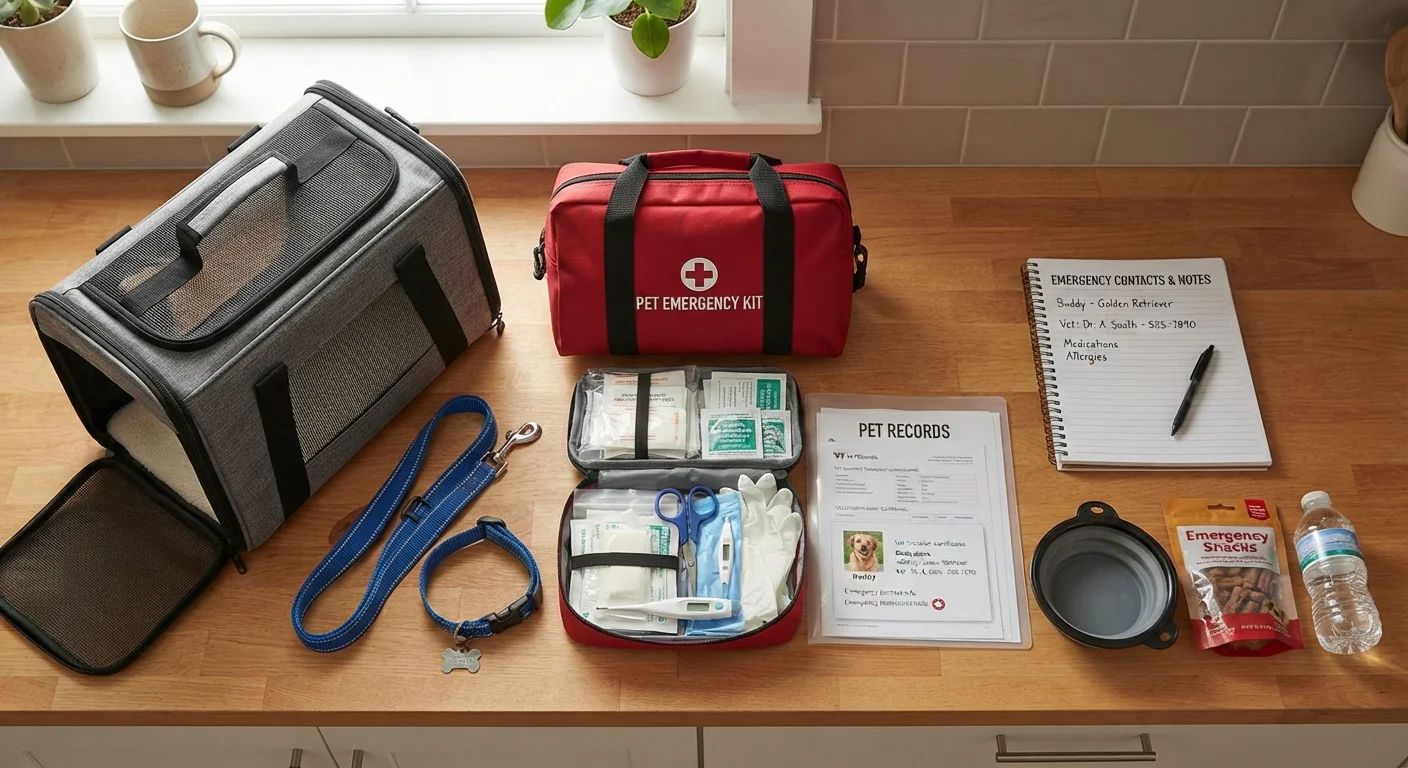
Pet-specific first aid kit
Provides gauze, bandages, thermometer, and other supplies needed to stabilize a pet's condition before reaching a vet.
Hard-sided or soft-sided pet carrier
Safely contains and transports an injured or distressed pet to the emergency clinic.
Printed emergency contact card
Lists your vet, emergency clinic, and poison control number in one place — accessible even if your phone is dead.
Medical records folder
Holds vaccination records, medication lists, and health history so emergency vets can treat your pet with full context.
Pet muzzle or soft restraint wrap
Protects both you and first responders when handling a pet that is in pain and may bite defensively.
Pet first aid reference card or app
Gives step-by-step guidance on common emergency scenarios (choking, bleeding, burns) when calm thinking is hard to maintain.
On the financial side, unexpected vet visits are among the most common unplanned household expenses for pet owners. If you don't yet have a financial cushion for these costs, reviewing general guidance on building an emergency fund can help you think through how to size a dedicated reserve for pet care.
Don't Attempt Treatments Without Veterinary Guidance
In an emergency, it can be tempting to search online for home remedies or administer human medications to your pet. Many human medications — including common pain relievers like ibuprofen and acetaminophen — are toxic to dogs and cats. Always call your vet or an emergency animal hospital before administering anything to a pet showing signs of illness or injury.
Poison Control Consultations Involve a Fee
The ASPCA Animal Poison Control Center (888-426-4435) is a valuable 24/7 resource, but note that consultations typically involve a per-case fee. Have a payment method available when you call, and confirm current fee details directly with the hotline since costs can change.
This article is for general informational purposes only and does not constitute veterinary or medical advice. Always contact a licensed veterinarian or emergency animal hospital for guidance specific to your pet's condition.
The content on this site is for informational purposes only and is not a substitute for professional advice. Always consult a qualified professional for guidance specific to your situation.