

The Math Behind Minimum Payments
Credit card issuers calculate minimum payments as a small percentage of your outstanding balance — typically between 1% and 3%, or a flat dollar floor (often $25–$35), whichever is greater. On a $3,000 balance at an 20% annual interest rate, a minimum payment might start around $60. That sounds manageable. The problem is that most of that $60 goes directly to interest charges, leaving only a small fraction to reduce the actual balance.
Because the minimum recalculates each month as your balance shrinks, your required payment gradually declines too — creating a slow-motion payoff that can stretch beyond ten years on a balance most people expect to clear in two or three. The total interest paid over that period can easily exceed $1,500 on a single $3,000 balance. That's money spent purely on the cost of carrying debt, with nothing to show for it.
Understanding this math is the first step. The second is recognizing the common mistakes that keep people locked into this cycle. See how popular debt myths can compound this problem further.
10+ years
Time to repay a $3,000 balance at minimums
Consumer Financial Protection Bureau guidance illustrates how minimum-only payments on a typical credit card balance can extend repayment well beyond a decade.
~20%
Average U.S. credit card interest rate
Federal Reserve data has shown average credit card interest rates hovering around or above 20% APR in recent years, making minimum payments especially costly.
Mistakes That Keep You Paying Longer
Most people don't choose to stay in debt — they fall into patterns that make it feel unavoidable. The mistakes below are among the most common, and each one quietly extends the timeline and total cost of repayment.
Treating the minimum payment as the default monthly target.
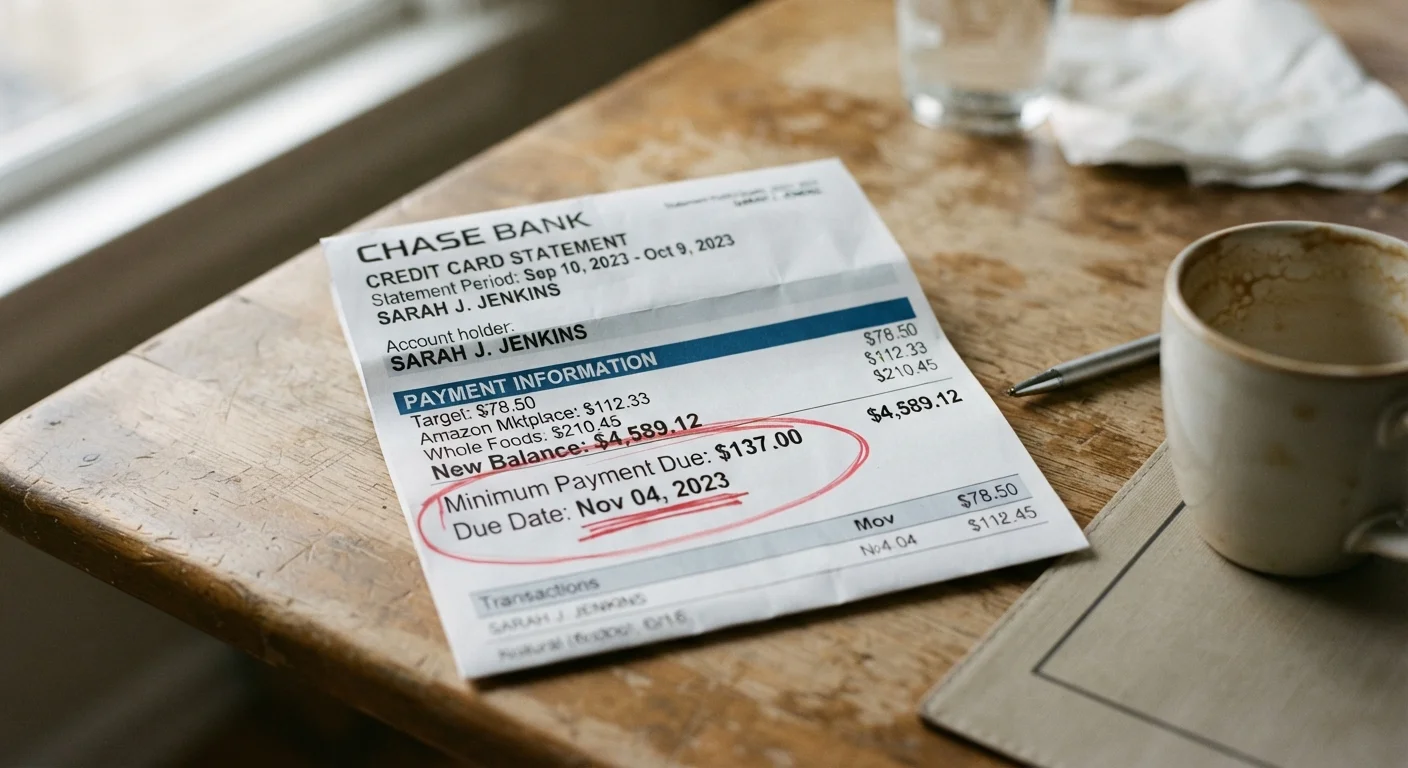
Why it happens: Card statements often display the minimum payment prominently, making it feel like the intended amount to pay rather than the legal floor.
Continuing to use a card while only paying the minimum.
Why it happens: When a balance feels manageable via minimums, it's easy to keep spending without realizing the principal is growing faster than it's shrinking.
Assuming that making every minimum payment protects your financial health.
Why it happens: Minimum payments do prevent late fees and protect your credit score from missed-payment penalties, which can create a false sense that everything is under control.
Ignoring interest rate differences across multiple debts.
Why it happens: When managing several balances, it's natural to spread payments evenly — but this ignores the fact that high-interest debt grows faster and costs more to carry.
Skipping a month's extra payment during a tight period and never resuming it.
Why it happens: Life interrupts plans. A single month of paying only the minimum feels harmless, but it often resets the habit and the extra payment never returns.
If you're ready to move beyond minimum payments, it's worth reviewing what to assess before aggressively paying down debt — including your emergency fund and income stability — so your new strategy is built on solid ground.
What to Do Instead
The most effective immediate change is committing to a fixed monthly payment rather than a percentage-based minimum. Pick an amount you can sustain — say, $150 or $200 on a $3,000 balance — and hold it steady even as your balance falls. This alone can cut years off your repayment and save hundreds in interest.
For multiple debts, structured approaches make a measurable difference. The debt avalanche and debt snowball methods offer two proven frameworks: the avalanche targets your highest-interest debt first (minimizing total interest paid), while the snowball starts with your smallest balance (building psychological momentum). Either method consistently outperforms paying minimums across the board.
If high interest rates are the core obstacle, it's worth understanding how balance transfers work and their trade-offs — reducing your rate even temporarily can make fixed payments go significantly further. And if you're worried about neglecting savings entirely, know that balancing debt repayment with saving is achievable with the right structure. Small, consistent budget adjustments — including cutting daily habits that quietly drain your budget — can free up the extra dollars needed to pay more than the minimum every month.
Minimum Payments Are a Floor, Not a Plan
Card issuers are required by law to disclose how long it will take to pay off your balance if you make only minimum payments — look for this on your monthly statement. Use that number as motivation, not a schedule. The sooner you commit to a fixed payment above the minimum, the less you'll pay overall and the faster you'll reach a zero balance.
This article is for general informational purposes only and does not constitute personalized financial advice. For guidance tailored to your situation, consult a licensed financial professional.
The content on this site is for informational purposes only and is not a substitute for professional advice. Always consult a qualified professional for guidance specific to your situation.