

Start here
Why a Basic Routine Is Enough
Build your foundation
The Core Four: What Every Routine Needs
Personalize
Matching Your Routine to Your Skin Type
Refine
Morning vs. Evening: What Changes and Why
Avoid pitfalls
Common Beginner Mistakes to Skip
Why a Basic Routine Is Enough
The skincare aisle can feel like a pop quiz you never studied for — serums stacked on serums, ten-step systems, ingredients with names that read like chemistry homework. Here's what the beauty industry rarely highlights: most skin does best with simplicity and consistency, not complexity and volume.
A routine built on three to four well-chosen products, used daily, delivers more reliable results than an elaborate regimen applied only occasionally. Think of it the way you might approach building a physical wellness habit — fundamentals practiced regularly beat advanced techniques tried once. The same principle holds for skin.
Skin barrier
The outermost layer of skin that acts as a protective shield, keeping moisture in and irritants out. A healthy barrier is key to balanced, comfortable skin.
Broad-spectrum SPF
A sunscreen rating that indicates protection against both UVA rays (aging) and UVB rays (burning). Dermatologists generally recommend SPF 30 or higher for daily use.
Non-comedogenic
A label indicating a product is formulated to not clog pores — particularly relevant for those with oily or acne-prone skin.
Active ingredient
A compound in a skincare product that produces a measurable change in skin, such as retinoids for cell turnover or vitamin C for brightness. Actives require care when layering.
Retinoid
A vitamin A derivative used in skincare to support cell turnover and address concerns like fine lines and uneven texture. Available in various strengths; prescription versions require a doctor's guidance.
The Core Four: What Every Routine Needs
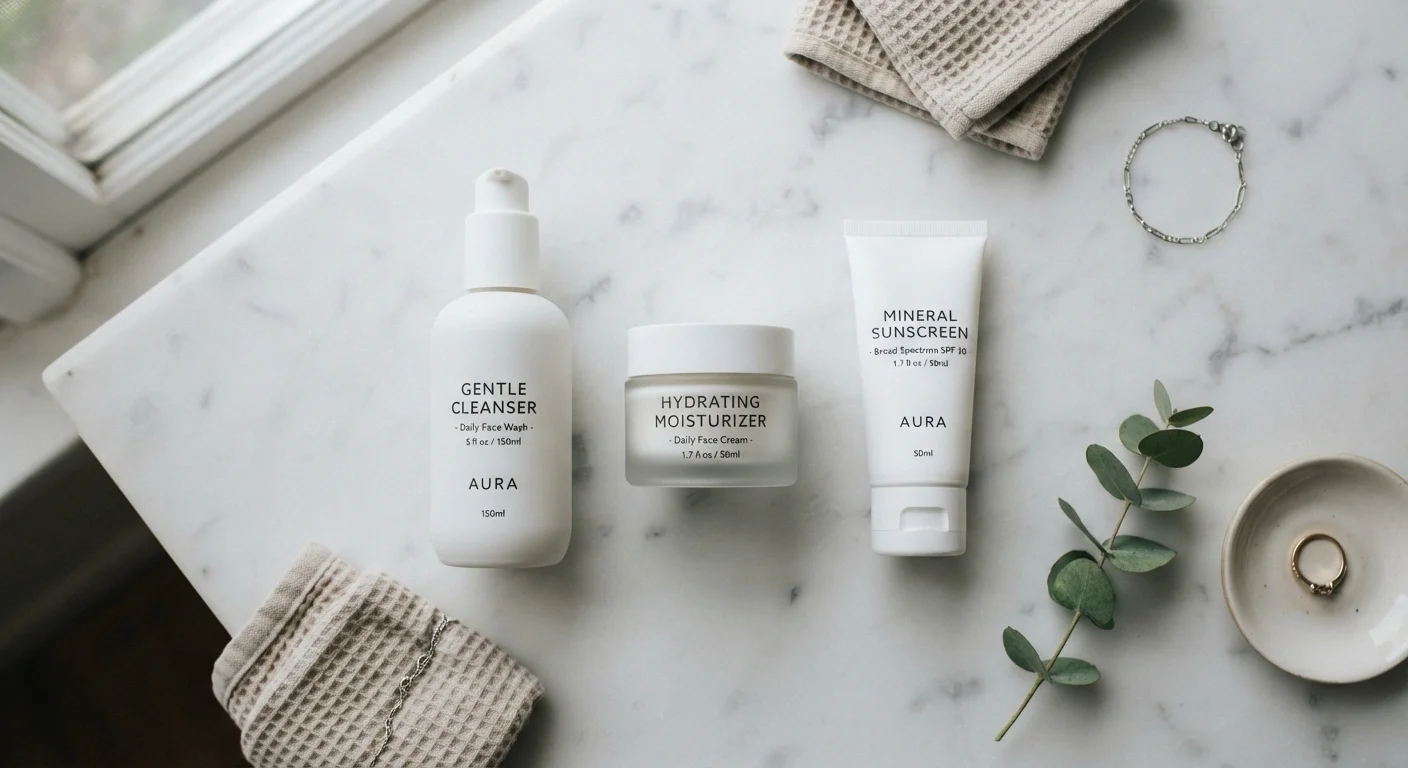
Regardless of skin type or budget, four steps form the foundation of any effective daily routine:
- Cleanser: Removes dirt, oil, and environmental residue without stripping the skin barrier. A gentle, non-foaming or low-lather formula suits most skin types.
- Moisturizer: Replenishes hydration and supports the skin's protective barrier. Even oily skin benefits from a lightweight, oil-free moisturizer.
- Sunscreen (AM only): Broad-spectrum SPF 30 or higher is the most evidence-supported daily step for preventing premature aging and reducing UV-related skin damage. For a deeper look at how to make SPF a real habit, see daily sunscreen use in practice.
- Optional targeted treatment: Once the basics are consistent, you can consider adding one active ingredient — such as a vitamin C serum in the morning or a retinoid at night — to address a specific concern.
One Product at a Time
When building your routine from scratch, buy your cleanser and moisturizer first and use them consistently for two to four weeks before adding anything else. This establishes your baseline and makes it much easier to spot what's working — or what's causing a reaction — when you introduce something new.
Matching Your Routine to Your Skin Type
Skin type influences which formulas feel comfortable and perform well — it doesn't change the steps, just the textures and ingredients you prioritize.
- Oily skin: Look for gel or water-based cleansers and non-comedogenic (won't clog pores), oil-free moisturizers. Lightweight, fluid sunscreens tend to wear better.
- Dry skin: Cream cleansers and richer moisturizers with ingredients like glycerin, ceramides, or hyaluronic acid help restore and lock in moisture.
- Combination skin: A gentle balanced cleanser works well; you may need a lighter moisturizer on oilier zones and a slightly richer one on drier areas.
- Sensitive skin: Fragrance-free, minimal-ingredient formulas reduce the risk of irritation. Patch-testing new products on a small area before full use is especially valuable here.
If you're building other personal care habits alongside skincare, the hair care beginner's guide applies many of the same keep-it-simple principles.
Morning vs. Evening: What Changes and Why
Your skin has different needs at different times of day, and a basic routine accounts for that without doubling your product count.
Morning: Cleanse lightly (or just rinse with water if your skin isn't particularly oily overnight), apply moisturizer, and finish with sunscreen. This preps skin for UV exposure and environmental contact during the day.
Evening: Cleanse more thoroughly to remove sunscreen, makeup, and the day's buildup. Follow with moisturizer — you can use a richer formula at night if your skin is dry. If you're incorporating a treatment like a retinoid, nighttime is typically when it's used, as some actives can increase sun sensitivity.
Retinoids Require a Slow Introduction
If you decide to add a retinoid to your evening routine, start with the lowest available concentration and use it just two to three times per week before working up to nightly use. Retinoids can cause initial dryness and sensitivity, and they're not appropriate for everyone — people who are pregnant or have certain skin conditions should consult a healthcare provider before use.
Common Beginner Mistakes to Skip
Starting a routine is straightforward; sustaining it means avoiding a few predictable traps:
- Doing too much, too fast: Adding five new products at once makes it impossible to identify what's helping or causing a reaction. Introduce one product at a time, spaced a few weeks apart.
- Over-cleansing: Washing your face more than twice a day — or using harsh, stripping cleansers — can compromise your skin barrier, leading to more dryness or oil overproduction.
- Skipping moisturizer on oily skin: Dehydrated oily skin often produces more oil to compensate. A lightweight moisturizer helps balance that cycle.
- Equating price with effectiveness: Many affordable formulas contain the same evidence-backed active ingredients as prestige products. Focus on the ingredient list, not the label.
Building consistent daily habits — whether for skin, hair care, or mental wellness — follows the same logic: start small, stay consistent, and adjust based on real results.
Watch for Signs of Irritation
Redness, stinging, persistent breakouts, or peeling after starting a new product are signs to pause and reassess. These reactions don't always mean a product is 'purging' — they can signal an ingredient that doesn't suit your skin. If irritation is severe, prolonged, or accompanied by other symptoms, consult a dermatologist rather than pushing through.
This article provides general skincare information for educational purposes only and is not a substitute for personalized advice from a licensed dermatologist or healthcare professional.
Frequently Asked Questions
Apply products from thinnest to thickest consistency: cleanser first, then any water-based serums, followed by moisturizer, and sunscreen last in the morning. This order helps each product absorb properly without being blocked by heavier formulas.
Most dermatologists suggest allowing four to six weeks of consistent use before evaluating a new routine. Skin cell turnover takes roughly that long, so changes — positive or negative — often aren't fully visible right away.
UVA rays, which contribute to premature aging and skin damage, penetrate windows and are present even on cloudy days. Daily broad-spectrum SPF is generally recommended by dermatologists regardless of whether you plan to spend time outdoors.
Your cleanser and moisturizer can often be the same, but sunscreen is skipped at night since there's no UV exposure. Some people add a richer moisturizer or a targeted treatment like a retinoid to their evening routine.
Toner is not an essential step. Modern cleansers are formulated to cleanse without disrupting skin's pH, making traditional toners largely optional. If your skin feels tight or rough after cleansing, a gentle hydrating toner may help.
Stop using the product immediately and return to your previous routine. Introduce it again after skin has calmed, or discontinue it entirely. If irritation is severe or persistent, consult a dermatologist — general content like this is not a substitute for professional guidance.
The content on this site is for informational purposes only and is not a substitute for professional advice. Always consult a qualified professional for guidance specific to your situation.